

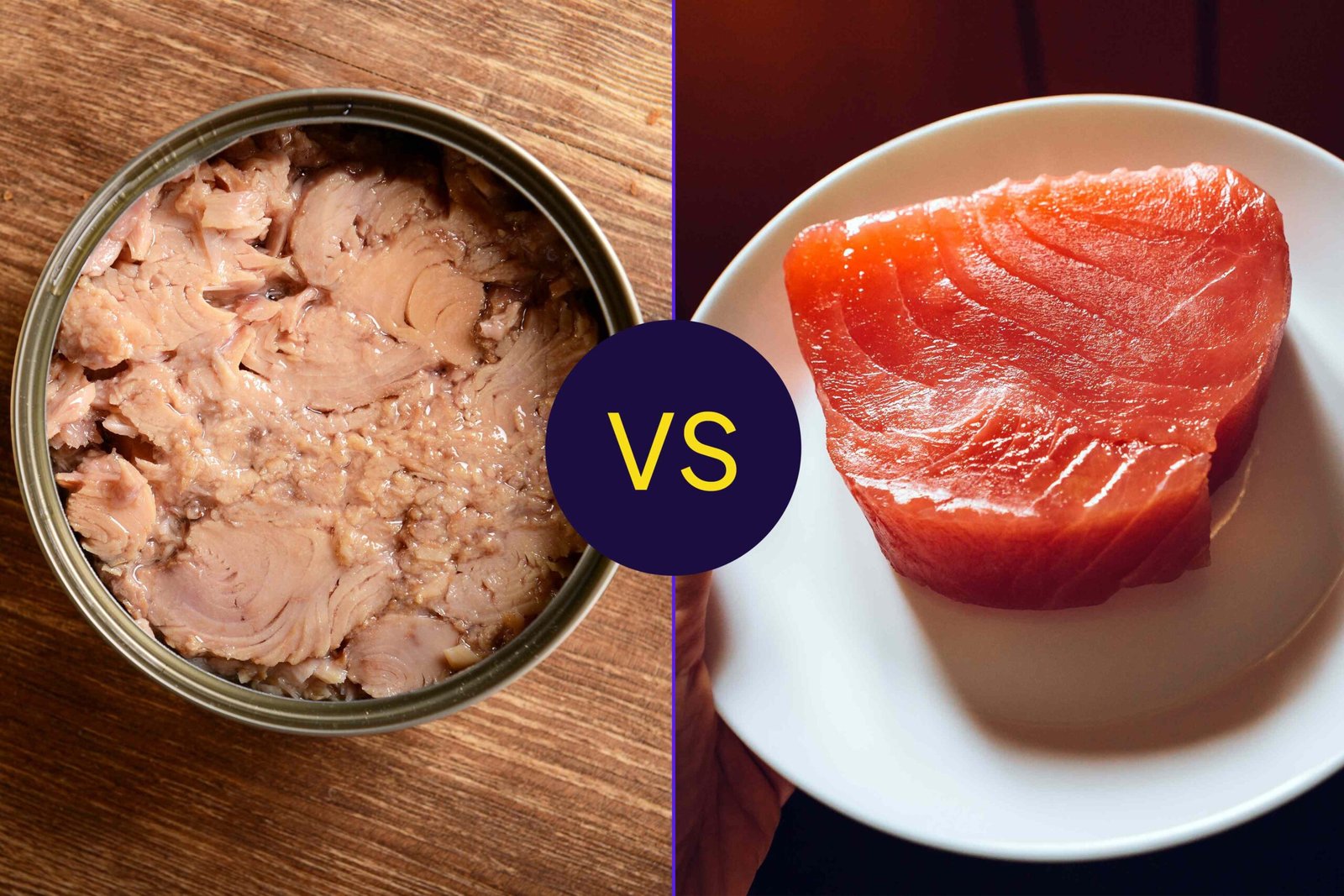
Tuna is a lean source of protein that supports heart health and weight management. Both fresh and canned tuna can be nutritious, though their omega-3 and protein content can differ.
Canned and fresh tuna provide omega-3 fatty acids. Bluefin tuna and albacore contain the highest levels of omega-3s. Leaner varieties, such as yellowfin and light canned tuna, provide smaller amounts.
Here’s the amount of omega-3s (EPA + DHA) in a 3.5-ounce (100-gram) serving:
- Fresh bluefin tuna (cooked): 1,503 milligrams (mg)
- Canned albacore tuna (in water): 862 mg
- Fresh skipjack tuna (cooked): 328 mg
- Canned light tuna (in water): 222 mg
- Fresh yellowfin tuna (cooked): 120 mg
Omega-3 fatty acids are healthy fats that support heart health. While individual needs vary, most guidelines recommend consuming 1.1–1.6 grams per day, or eating two servings of fatty fish (such as bluefin tuna) per week. Some research suggests that higher intakes of up to 3 grams per day may help lower blood pressure.
All types of tuna are good sources of protein, which helps support muscle health and fullness. Fresh tuna generally provides more protein per serving. Here’s how they compare:
- Fresh tuna: 28–30 grams per 3.5-ounce serving
- Canned tuna: 19–24 grams
Even with slightly less protein, canned tuna still offers high-quality protein and is a convenient, budget-friendly option for meeting daily protein needs.
Here is the basic nutritional breakdown of 3.5-ounce (100-gram) portions of canned tuna vs. fresh tuna:
Nutrient
Fresh Tuna (yellowfin, cooked)
Fresh tuna (skipjack, cooked)
Fresh Tuna (bluefin, cooked)
Albacore Tuna (canned in water)
Light Tuna (canned in water)
Calories
130
132
184
128
85
Protein
29.2 grams (g)
28.2 g
29.9 g
23.6 g
19 g
Carbohydrates
0 g
0 g
0 g
0 g
0 g
Fat
0.59 g
1.29 g
6.28 g
2.97 g
0.94 g
Saturated Fat
0.20 g
0.42 g
1.61 g
0.79 g
0.22 g
Phosphorus
333 milligrams (mg), or 27% of the DV
285 mg, or 23% of the DV
326 mg, or 26% of the DV
217 mg, or 17% of the DV
137 mg, or 11% of the DV
Selenium
108 micrograms (mcg), or 196% of the DV
46.8 mcg, or 85% of the DV
46.8 mcg, or 85% of the DV
65.7 mcg, or 119% of the DV
67.8 mcg, or 123% of the DV
Niacin (vitamin B3)
22.1 mg, or 128% of the DV
18.8 mg, or 118% of the DV
10.5 mg, or 66% of the DV
5.8 mg, or 36% of the DV
9.92 mg or 62% of the DV
Vitamin B6
1.04 mg, or 61% of the DV
0.98 mg, or 58% of the DV
0.52 mg, or 31% of the DV
0.21 mg, or 12% of the DV
0.32 mg 19% of the DV
Vitamin B12
2.35 mcg, or 98% of the DV
2.19 mcg, or 91% of the DV
10.9 mcg, or 454% of the DV
1.17 mcg, or 49% of the DV
2.57 mcg, or 107% of the DV
Both fresh and canned tuna are good sources of selenium, which helps protect cells and support thyroid health. They also provide B vitamins, including niacin, vitamin B6, and vitamin B12, which help the body turn food into energy and support brain and blood health.
Mercury is a natural substance that can build up in fish over time. Bigger fish that eat other fish usually have more mercury. Because of this, fresh tuna and canned albacore (white) tuna are higher in mercury. Canned light tuna, made from smaller fish, has less.
Too much mercury can be harmful, especially for pregnant people and children. Pregnant people, those who may become pregnant, people who are breastfeeding, and young children should:
- Eat up to 12 ounces per week of a variety of low-mercury fish, including canned light tuna
- Limit albacore (white) tuna, bluefin tuna, and other high-mercury fish to no more than 6 ounces per week
When choosing between canned and fresh tuna, here are a few things to keep in mind:
- Sodium: Fresh tuna is naturally low in sodium, while canned tuna can contain added salt. Choosing low-sodium or no-salt-added canned tuna can help keep sodium intake low.
- Packed in water vs. oil: Tuna canned in water is lower in calories and fat. If you choose tuna packed in oil, opting for olive oil can be a healthier choice.
- Cooking method: Baking, roasting, or air-frying fresh tuna offers health advantages over deep-frying.
- Cost and convenience: Fresh tuna may offer some nutritional advantages, but it is often more expensive and less available. Canned tuna is shelf-stable, budget-friendly, and convenient.
- Variety is key: Including a variety of omega-3–rich seafood, such as tuna, salmon, sardines, and trout, can help you get the benefits of omega-3s while limiting mercury exposure.
Health.com uses only high-quality sources, including peer-reviewed studies, to support the facts within our articles. Read our editorial process to learn more about how we fact-check and keep our content accurate, reliable, and trustworthy.
U.S. Department of Agriculture: FoodData Central. Fish, tuna, skipjack, fresh, cooked, dry heat.
U.S. Department of Agriculture: FoodData Central. Fish, tuna, yellowfin, fresh, cooked, dry heat.
U.S. Department of Agriculture: FoodData Central. Fish, tuna, white, canned in water, without salt, drained solids.
U.S. Department of Agriculture: FoodData Central. Fish, tuna, light, canned in water, drained solids.
U.S. Department of Agriculture: FoodData Central. Fish, tuna, fresh, bluefin, cooked, dry heat.
American Heart Association. Consuming about 3 grams of omega-3 fatty acids a day may lower blood pressure.
U.S. Food & Drug Administration. Vitamins.
California Office of Environmental Health Hazard Assessment. Mercury in fish.
