

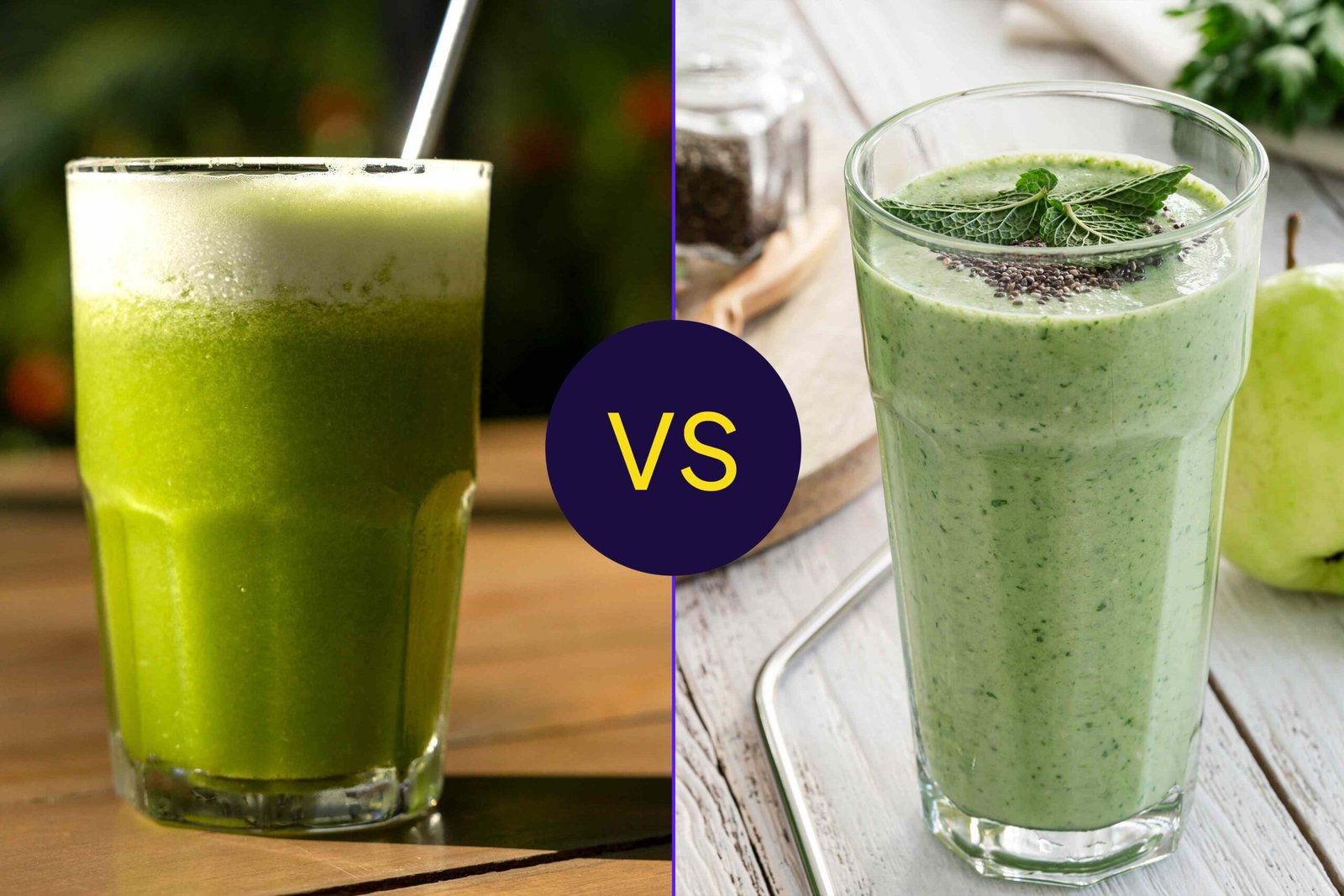
Green juices and smoothies are popular ways to increase fruit and vegetable intake. Both provide vitamins, minerals, and antioxidants. However, they affect digestion, fullness, and blood sugar in different ways.
Nutrients from both green juices and smoothies are well absorbed. The main difference is how quickly they enter the bloodstream.
Green juice contains little to no fiber, so it moves through the digestive system more quickly. This allows vitamins and nutrients to enter the bloodstream faster.
Juice can also be more concentrated. When the pulp is removed, the liquid takes up less space. This allows more fruits and vegetables to fit into one glass. As a result, you may drink nutrients from several servings of produce at once.
Smoothies retain soluble fiber, which slows digestion. While this doesn’t reduce total nutrient absorption, it can affect how quickly nutrients enter the bloodstream.
Studies show that vitamin C is well absorbed from juice, whole fruits, and supplements. Juice may raise vitamin C levels in the blood more quickly than whole fruit. However, blending whole fruits into a smoothie may help keep more antioxidants and beneficial plant compounds.
Green juice also supports hydration, which plays an important role in digestion and nutrient absorption.
Smoothies tend to keep you full because they retain fiber, which slows digestion and helps you stay satisfied longer.
Texture also plays a role. Thick, creamy drinks like smoothies are generally more filling than thinner beverages like juice.
In research comparing whole fruit, smoothies, and juice, whole fruit was the most filling. Smoothies ranked second, while juice was the least filling.
Adding yogurt, protein powder, or nut butter to smoothies can help you feel full longer. Protein helps control hunger. Healthy fats give you steady energy. Fats also help your body absorb vitamins A, D, E, and K. These vitamins need fat to be used properly by your body.
Because green juice has little fiber, protein, or fat, you may feel hungry again sooner after drinking it.
Blood sugar levels rise after you eat or drink something with carbohydrates. Fiber helps slow how quickly sugar enters your bloodstream. This can prevent quick rises and drops in blood sugar.
Green juice, especially juice made mostly from fruit, may raise blood sugar more quickly. This happens because the fiber has been removed.
To reduce the impact on blood sugar, choose mostly vegetables when making juice. A good general rule is to use about 80% vegetables and 20% fruit. Adding protein or healthy fats to either drink can also help keep blood sugar levels stable.
Green juice may be a good choice in certain situations. For example:
- You want nutrients absorbed quickly
- You need nutrients but do not feel like eating whole fruits and vegetables
- You are recovering from illness
- You have trouble digesting high-fiber foods or need to give your digestive system a rest
Some people also use green juice to increase their vegetable intake. If you do not enjoy eating vegetables, drinking them may feel easier.
Smoothies may be the better choice for most people, especially as a snack or small meal. They are a good option if you want:
- Lasting fullness
- Steady energy
- Blood sugar balance
- Digestive support
Adding protein and healthy fats can make a smoothie more balanced and satisfying.
