

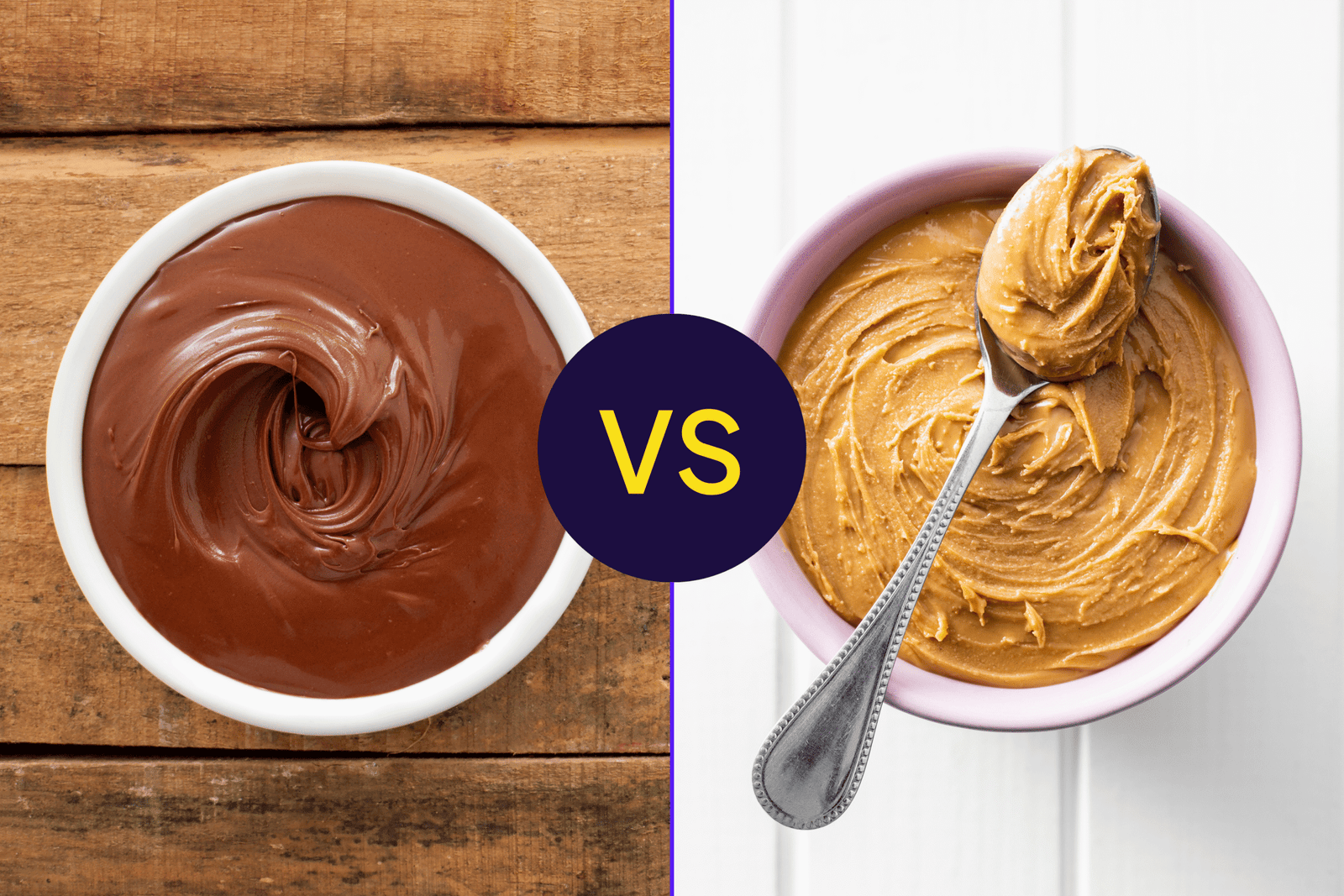
Peanut butter and Nutella—a chocolate hazelnut spread—are both popular and delicious dips made from nuts. Peanuts and hazelnuts are known for being good sources of protein, fiber, and healthy fats. However, Nutella’s high sugar content makes peanut butter the more nutritious option.
The specific nutritional breakdown for peanut butter and Nutella varies slightly based on the brand and type, but in general, peanut butter is the better source of protein.
A standard 2-tablespoon serving of each spread contains:
- Peanut butter: 7 grams of protein
- Nutella: 2 grams of protein
Peanuts are naturally richer in protein than hazelnuts, which are used to make Nutella. Plus, hazelnuts are the third ingredient in Nutella, behind sugar and palm oil.
When comparing the fiber content of peanut butter and Nutella, neither are super heavy hitters. Still, peanut butter comes out on top:
- Peanut butter: 1.82 grams of fiber in a 2-tablespoon serving (chunky peanut butter has slightly more)
- Nutella: 1 gram of fiber in a 2-tablespoon serving
Fiber is known for boosting gut health, but it can also help stabilize blood sugar. The fiber in peanut butter can help slow digestion, making peanut butter a relatively low glycemic index food.
Nutella actually has fewer grams of total fat per serving than peanut butter:
- Nutella: 11 grams of fat per 2 tablespoons
- Peanut butter: 15.8 grams of fat per 2 tablespoons
However, the fats in peanut butter are largely the “good” kind—unsaturated fats—while Nutella contains a greater percentage of unhealthy, saturated fats.
That’s because Nutella contains more palm oil, a vegetable oil that is about 50% saturated fat. Experts are still debating just how palm oil—and saturated fats in general—affect human health. But research shows replacing saturated fats with unsaturated fats in your diet can help protect your heart health.
Peanut butter is made by grinding or blending peanuts into a thick paste. Some producers add sweeteners, salt, oil, or other ingredients to jarred peanut butter to improve texture. However, peanuts are always the first ingredient listed under the nutrition facts. In fact, the Food and Drug Administration (FDA) mandates that peanut butter must be made of at least 90% peanuts.
That means eating peanut butter allows you to reap the health benefits from peanuts, which can include the following:
- Greater satiety: Peanut butter is a good source of protein and fiber, which means it can help keep you fuller for longer. This could support weight management.
- A boost in micronutrients: Peanut butter contains several beneficial nutrients, including magnesium, potassium, phosphorus, and vitamin E.
While this spread can be good for your health, it’s important to pay attention to the other ingredients in your jar of peanut butter, including:
- Added sugar: Most brands of peanut butter don’t contain high amounts of sugar, though this can vary by brand. Check the nutrition label if you’re trying to choose a healthier variety.
- Added sodium: Sodium is another peanut butter ingredient that can vary widely based on brand or type. A typical 2-tablespoon serving contains around 150 milligrams of sodium, or about 6.5% of the recommended daily value. However, you can purchase low-salt or no-salt-added peanut butters.
Though Nutella is a nut spread like peanut butter, it’s not associated with the same kinds of health benefits. That’s because sugar and palm oil make up a greater percentage of Nutella than hazelnuts do—hazelnuts are the third ingredient on the nutrition label.
A single 2-tablespoon serving of Nutella contains 21 grams of sugar. The American Heart Association (AHA) recommends that men limit their daily sugar intake to 36 grams, and women limit their intake to 25 grams of sugar daily.
Nutella also has a substantial amount of saturated fat, which has been linked to poor heart health.
However, there can be some benefits to choosing Nutella over other sweet treats—it contains protein and fiber, which are essential nutrients in a healthy diet, as well as antioxidants from cocoa, hazelnuts, and palm oil that could boost your health.
For most people, peanut butter can fit into a nutritious diet. But to ensure you’re eating peanut butter in a healthy way, consider the following:
- Choose natural peanut butter when possible, as it usually has less salt and sugar.
- Limit your peanut butter intake if you’re following a strict calorie plan; peanut butter is calorically dense, with 188 calories per 2-tablespoon serving.
- Make your own peanut butter or eat less of it if you’re limiting your intake of salt and sugar.
As for Nutella—despite its protein, fiber, and antioxidant content—it’s best eaten as a treat or alongside other healthy foods. If you want to enjoy Nutella or other chocolate hazelnut spreads in a way that supports nutrition, you can:
- Use it as a dip for fresh fruit or pretzels.
- Mix a small amount of Nutella into Greek yogurt.
- Spread a thin later on a piece of whole-grain toast.
