

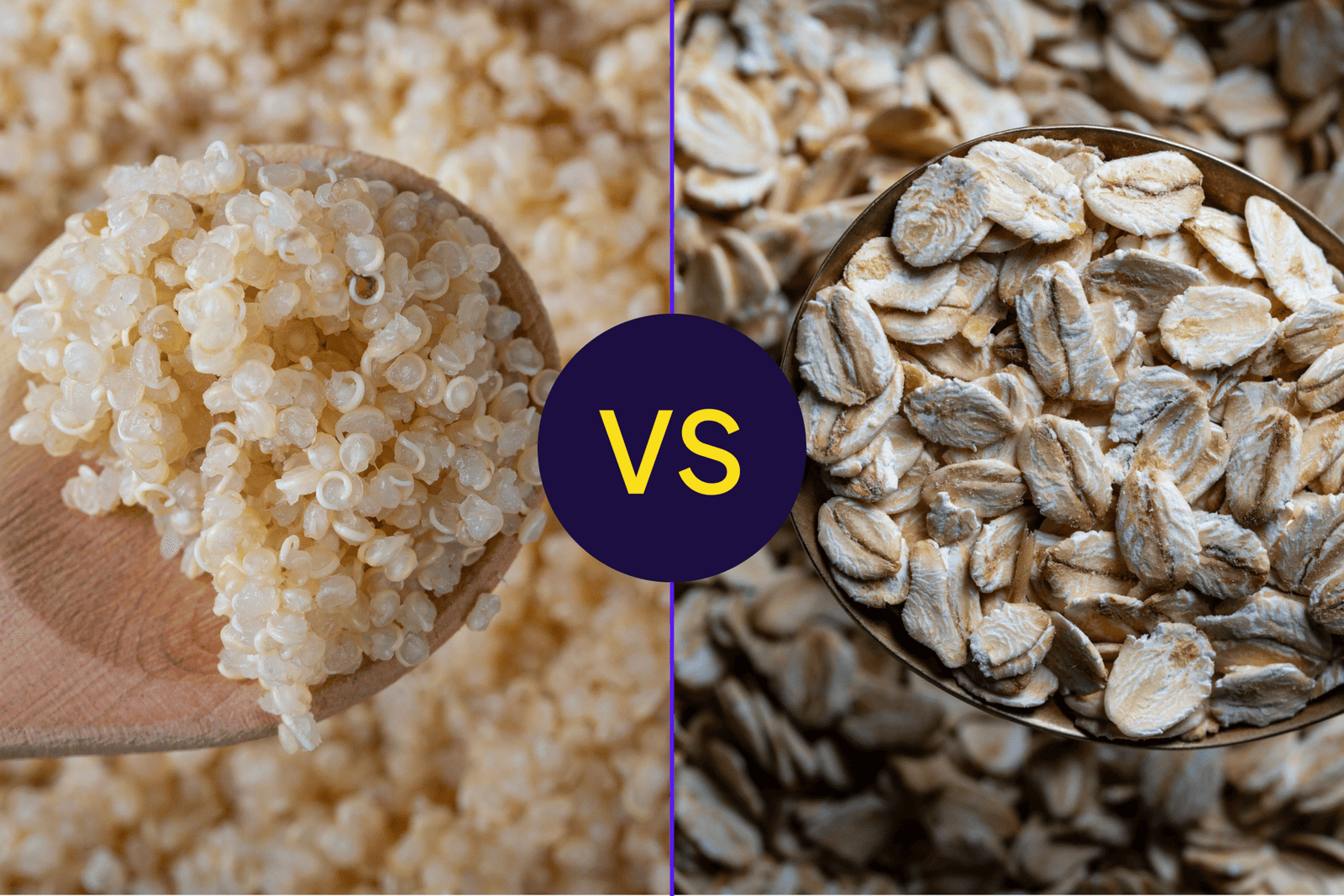
Oats and quinoa are both popular complex carbohydrate sources that are commonly recommended by nutrition experts. While both are healthy, there are some nutritional differences between the two, including in their levels of plant-based protein and fiber. Here’s how oats and quinoa compare, and which one contains more protein and iron.
When it comes to plant-based protein, quinoa is the better choice. Quinoa contains 5.64 grams of protein per 40-gram (½ cup) serving, while the same serving of rolled oats provides 5 grams, giving quinoa a slight edge.
However, quinoa shouldn’t be the main source of protein in your diet. Although it is higher in protein than other grains, like rice, many other plant-based foods, like lentils and tofu, provide much more protein per serving.
Quinoa is often touted as a “complete protein,” meaning it contains all nine essential amino acids in adequate proportions. However, some research suggests it may be more accurate to consider it “nearly complete.” Certain essential amino acids, such as lysine, methionine, and valine, may be present in lower amounts than what’s required to fully meet the criteria for a complete protein.
For this reason, if you’re following a plant-based diet, it’s best to include a variety of plant-based protein sources, including beans, lentils, tofu, and pea protein, in your diet to meet your daily needs.
Iron is an essential mineral needed for oxygen transport, energy production, and cellular function. Unfortunately, iron deficiency is common, especially among people following plant-based diets.
A ½ cup of dry quinoa covers 10% of your daily iron needs, which is slightly more than the 9% found in the same serving of oats. While quinoa is a better source of iron, you shouldn’t rely on quinoa as a primary source of iron, especially if you’re following a plant-based diet.
Plant-based foods contain non-heme or plant-based iron, which is not as absorbable as heme iron found in animal foods, like red meat and fish. Your body absorbs around 25% of heme iron, compared to just 17% of nonheme iron.
Research also shows that eating a source of heme iron alongside plant-based foods can boost your body’s ability to absorb iron from fruits, vegetables, and grains. If you’re not strictly plant-based, pairing quinoa with animal-based sources of iron, such as fish, can help enhance your body’s absorption of the iron found in quinoa.
Both oats and quinoa can be included in a well-rounded diet. Choosing between them depends on your specific preferences and nutritional priorities.
While quinoa is higher in protein, oats are a better source of fiber, including soluble fiber like beta-glucan. A ½ cup (40 gram ) serving of rolled oats packs 4 grams of fiber, while the same serving of quinoa contains just 2.8 grams.
In addition to their nutritional differences, oats and quinoa have different tastes and textures. Oats have a milder flavor and a soft, creamy texture when cooked, while quinoa has a slightly nutty flavor and a light, fluffy texture. Oats are ideal for breakfast and added to baked goods and smoothies, while quinoa works well in grain bowls, salads, soups, and savory side dishes.
For the most benefits, enjoy a variety of grains, including quinoa and oats, in your diet.
Here’s how a 40-gram serving of rolled oats and quinoa compares:
Rolled Oats
Quinoa
Calories
150
147
Protein
5 grams (g)
5.64 g
Carbs
27 g
25.68 g
Fiber
4 g
2.8 g
Fat
2.5 g
2.4 g
Iron
1.6 milligrams (mg), or 9% of the Daily Value (DV)
1.8 mg or 10% of the DV
Magnesium
50.4 mg or 12% of the DV
78.8 mg or 18.5% of the DV
Zinc
1.1 mg or 10% of the DV
1.24 mg or 10% of the DV
Rolled oats are higher in fiber, while quinoa is higher in protein, as well as minerals like iron, magnesium, and zinc.
While they do have some differences, both oats and quinoa are nutritious carb sources that can fit into well-rounded diets.
Health.com uses only high-quality sources, including peer-reviewed studies, to support the facts within our articles. Read our editorial process to learn more about how we fact-check and keep our content accurate, reliable, and trustworthy.
Craine EB, Murphy KM. Seed Composition and Amino Acid Profiles for Quinoa Grown in Washington State. Front Nutr. 2020 Aug 12;7:126. doi: 10.3389/fnut.2020.00126. Erratum in: Front Nutr. 2020 Nov 09;7:605674. doi: 10.3389/fnut.2020.605674. PMID: 32903386; PMCID: PMC7434868.
Malhotra A, Lakade A. Analytical Review on Nutritional Deficiencies in Vegan Diets: Risks, Prevention, and Optimal Strategies. J Am Nutr Assoc. 2025 Aug;44(6):545-555. doi: 10.1080/27697061.2025.2461218. Epub 2025 Feb 12. PMID: 39936826.
National Library of Medicine. StatPearls. Dietary Iron.
Valido E, Stoyanov J, Bertolo A, Hertig-Godeschalk A, Zeh RM, Flueck JL, Minder B, Stojic S, Metzger B, Bussler W, Muka T, Kern H, Glisic M. Systematic Review of the Effects of Oat Intake on Gastrointestinal Health. J Nutr. 2021 Oct 1;151(10):3075-3090. doi: 10.1093/jn/nxab245. PMID: 34486656.
Akbar A, Shreenath AP. High fiber diet. In: StatPearls. StatPearls Publishing; 2024.
U.S. Department of Agriculture: FoodData Central. Old fashioned oats.
U.S. Department of Agriculture: FoodData central. Quinoa, uncooked.
