

Key Takeaways
- Cultural appropriation is when elements of a minority culture are used by a dominant group in a harmful way.
- You can tell if something is cultural appropriation by asking if it disrespects the original culture.
- To avoid cultural appropriation, give credit to and learn from the culture you are borrowing from.
Cultural appropriation refers to the use of objects or elements of a non-dominant culture in a way that reinforces stereotypes or contributes to oppression and doesn’t respect their original meaning or give credit to their source. It also includes the unauthorized use of parts of their culture (their dress, dance, etc.) without permission.
In this way, cultural appropriation is a layered and nuanced phenomenon that many people may have trouble understanding and may not realize when they are doing it themselves.
It can be natural to merge and blend cultures as people from different backgrounds come together and interact. In fact, many wonderful inventions and creations have been born from the merging of such cultures (such as country music).
However, the line is drawn when a dominant cultural group makes use of elements of a non-dominant group in a way that the non-dominant group views as exploitative.
Elements of Cultural Appropriation
Taking a step backward, how do we define cultural appropriation? It helps to consider what is meant by each of the terms in the phrase, as well as some related terms that are important to understand.
Culture
Culture refers to anything associated with a group of people based on their ethnicity, religion, geography, or social environment. This might include beliefs, traditions, language, objects, ideas, behaviors, customs, values, or institutions. It’s not uncommon for culture to be thought of as belonging to particular ethnic groups.
Appropriation
Appropriation refers to taking something that doesn’t belong to you or your culture. In the case of cultural appropriation, it is an exchange that happens when a dominant group takes or “borrows” something from a minority group that has historically been exploited or oppressed.
In this sense, appropriation involves a lack of understanding of or appreciation for the historical context that influences what is being taken. Taking a sacred object from a historically marginalized culture and producing it as part of a Halloween costume is one example.
Cultural Denigration
Cultural denigration is when someone adopts an element of a culture with the sole purpose of humiliating or putting down people of that culture. The most obvious example of this is blackface, which originated as a way to denigrate and dehumanize Black people by perpetuating negative stereotypes.
Cultural Appreciation & Respect
Cultural appreciation, on the other hand, is the respectful borrowing of elements from another culture with an interest in sharing ideas and diversifying oneself. Examples would include learning martial arts from an instructor with an understanding of the practice from a cultural perspective or eating Indian food at an authentic Indian restaurant.
When done correctly, cultural appreciation can result in deeper understanding and respect across cultures as well as creative hybrids that blend cultures together.
Appreciation
Celebrates cultures in a respectful way
Asks permission, provides credit, and offers compensation
Elevates the voices and experiences of members of a cultural group
Focuses on learning the stories and meanings behind cultural elements
Types of Cultural Appropropriation
There are four main types of cultural appropriation:
- Exchange: This form is defined as a reciprocal exchange between two cultures that are approximately equal in terms of power and dominance.
- Dominance: This type involves a dominant culture taking elements of a subordinate culture that has had a dominant culture forced upon it.
- Exploitation: This type is defined as taking cultural elements of a subordinate culture without compensation, permission, or reciprocity.
- Transculturation: This form involves taking and combining elements of multiple cultures, making it difficult to identify and credit the original source.
Context of Cultural Appropriation
Learning about the context of cultural appropriation is important for understanding why it is a problem. While some might not think twice about adopting a style from another culture, for example, the group with which the style originated may have historical experiences that make the person’s actions insensitive to the group’s past and current experience.
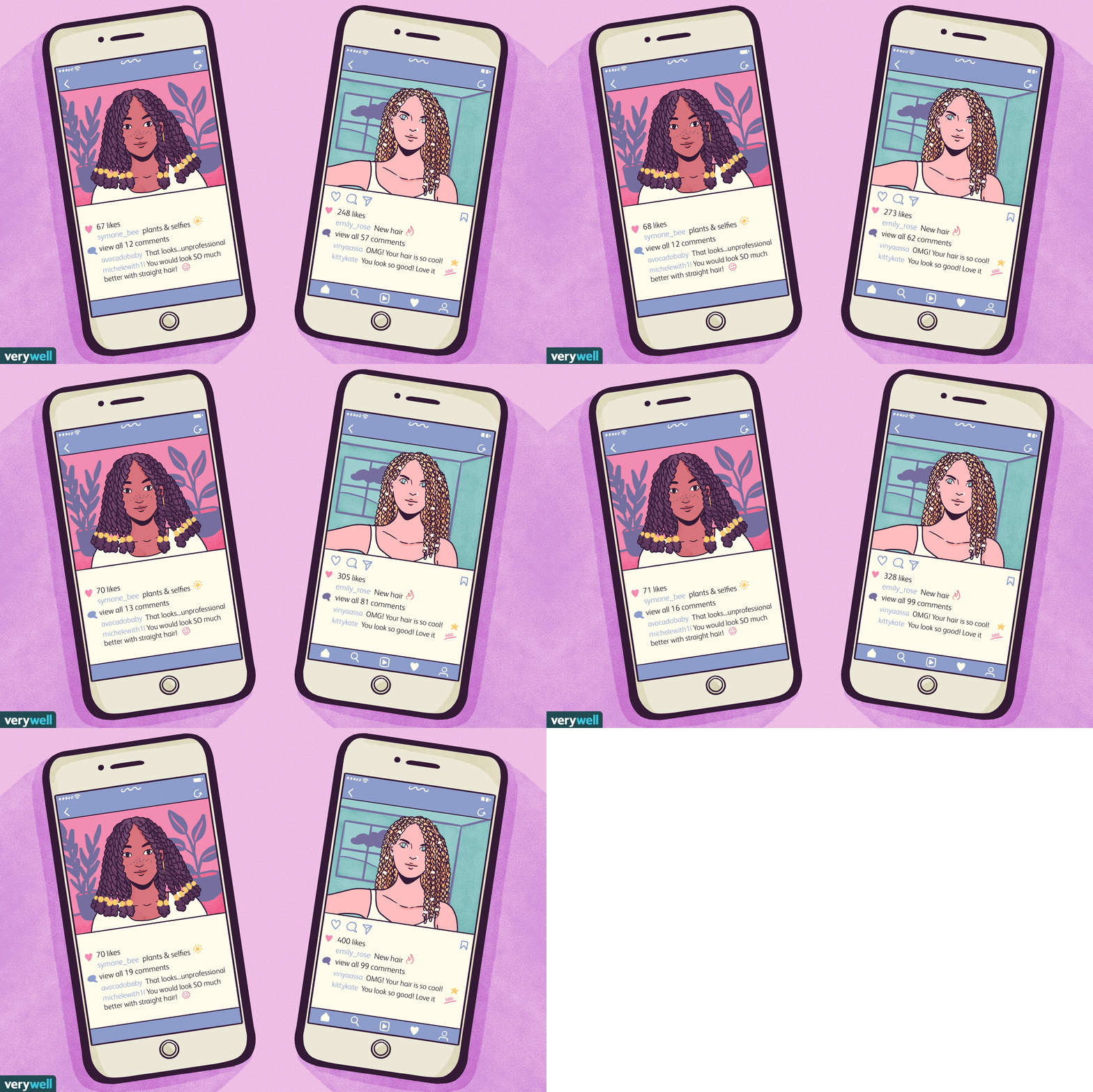
For example, consider a White American wearing their hair in cornrows. While Black Americans have historically experienced discrimination because of protective hairstyles like cornrows, White Americans, as part of the dominant group in the U.S., can often “get away” with appropriating that same hairstyle and making it “trendy,” all the while not understanding or acknowledging the experiences that contributed to its significance in Black culture in the first place.
Examples of Cultural Appropriation
When considering examples of cultural appropriation, it’s helpful to look at the types of items that can be a target. They include:
- Artifacts
- Clothing and fashion
- Dance
- Decorations
- Food
- Hairstyle
- Intellectual property
- Language
- Makeup
- Medicine
- Music
- Religious symbols
- Tattoos
- Wellness practices
In the United States, the groups that are most commonly targeted in terms of cultural appropriation include Black Americans, Asian Americans, Hispanic and Latinx Americans, and Native Americans.
The following are some real-world examples of cultural appropriation to consider.
Rock ‘N’ Roll
In the 1950s, White musicians “invented” rock and roll; however, the musical style was appropriated from Black musicians who never received credit. In fact, music executives at the time chose to promote White performers over Black performers, reinforcing the idea that cultural appropriation involves a negative impact on a non-dominant group.
Sweat Lodge
In 2011, motivational entrepreneur James Arthur Ray was convicted of three counts of negligent homicide after the death of three participants in his pseudo sweat lodge. This is an extreme example of the cultural appropriation and misrepresentation of Native American traditions.
Voguing
Do you remember the “voguing” craze made popular by Madonna back in the 1990s? Voguing as a dance actually had its roots in the gay clubs of New York City and was pioneered by Black members of the LGBTQ+ community. Madonna defends her right to artistic expression, but the question remains—how many people still mistakenly think she invented voguing?
Team Mascots
There is a history of major sports teams in the United States and Canada being involved in the cultural appropriation of Indigenous cultures through their names and mascots. Past and present examples include the Chicago Blackhawks, Cleveland Indians, Washington Redskins, and Edmonton Eskimos. (The Redskins and Eskimos have since undergone name changes.)
“Redskin” is a derogatory term for Indigenous people, and the term “eskimo” has been rejected by the Inuit community.
How to Know If Something Is Cultural Appropriation
If you are unsure how to decide if something is cultural appropriation, here are some questions to ask yourself:
- What is your goal with what you are doing?
- Are you following a trend or exploring the history of a culture?
- Are you deliberately trying to insult someone’s culture or are you being respectful?
- Are you purchasing something (e.g., artwork) that is a reproduction of a culture or an original?
- How would people from the culture you are borrowing from feel about what you are doing?
- Are there any stereotypes involved in what you are doing?
- Are you using a sacred item (e.g., headdress) in a flippant or fun way?
- Are you borrowing something from an ancient culture and pretending that it is new?
- Are you crediting the source or inspiration of what you are doing?
- If a person of the original culture were to do what you are doing, would they be viewed as “cool” or could they possibly face discrimination?
- Are you wearing a costume (e.g., Geisha girl, tribal wear) that represents a culture?
- Are you ignoring the cultural significance of something in favor of following a trend?
Explore these questions and always aim to show sensitivity when adopting elements from another culture. If you do realize that something you have done is wrong, accept it as a mistake and then work to change it and apologize for it.
If you aren’t sure if something is considered cultural appropriation, you need to look no further than the reaction of the group from whom the cultural element was taken.
How to Avoid Cultural Appropriation
You can avoid cultural appropriation by taking a few steps, such as these:
- Ask yourself the list of questions above to begin to explore the underlying motivation for what you are doing.
- Give credit or recognize the origin of items that you borrow or promote from other cultures rather than claiming them as your original ideas.
- Take the time to learn about and truly appreciate a culture before you borrow or adopt elements of it. Learn from those who are members of the culture, visit venues they run (such as restaurants) and attend authentic events (such as going to a real luau).
- Support small businesses run by members of the culture rather than buying mass-produced items from big box stores that are made to represent a culture.
