

Key Takeaways
- Relationship paranoia may stem from past experiences where your trust was violated or even from things that happened in your childhood that made you feel insecure.
- Share your feelings with your partner and listen to their perspective to help build trust.
- Seek therapy to explore causes, identify triggers, and improve communication skills.
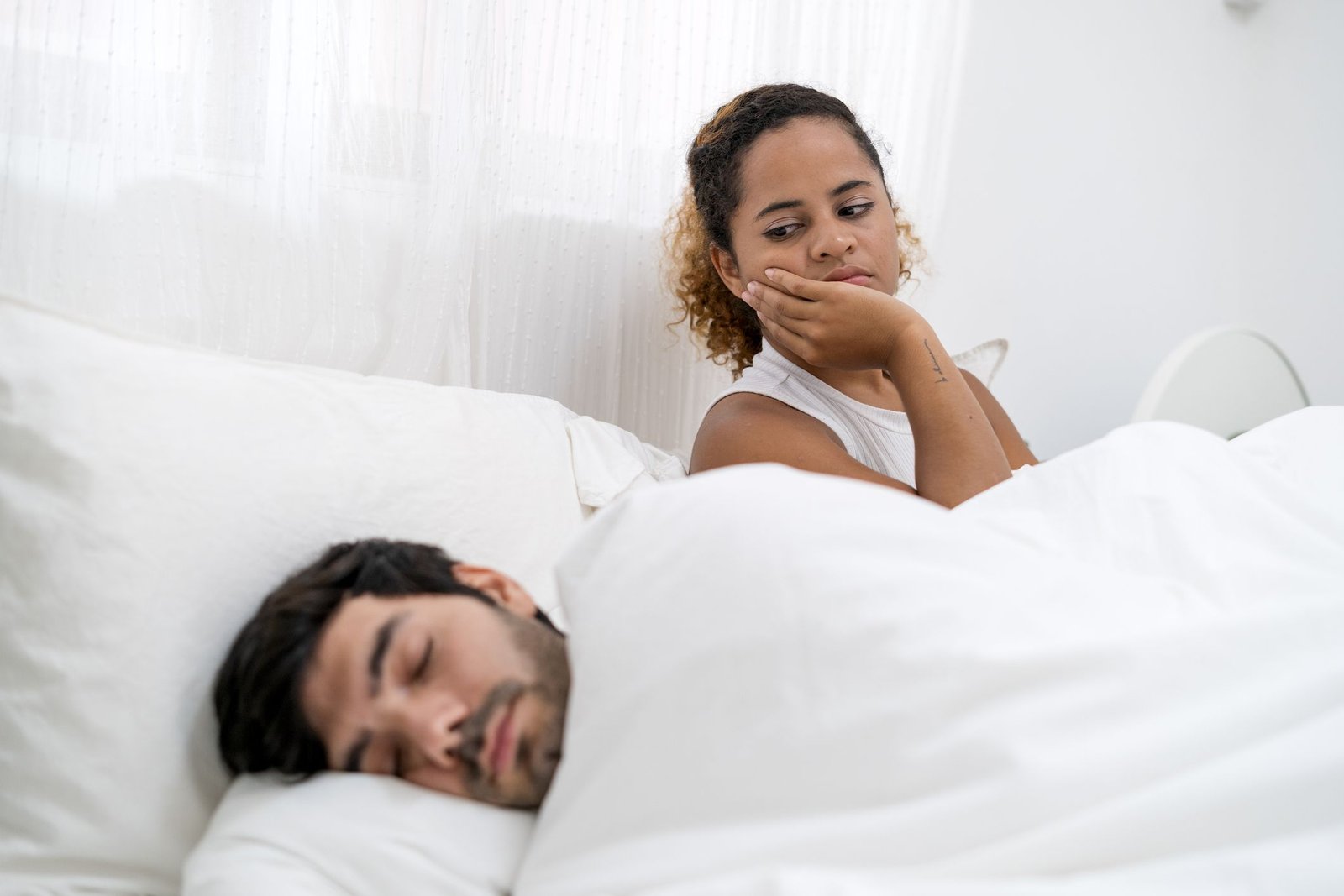
Do you check your partner’s phone when they’re sleeping? Are you worried that their relationship with a coworker is more than it seems? Do you call them to check up on them when they’re out? Do you think they’re lying to you about money? Do you find yourself picking a fight every time your partner meets up with a friend? These are some signs of relationship paranoia.
In this article, we’ll talk about what causes paranoia in relationships and how you can overcome it.
What Is Relationship Paranoia?
“[Relationship] paranoia is characterized by a groundless and insistent belief that your partner is acting against you. This belief leads to mistrust, which interferes with your relationship as well as your ability to function independently,” says Sabrina Romanoff, PsyD, a clinical psychologist and professor at Yeshiva University.
Paranoia was originally a term used to describe psychosis, a feature of mental health conditions like schizophrenia. The definition has evolved to apply to anxiety or worry that people have in everyday situations—which is how the term is generally used in “relationship paranoia.”
Is Paranoia a Mental Health Symptom?
When it’s part of a mental health condition, a person with paranoia may have hallucinations and delusions. These symptoms can be serious and can be harmful to the person experiencing them and the others around them. If you think you are having symptoms of psychosis, you need to seek medical care right away.
Examples of Relationship Paranoia
Here are just a few general examples of what paranoia in a relationship can look like:
- Going through your partner’s phone, email, or social media accounts.
- Calling or texting your partner constantly when you’re apart.
- Snooping on them at work (for example, asking a coworker who your partner eats lunch with, how often they leave their desk, etc).
- Worrying excessively about your relationship, particularly if you have specific suspicions about your partner (e.g., that they’re cheating on you).
- Feeling (and acting) jealous when your partner spends time with others (e.g., friends, family).
- Going through their mail, opening packages, or any other personal correspondence.
- Looking up information on your partner or other people in their life (e.g., family, coworkers, friends, past partners).
- Asking your partner questions (often repeatedly) for information and reassurance (e.g., where they were, who they were with, what they did).
- Assuming the worst and finding yourself jumping to conclusions (e.g., if your partner says they have to work late, you assume they were really going out with a coworker behind your back).
- Struggling to enjoy your time together because your mind is dwelling on “what ifs” (e.g., what if they are cheating on you, what if they want to break up, what if they don’t love you anymore, etc.).
- Accusing your partner of lying and not feeling convinced when they respond.
Causes of Relationship Paranoia
There are many different underlying causes of paranoia, says Dr. Romanoff. Below, we’ll unpack some of the causes of relationship paranoia.
Past Trauma
The relationships a person has had throughout their life can affect whether they feel paranoid in their current relationship. Paranoia may stem from traumatic life events, including child abuse or previous relationships in adulthood.
For example, a person may have been repeatedly cheated on in the past and paranoid thinking may have developed as a defense mechanism to protect them against future threats.
High Stress Levels
Another common cause for paranoia is being under a lot of stress. You’re more vulnerable to having paranoid thoughts when you’re body and mind are already taxed by stress.
Trust Violations
Sometimes, people in relationships start to feel paranoid for a specific reason. For example, it can be a normal reaction to have paranoid thoughts after your partner cheats or lies about money because they have violated your trust.
Combined Factors
Often, it’s not just one thing but a combination of your life history and environmental factors that contribute to relationship paranoia. For example, if you’ve experienced trauma and trust violations in previous relationships and then you heap on a ton of stress in your current one, you might be more hypervigilant about possible threats.
Is Paranoia in a Relationship Ever Helpful?
You may wonder if you should ever “trust your instincts” about paranoid thoughts. If your partner has given you reasons to be distrustful before or you have evidence that something is amiss, it’s worth taking a closer look at your paranoid feelings to see if they could be trying to alert you to a problem.
Effects of Relationship Paranoia
Paranoia can take a toll on your health, your partner, and your relationship. Below, Dr. Romanoff outlines how paranoia can affect your relationship.
Effect on Your Health
Paranoia can have a significant effect on your health because it causes you to be on high alert. Your body’s physiological response to stress is to release stress hormones that prepare your body to either fight or flight.
When you’re living with relationship paranoia, it can strain your body and mind, leading to anxiety, exhaustion, fatigue, and poor sleep.
Effect on Your Partner
If your paranoid beliefs cause you to respond out of proportion to a situation, it can be overwhelming and frustrating for your partner. You may notice that they seem resigned to the fact that you need constant reassurance, even if it never seems to help.
At first, they may try to explain that the threat you’re picking up on is one you created. Over time, they may become exasperated when you repeatedly accuse them of lying and violating your trust. If there doesn’t seem to be anything they can do or say to reassure you that they’re being truthful, they may give up.
If they step trying to offer reassurance, however, it may make you feel even more paranoid. Pretty soon, yo may both feel like you’re trapped in a vicious cycle.
Effect on Your Relationship
Paranoia stems from a core problem in your relationship: you don’t trust your partner. Over time, that lack of trust will break down your relationship. The only way to fix it is to find a way to feel secure in the relationship and be able to believe your partner when they demonstrate they are trustworthy.
How to Feel Less Paranoid in a Relationship
These are some steps you can take to reduce relationship paranoia:
- Understand the cause: It can be helpful to understand the cause of your paranoia, particularly if it’s being stoked by something you went through in the past. Spend some time looking within yourself to try and find out what’s causing your feelings. You may want to talk to your friends or loved ones about it or see a counselor.
- Identify situations that trigger you: You may notice that certain feelings or situations trigger paranoia. It can be helpful to track your triggers. You can note down your feelings in a journal to help improve your self-awareness.
- Pause before you react: Paranoia can cause you to react without thinking. Pause, take a deep breath, process the situation, understand that there’s no threat, and then react mindfully. These steps will help make sure you don’t say or do things you’ll later regret.
- Share your feelings with your partner: Have an honest discussion with your partner and explain what you’re feeling and why. Instead of blaming them, focus on expressing your feelings. For example, instead of saying “You upset me by…” say “I feel upset when…”
- Be open to their perspective: When you talk, really listen to your partner’s feedback. Hear them out and try to understand the situation from their perspective.
- Express your needs: Start telling your partner what you need from them to feel more secure. Then, ask them what they need from you to feel secure in your relationship.
- Work to build trust: “You and your partner can practice building trust in the relationship by following through with commitments. Both of you can also improve trust by being more emotionally present when you’re together and by being accountable to each other,” says Dr. Romanoff.
- Let your guard down: Make a conscious effort to relax and be less guarded. You may find yourself pleasantly surprised by the emotional connection you can build when you allow yourself to be vulnerable with your partner.
- Avoid giving in to paranoia: Find other ways to keep busy that will take your mind off whatever it is that’s got you feeling paranoid. Watch a movie, go out with your friends, focus on work, engage in a hobby, cook a new recipe, or do something else you enjoy.
- Seek therapy: A therapist can work with you to explore the causes of your paranoia, identify your triggers, develop coping techniques, and improve your communication skills.
Verywell Mind uses only high-quality sources, including peer-reviewed studies, to support the facts within our articles. Read our editorial process to learn more about how we fact-check and keep our content accurate, reliable, and trustworthy.
Raihani NJ, Bell V. An evolutionary perspective on paranoia. Nat Hum Behav. 2019;3(2):114-121. doi:10.1038/s41562-018-0495-0
Raihani NJ, Bell V. An evolutionary perspective on paranoia. Nat Hum Behav. 2019;3(2):114-121. doi:10.1038/s41562-018-0495-0
PTSD UK. Hypervigilance and PTSD.
Mason A, Jung P, Seo Young Kim, et al. Associations between post-traumatic stress disorders and psychotic symptom severity in adult survivors of developmental trauma: a multisite cross-sectional study in the UK and South Korea. The Lancet Psychiatry. 2023;10(10):760-767. doi:10.1016/s2215-0366(23)00228-6
Carmichael DA. Relationship between childhood trauma and paranoia: a study of specificity and underlying theoretical mechanisms. Edacuk. Published online 2019. doi:https://hdl.handle.net/1842/36609
Mind UK. Paranoia.
Mayo D, Corey S, Kelly LH, et al. The role of trauma and stressful life events among individuals at clinical high risk for psychosis: a review. Front Psychiatry. 2017;0. doi:10.3389/fpsyt.2017.00055
Sheffield JM, Brinen AP, Freeman D. Paranoia and grandiosity in the general population: differential associations with putative causal factors. Front Psychiatry. 2021;12:668152. doi:10.3389/fpsyt.2021.668152
Thanks for your feedback!
What is your feedback?
Helpful
Report an Error
Other
