

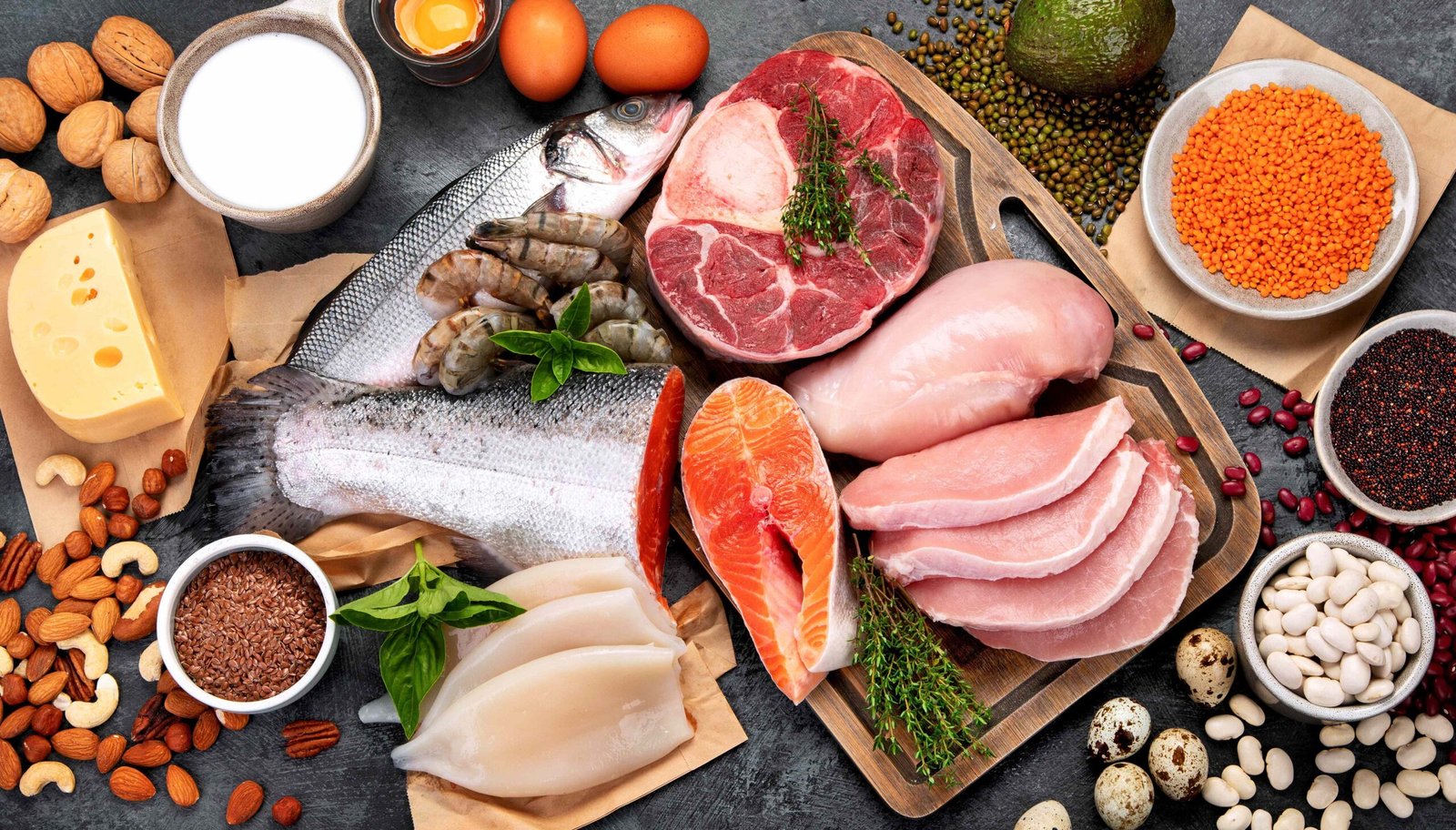
The Trump administration released new dietary guidelines on Wednesday urging Americans to prioritize red meat, full-fat dairy, and produce while cutting back on certain products, like those that are highly processed.
Updated every five years, the guidelines rolled out by the U.S. Department of Agriculture and U.S. Department of Health and Human Services are easily accessible for consumers, but are also intended as a tool for health professionals to develop programs, educational materials, and other resources that align with government standards.
While the new advice contains some “familiar themes,” it also significantly departs from past guidance in important ways, Bonnie Taub-Dix, RDN, registered dietitian and author of Read It Before You Eat It – Taking You from Label to Table, told Health.
Perhaps one of the most noticeable changes—aside from the guidelines being much shorter than previous versions—is the addition of an inverted food pyramid visual that places protein, dairy, healthy fats, fruits, and vegetables mixed together at the top, and whole grains at the bottom. This misses the mark, Taub-Dix said. “Americans are severely lacking in fiber, yet whole grains appear at the tip of the pyramid, rather than sharing the foundation with fruits and vegetables. That visual hierarchy matters.”
Here’s a look at five other major changes—and what has stayed the same.
U.S. Department of Agriculture
While previous advice recommended consuming protein as part of a balanced diet, the new guidelines advise prioritizing protein at every meal. Specifically, the guidelines call for consuming 1.2 to 1.6 grams of protein per kilogram of body weight a day. That’s significantly more than the recommended dietary allowance from the World Health Organization of 0.8 grams of protein per kilogram of body weight per day.
However, protein needs are highly individualized and depend on factors like weight, activity level, and age, said Gena Seraita, MS, RD, CDN, program director of the New York University dietetic internship. “While for some, this may be the right protein range, for others it could be too high or too low,” she told Health.
For most people, consuming enough protein isn’t an issue, Taub-Dix said. In fact, some research indicates that most Americans overconsume, rather than underconsume, protein.
Taub-Dix takes particular issue with the new directive encouraging people to get protein from animal sources, including red meat, as part of a “variety of protein foods.” Previous guidance urged Americans to prioritize lean protein. “The heavier emphasis on animal protein raises concerns about increased saturated fat intake, especially if people aren’t given clear guidance on lean versus fatty sources,” Taub-Dix said.
The new advice encourages Americans to get most of their dietary fat from whole food sources like meats, poultry, eggs, omega-3-rich seafood, nuts, seeds, olives, avocados—and, notably, full-fat dairy (rather than low- or nonfat as previous guidelines suggested).
This updated guidance is evidence-based, said Lauren Manaker, MS, RD, owner of Nutrition Now Counseling. “A growing body of research suggests that whole-fat dairy is not associated with increased risk for obesity, diabetes, or cardiovascular disease,” she told Health. “In fact, this type of dairy may even help reduce the risk for these chronic diseases.”
That said, the updated messaging around fat could have drawbacks, Taub-Dix said. Full-fat dairy contains saturated fat, which has been promoted by HHS Secretary Robert F. Kennedy Jr. despite being shown to raise cholesterol and the risk of cardiovascular disease. “Loosening the guardrails around saturated fat risks overconsumption, particularly in a country where heart disease kills more women than all cancers combined, and for men, heart disease is still the number one cause of death,” Taub-Dix said.
Both she and Toby Amidor, MS, RD, a registered dietitian and Wall Street Journal best-selling cookbook author, also raised concerns about the prominent placement of butter—a major source of saturated fat—on the new food pyramid. “Although these guidelines recommend no more than 10% of total calories per day coming from saturated fat, the pictorial depiction doesn’t reflect this,” Amidor said. “This can lead to overconsumption.”
Previous guidelines encouraged prioritizing whole foods and not overconsuming processed meats, but the new ones encourage a “dramatic reduction” in highly processed foods (also called ultraprocessed foods or UPFs). “The message is simple: eat real food,” the document says.
This advice could have meaningful health benefits for Americans, according to Manaker. “Over and over again, data suggests that excessive consumption of ultraprocessed foods is linked to many negative health outcomes, including obesity and cardiovascular health challenges,” she said.
On the other hand, a lack of specificity could leave people puzzled about how to proceed. “There is no clear definition on the term ‘real,’ which brings about more confusion and leaves it open to consumer interpretation,” Amidor added. “In addition, UPFs are not a clearly defined term [in the guidelines].”
Still, the American Heart Association and American Medical Association praised the guidelines for their renewed focus on limiting highly processed foods.
The newly released document goes further than the old guidelines, saying that no—rather than a “small”—amount of added sugar is recommended or considered part of a healthy or nutritious diet. Furthermore, the hard limit for each meal should be 10 grams of added sugars, according to the new advice.
But avoiding added sugars entirely is highly unrealistic for most people, Seraita said. A 10-gram-per-meal limit could be confusing, since the number and size of meals people eat can vary. “This could result in widely different amounts consumed for someone eating three meals a day versus six small meals,” she said.
The new guidelines simply advise people to “consume less alcohol,” with certain groups, like pregnant women, urged to avoid it altogether. Previous guidance was more specific, recommending that men have no more than two drinks per day and women no more than one.
While the health effects of moderate drinking are less clear than those of heavy alcohol use, research has linked even casual drinking with certain cancers and other health problems.
Despite these changes, many core principles have remained the same. “One message that has stayed consistent is that fruits and vegetables should be a part of our diets,” Manaker said. “It is well established that produce consumption is linked to positive health outcomes.”
The push for more whole grains also remains unchanged. Much like the 2020-2025 advice, which encouraged making half your grains whole, the new guidelines recommend two to four servings per day of fiber-rich whole grains. And though the guidance on added sugars is now more stringent, it builds upon the previous version’s statement that nutrient-dense foods “have no or little added sugars.”
Taub-Dix noted that these are all trustworthy foundations. This “continuity is reassuring and reflects decades of evidence linking these habits to better long-term health outcomes,” she said.
