

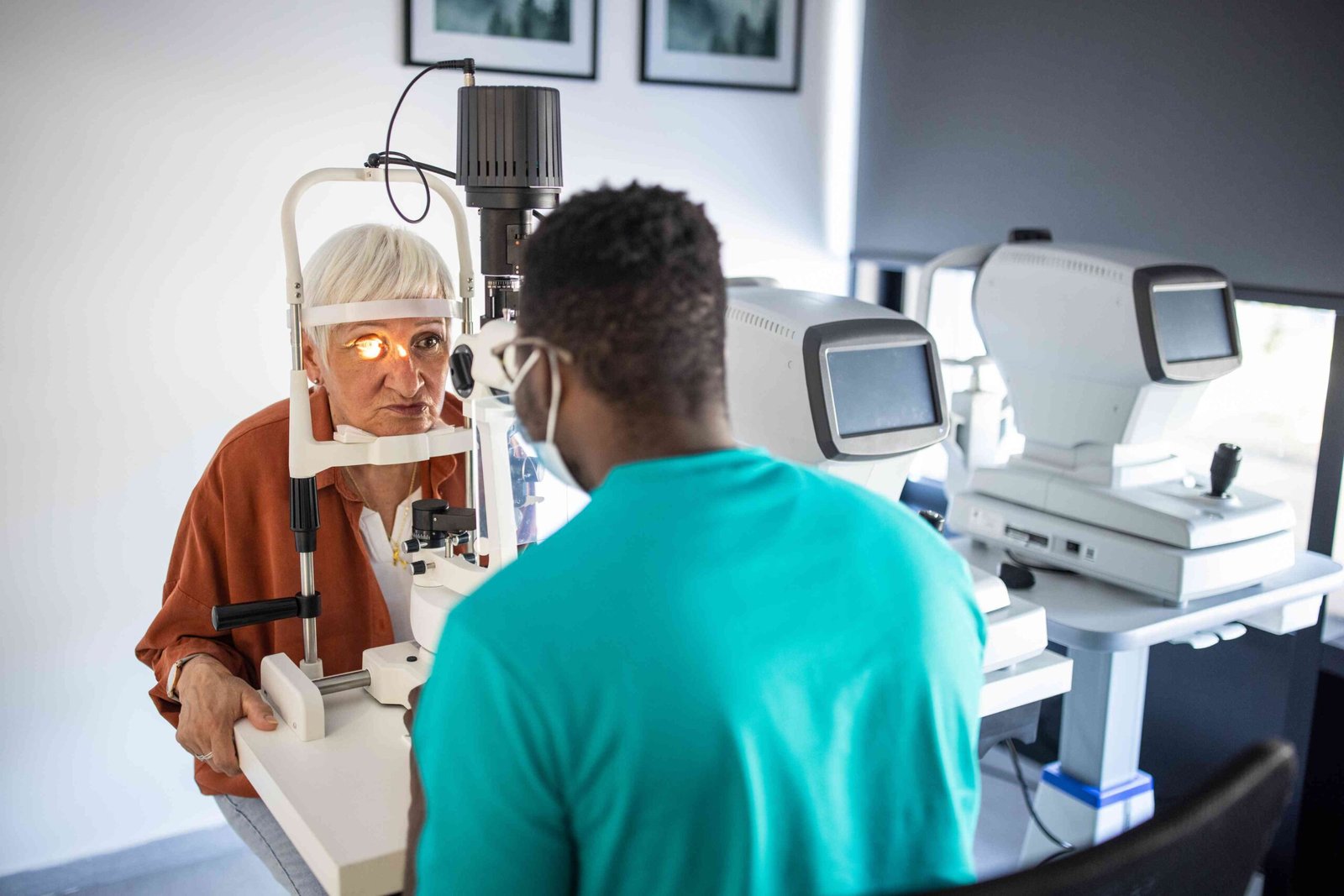
Wet age-related macular degeneration (AMD), or advanced neovascular AMD, affects central vision and can lead to rapid vision loss. It often requires treatment to preserve eyesight.
Design by Health
Age-related macular degeneration is a leading cause of permanent vision loss in older adults globally. About one in eight people over 60 has AMD, and the risk grows with age.
There are two main types of AMD: dry and wet.
Dry AMD
Dry AMD is the most common type, accounting for 85-90% of all AMD cases. In dry AMD, the macula thins over time, and clumps of drusen—yellow deposits of lipids and protein—form under the retina.
You may have hazy vision, blurry spots in your central vision, or difficulty seeing in low light.
Wet AMD
Wet AMD is an advanced form that develops when abnormal blood vessels in the macula leak fluid or blood, damaging and scarring it. About 10-15% of those with dry AMD will develop wet AMD, which can progress quickly and lead to severe vision loss or blindness.
Wet AMD impacts your central vision, the part needed to see details and colors clearly. This vision is essential for tasks like driving, reading, and recognizing faces. Symptoms can develop quickly, often causing noticeable changes that worsen in days or weeks.
Symptoms of wet AMD can affect one or both eyes and may include:
- Blurry or blind spots: A blurry or dark spot in your central vision that may appear red, black, or gray and can grow in size over time.
- Distorted vision: Straight lines may appear wavy or crooked, and objects may appear to change shape, size, or color, or disappear when looking at them.
- Decreased color vision: Colors may seem faded or less vibrant.
- Difficulty adjusting to low light: It may take longer for your eyes to adjust to dim lighting, and many people with wet AMD have trouble seeing in low-light conditions.
- Increased sensitivity to light: Some people with wet AMD experience discomfort in bright light.
Wet AMD develops when abnormal blood vessels grow under the macula, the center part of the retina. These vessels leak blood and other fluids, which can accumulate and damage the macula, causing blind spots and blurry, distorted vision.
Wet AMD develops in people with dry AMD. Experts suggest these abnormal, leaky vessels grow in response to damage and functional problems caused by dry AMD.
Who’s at Risk?
A combination of genetic and environmental factors likely plays a role in developing age-related macular degeneration, but the exact cause is unknown. Wet AMD occurs in about 10-15% of people with dry AMD. Certain factors can increase your risk of developing the condition.
Risk factors for wet AMD include:
- Age: Wet AMD is most common in adults ages 60 and older, and the risk increases with age.
- Sex: People assigned female at birth are more likely to develop wet AMD.
- Family history: Genetic factors play a role in the development of AMD, and having a family history of the condition increases your risk.
- Ethnicity: Wet AMD is most common in people with Caucasian ancestry, especially those with light iris/eye color (e.g., blue).
- Diet: Consuming a diet high in processed and fried foods, red meat, and high-fat dairy can increase your risk of wet AMD.
- Smoking: Smoking damages the blood vessels, which may promote the growth of abnormal blood vessels in the eye.
- Alcohol: Drinking alcohol causes inflammation, which can damage body tissues, including the retina.
- Underlying conditions: Obesity and high blood pressure (hypertension) can increase your risk of wet AMD.
Doctors who specialize in eye and vision care, such as ophthalmologists and optometrists, can diagnose wet AMD.
During your appointment, an eye doctor will ask about your symptoms, including when and how quickly they progressed. They will also ask about your family history, whether you have any medical conditions or are taking medications, and your risk factors (e.g., whether you smoke).
An eye doctor will perform a comprehensive eye exam, including a visual acuity (eye chart) test and an Amsler grid exam. The Amsler grid, which resembles graph paper, has straight lines and one black dot at its center.
An eye doctor will ask you to look directly at the dot. If the grid lines appear wavy or missing, it’s a sign of AMD.
The eye exam also involves dilating your pupils with eye drops so they can closely examine your retina for signs of wet AMD and determine whether there’s optic nerve damage.
If an eye doctor suspects you have wet AMD, they may perform additional diagnostic tests, including:
- Fluorescein angiography: This test involves injecting a fluorescent dye into your arm that travels to the blood vessels in your eye. An eye doctor then takes pictures of your eye at timed intervals for 15 minutes to see if there are any leaks from abnormal blood vessels in the retina.
- Indocyanine green angiography (ICG): Similar to fluorescein angiography, this test involves using a green dye to help visualize blood flow in your choroid, a thin layer of blood vessels between your retina and sclera (white of the eye)
- Optical coherence tomography (OCT): This imaging test uses light waves to create detailed cross-sectional images of your retina, allowing an eye doctor to see its layers and detect abnormalities.
Treatment for wet AMD aims to control the growth of abnormal blood vessels under the macula and prevent further damage to the retina to maintain your vision and prevent further vision loss.
Anti-VEGF Injections
Anti-vascular endothelial growth factor (VEGF) injections are the first-line treatment for wet AMD. These injections contain medications that block the activity of vascular endothelial growth factor (VEGF), a protein that promotes the growth of new blood vessels.
Before administering the injection, an eye doctor will first numb your eye to ease discomfort and clean it to prevent infection. Anti-VEGF injections are administered directly into your eye using a thin needle.
Most people need regular anti-VEGF injections, typically once a month at the start of treatment, though you may need fewer injections over time.
Ninety percent of people who receive anti-VEGF treatment retain their vision, and about one-third experience improvements.
An eye doctor may inject one of the following anti-VEGF medications:
- Avastin (bevacizumab)
- Eylea (aflibercept)
- Lucentis (ranibizumab)
- Beovu (brolucizumab)
- Vabysmo (faricimab)
Photodynamic Therapy (PDT)
Photodynamic therapy (PDT) is a less common treatment for wet AMD that some eye doctors use in combination with anti-VEGF injections. PDT involves injecting a light-sensitive medication (verteporfin) into your arm, which travels through your body’s blood vessels, including your eyes.
Verteporfin activates when exposed to a specific laser light, which an eye doctor shines on a small area on the back of your eye. This closes off the leaking blood vessels to prevent further damage to the retina.
Nutritional Supplements
Certain nutritional supplements may slow the progression of wet AMD and help protect your vision.
Studies exploring the benefits of vitamins and minerals for preventing AMD have shown promising results regarding the daily use of nutritional supplements, including:
- Vitamin C (500 mg)
- Vitamin E (400 IU)
- Lutein (10 mg)
- Zeaxanthin (2 mg)
- Zinc (80 mg)
- Copper (2 mg)
There’s no guaranteed way to prevent wet AMD. Some risk factors, such as age and family history, are not within your control.
However, certain lifestyle habits may help lower your risk of wet AMD, including:
- Avoid smoking: Smoking is a major risk factor for developing AMD; not smoking is one of the best ways to protect your eye health and vision.
- Eat for eye health: An eye-healthy diet rich in fruits, vegetables, and omega-3 fatty acids can benefit your eye health. Colorful fruits and vegetables, such as kale, berries, broccoli, papaya, Swiss chard, and spinach, are especially beneficial for eye health.
- Get regular eye exams: Comprehensive eye exams with an eye doctor can help detect changes to your eye health and vision early and ensure prompt treatment to protect your vision.
Several conditions share risk factors with wet AMD, and some may contribute to its development.
Common wet AMD-related conditions include:
- Dry AMD: The most common form of age-related macular degeneration, dry AMD progresses to wet AMD in about 10 to 15% of people with the condition.
- Cataracts: Cataracts are cloudy areas in the eye’s lens that cause blurry vision. Cataracts and wet AMD are both age-related eye conditions common in older adults.
- Glaucoma: Glaucoma is a group of eye diseases that damage the optic nerve and cause progressive vision loss. Glaucoma and wet AMD share some risk factors (e.g., age, family history), and some people can develop both.
