

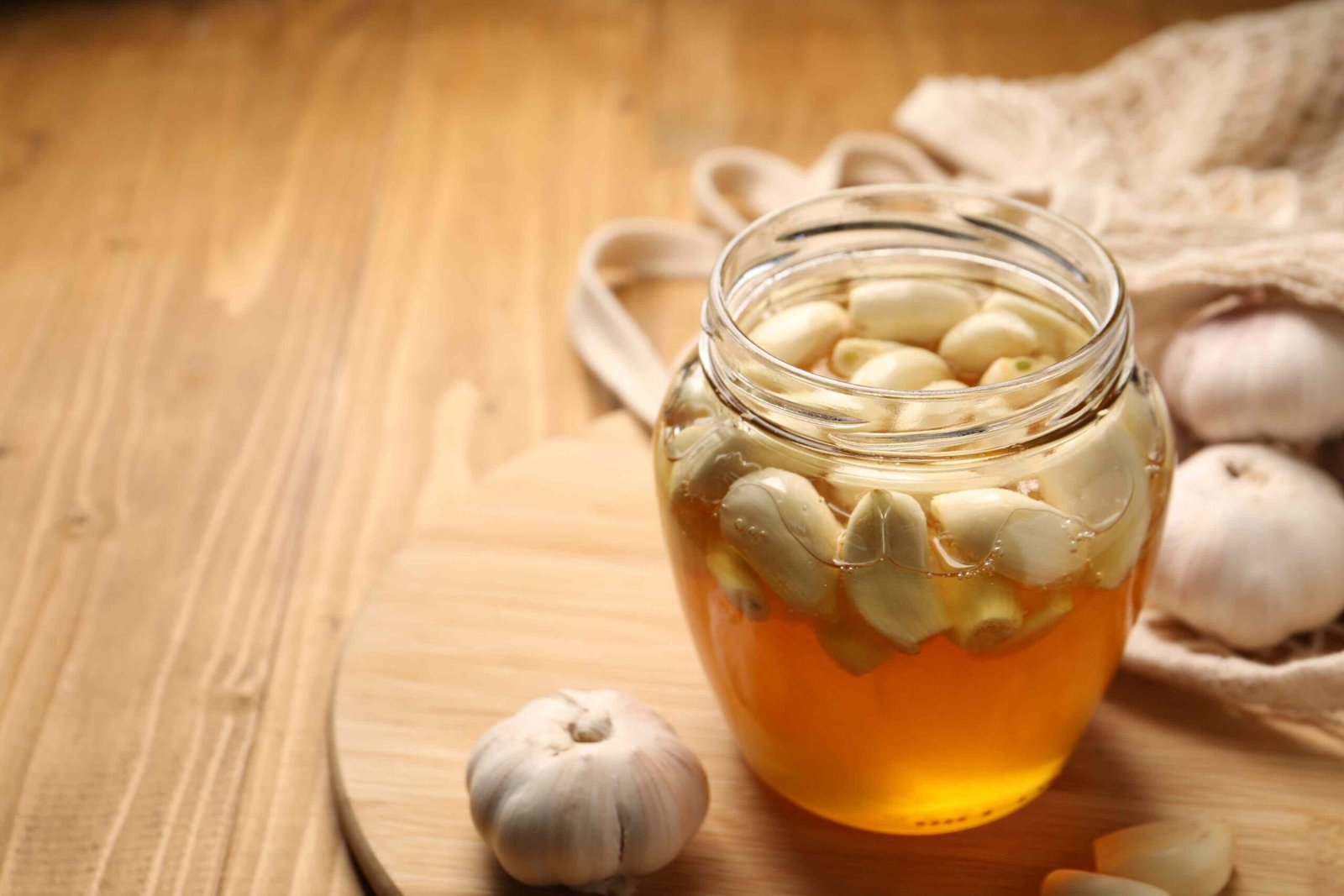
To make garlic and honey, combine garlic cloves with raw honey, then let the mixture ferment for about a month. Though the evidence is limited, this combination may boost immune function, sooth sore throat, and promote cardiovascular health, among other benefits.
Honey can help with upper respiratory infections, such as the common cold or influenza (flu). In a review of 14 studies, researchers found that honey was more effective than standard treatments for easing sore throat and cough.
This effect has been traced to several properties of honey:
- Anti-inflammatory properties: At the root of the discomfort due to a sore throat, inflammation is the body’s natural immune response. Honey’s anti-inflammatory properties ease this response.
- Antimicrobial properties: Studies have shown that honey acts against bacteria and viruses that can cause upper respiratory symptoms.
- Thins mucus: Upper respiratory symptoms can be caused by thickened mucus due to infection. Honey has a demulcent effect, meaning it thins this.
Owing to the garlic in the mixture, garlic and honey may also boost the immune system. Garlic, like honey, has an anti-inflammatory effect, and some studies have found that it alters immune function.
They believe compounds in this plant modulate the secretion of cytokines (substances active in the inflammatory response) and types of white blood cells that spur and control immune responses. However, more research is needed to confirm any effect.
Garlic may benefit heart health by managing blood pressure and cholesterol, two major risk factors for heart disease:
- Blood pressure: Several studies found that garlic was effective in controlling blood pressure in adults with mild hypertension (high blood pressure). This may be due to garlic’s antioxidants and ability to boost nitric oxide levels, which dilate blood vessels.
- High cholesterol: Multiple studies found garlic effective in reducing total and low-density lipoprotein (LDL) cholesterol (“bad” cholesterol) levels. They think compounds in garlic block the activity of enzymes in the liver associated with absorbing cholesterol.
Garlic and honey have properties that help manage blood sugar levels in cases of diabetes. Honey is rich in fructose and glucose—natural sugars—as well as minerals and flavonoids. These moderate the glycemic response (the speed at which sugars are absorbed into the blood). Studies suggest it’s a safer sweetener than sugar if you have type 2 diabetes.
Garlic also may help. Studies in animals and humans found extracts effective in moderating blood sugar levels. It also boosted the activity of antidiabetic drugs like Fortamet (metformin).
For most, fermented garlic and honey is safe, but there may be risks, especially with certain populations:
- Children under 1 year old: Raw honey can contain the spores of botulinum bacteria. Because infant immune systems aren’t as effective at fighting off these bacteria, honey can result in life-threatening infant botulism.
- Contamination risks: Be careful when making fermented garlic and honey at home. Avoid contamination by practicing proper hygiene and using high-quality ingredients (pasteurized versus raw honey). Don’t use it if it develops an acrid smell.
- Medication interactions: Garlic may affect how certain medications, including blood-thinners and aspirin, work. Ask your healthcare provider if honey and garlic are safe to take.
- Allergies: You can be allergic to honey and garlic. This can lead to a severe reaction; get help immediately if you develop symptoms such as breathing difficulties, swelling, vomiting, dizziness, or an irregular heartbeat.
