

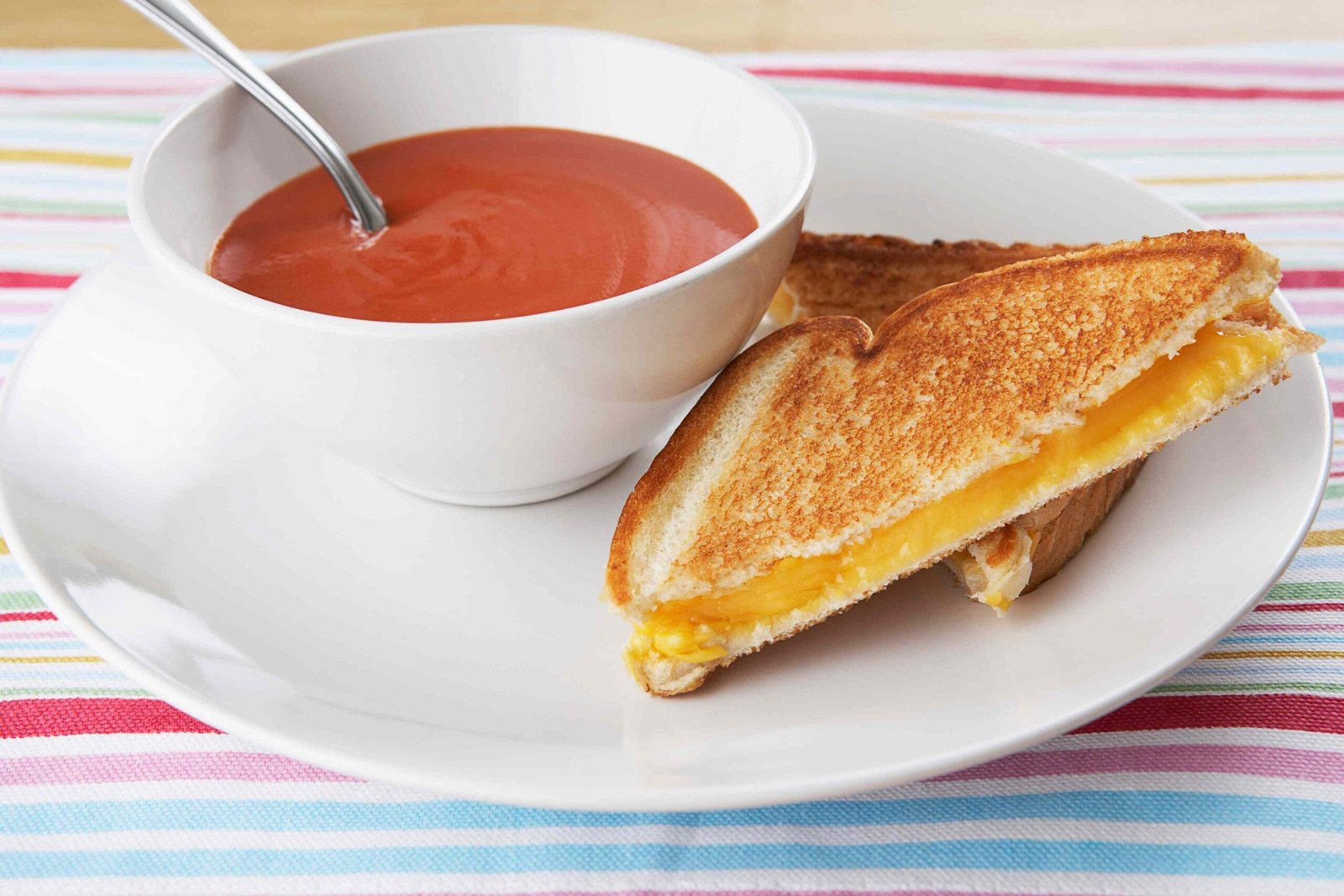
Grilled cheese and tomato soup are a classic comfort-food pairing. They can be healthy and fit into a balanced diet when you choose nutrient-dense ingredients.
Tomatoes supply several nutrients that support overall health:
- Lycopene: This antioxidant protects cells from damage and promotes heart health.
- Vitamin C: This vitamin boosts immune function by supporting the production of immune cells. It also plays a role in making collagen, which supports skin, joints, and blood vessels.
- Potassium: This electrolyte mineral maintains a steady heartbeat, supports the body’s fluid balance, and counteracts the effects of sodium, helping control blood pressure.
Onions are rich in antioxidants and small amounts of fiber that support digestive and heart health. Many tomato soup recipes also incorporate other vitamin-rich vegetables and herbs, such as garlic, carrots, or celery.
The type of bread you select changes the nutrition of your grilled cheese.
White bread, the most common choice, is made from refined grains. Your body digests these grains quickly, which can cause your blood sugar levels to rise and fall rapidly. White bread also lacks the fiber found in whole grains, so you may feel hungry again shortly after your meal.
Choosing whole-grain bread adds several nutrients to your meal, including:
- Fiber: Fiber supports digestion and helps prevent constipation. It also slows sugar absorption, helping regulate blood sugar levels.
- B vitamins: These vitamins help your body convert food into usable energy and support brain and nervous system function.
- Minerals: Whole grains contain magnesium and iron, minerals that help support muscle function and help red blood cells deliver oxygen throughout your body.
Cheddar cheese and similar cheeses provide several essential nutrients for muscle, bone, and blood health:
- Protein: Supports muscle repair and growth, and helps the body make hormones and enzymes
- Calcium: Maintains strong bones and teeth and supports nerve signaling and blood clotting
- Vitamin B12: Supports healthy nervous system function and helps the body metabolize protein and make red blood cells
- Phosphorus: Strengthens bones and teeth and helps cells produce energy
Many cheeses also contain high levels of saturated fat. Butter helps crisp the bread and adds flavor, but it is high in saturated fat. Cream (as an ingredient in creamy tomato soup), will also add saturated fat.
Diets high in saturated fat can raise LDL (“bad”) cholesterol, increasing the risk of heart disease. The American Heart Association recommends limiting saturated fat intake to less than 6% of total daily calories; excess intake can raise cholesterol levels and increase the risk of heart disease.
Using a small amount of butter or replacing it with a plant-based oil, such as olive oil, can help limit your saturated fat intake.
Excess sodium in cheese can raise blood pressure. Canned tomato soup can also be high in sodium.
Grilled cheese made with white bread, cheddar cheese, and butter contains about:
- 427 calories
- 16 grams of protein
- 426 milligrams of calcium
- 31 grams of carbohydrates
- 2.1 milligrams of iron
- 27 grams of total fat (13 grams of saturated fat)
Tomato soup usually contains tomatoes, water or broth, onions, and seasonings such as salt, pepper, and basil. Some recipes also include milk or cream for a smoother texture.
One cup of homemade tomato soup provides about:
- 65 calories
- 2 grams (g) of fat (1 gram saturated)
- 2 g of protein
- 15 milligrams (mg) of vitamin C
- 19 international units (IU) of vitamin D
- 51 mg of calcium
- 1 mg of iron
- 330 mg of potassium
A few simple ingredient swaps can reduce the sodium and saturated fat in your grilled cheese and tomato soup, improving the nutritional value of your meal:
- Choose 100% whole-grain or sprouted-grain bread instead of white bread. Whole grains deliver fiber that slows digestion and supports steady energy levels. They also provide more vitamins and minerals than refined white bread.
- Choose sharp cheeses with a stronger flavor over mild varieties. This helps you use smaller portions, reducing saturated fat and sodium intake without compromising on taste.
- Replace butter with olive oil or avocado oil to grill your sandwich. Plant-based oils contain unsaturated fats that support heart health and help manage cholesterol levels. If you prefer butter, use a small amount or use a half-butter/half-plant-based oil base.
- Select low-sodium or no-salt-added soup or make a homemade low-sodium tomato soup to support healthy blood pressure.
- Replace cream with yogurt. If you prefer a creamy texture, consider stirring plain Greek yogurt in place of heavy cream to reduce saturated fat intake.
- Add vegetables such as spinach, sliced tomatoes, or peppers to your sandwich to increase fiber and vitamin intake. Blend carrots or red pepper into tomato soup to boost antioxidant variety and overall nutrient density. Or, opt for a side salad to balance your plate.
