

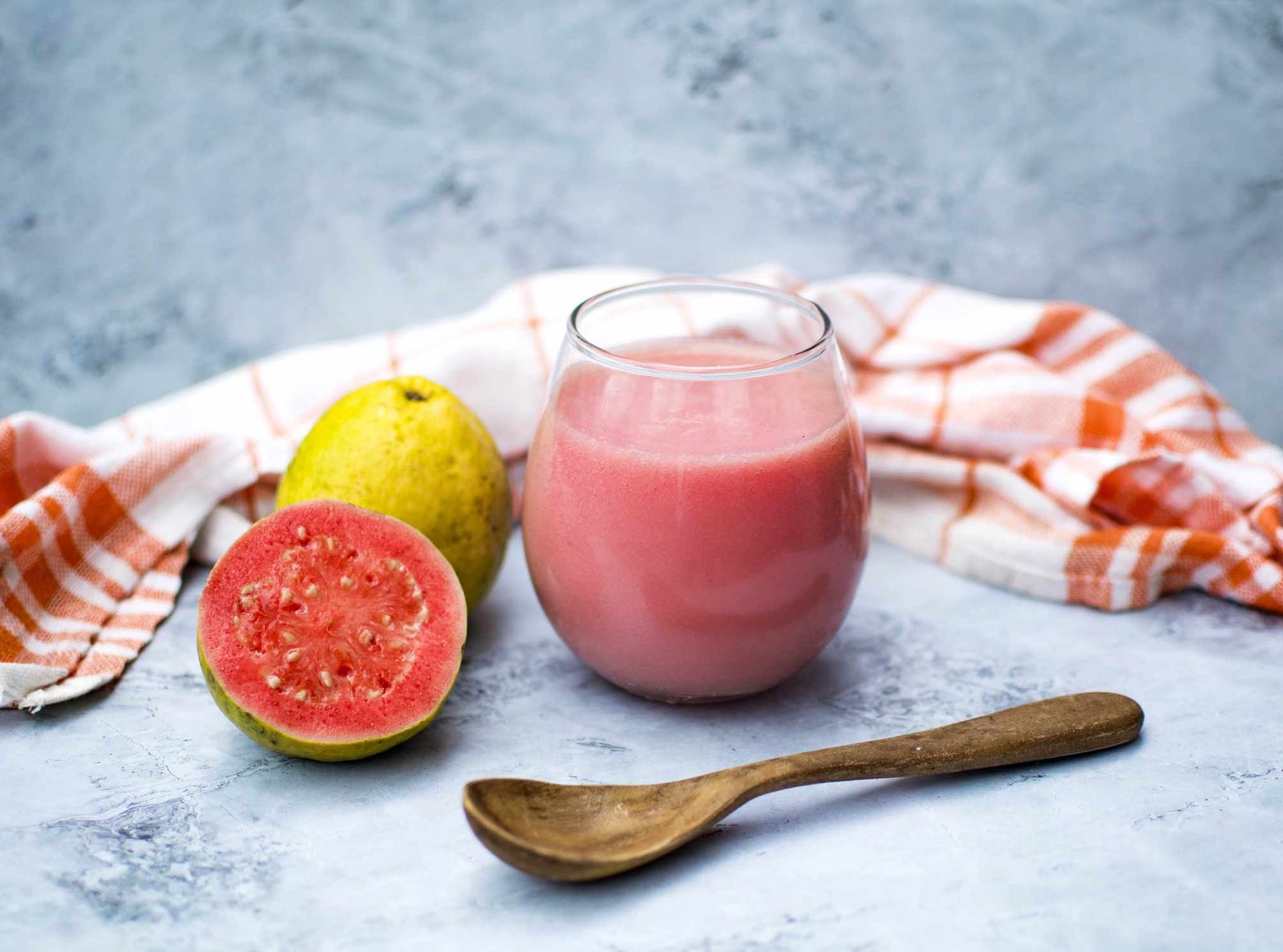
Guava is a highly nutritious tropical fruit. Fresh guava juice without added sweeteners can provide similar nutrition to the whole fruit. You can also purchase commercially made guava juice, but these drinks often have a higher sugar content and lower nutritional value than freshly juiced guava.
Guava has a naturally high water content, even after juicing. Staying hydrated is essential for important bodily functions like regulating body temperature, lubricating joints, keeping organs functioning, removing waste, and transporting nutrients.
Guava—and its juice—offers significantly more vitamin C than an orange. One guava contains around 125 milligrams of vitamin C, or 138% of the Daily Value (DV). This high level of vitamin C, plus other antioxidants like lycopene, also helps manage inflammation and prevent chronic conditions.
Guava is rich in vitamin A, with 343 micrograms or about 38% of the DV in one fruit. If you juice several guavas, you are getting a large dose of this important vitamin.
Eating a diet rich in vitamin A can help protect eye health, promote eye lubrication, and help lower your risk of macular degeneration.
Guavas are a good source of dietary fiber, with about 3 grams of fiber in one fruit. Keeping the pulp from the fruit in your juice can help retain this high fiber content. A diet rich in fiber can help promote healthy bowel movements and overall gut health.
Several studies have found that eating guava or guava leaf extract may help lower blood glucose levels. While no studies have been done specifically with guava juice, you may see some blood sugar benefits from drinking fresh guava juice.
When you juice guava, you will likely use about three fruits for one serving of juice. This means you will be getting as much as 687 milligrams of potassium, or nearly 15% of the DV. Potassium can help lower blood pressure and reduce the risk of heart attack and stroke. It also supports bone and kidney health.
Research has also found that guava pulp, likely found in juiced guava, may lower cholesterol and triglycerides.
Due to guava’s rich antioxidant content, particularly vitamin C, lycopene, and other phytochemicals, it has been studied for its ability to reduce cancer risk. Research has found evidence that guava may suppress the growth of human cancer cells without impacting normal cells. While this preliminary research is positive, more extensive research is needed to understand how guava impacts cancer cells and its role in cancer prevention.
