

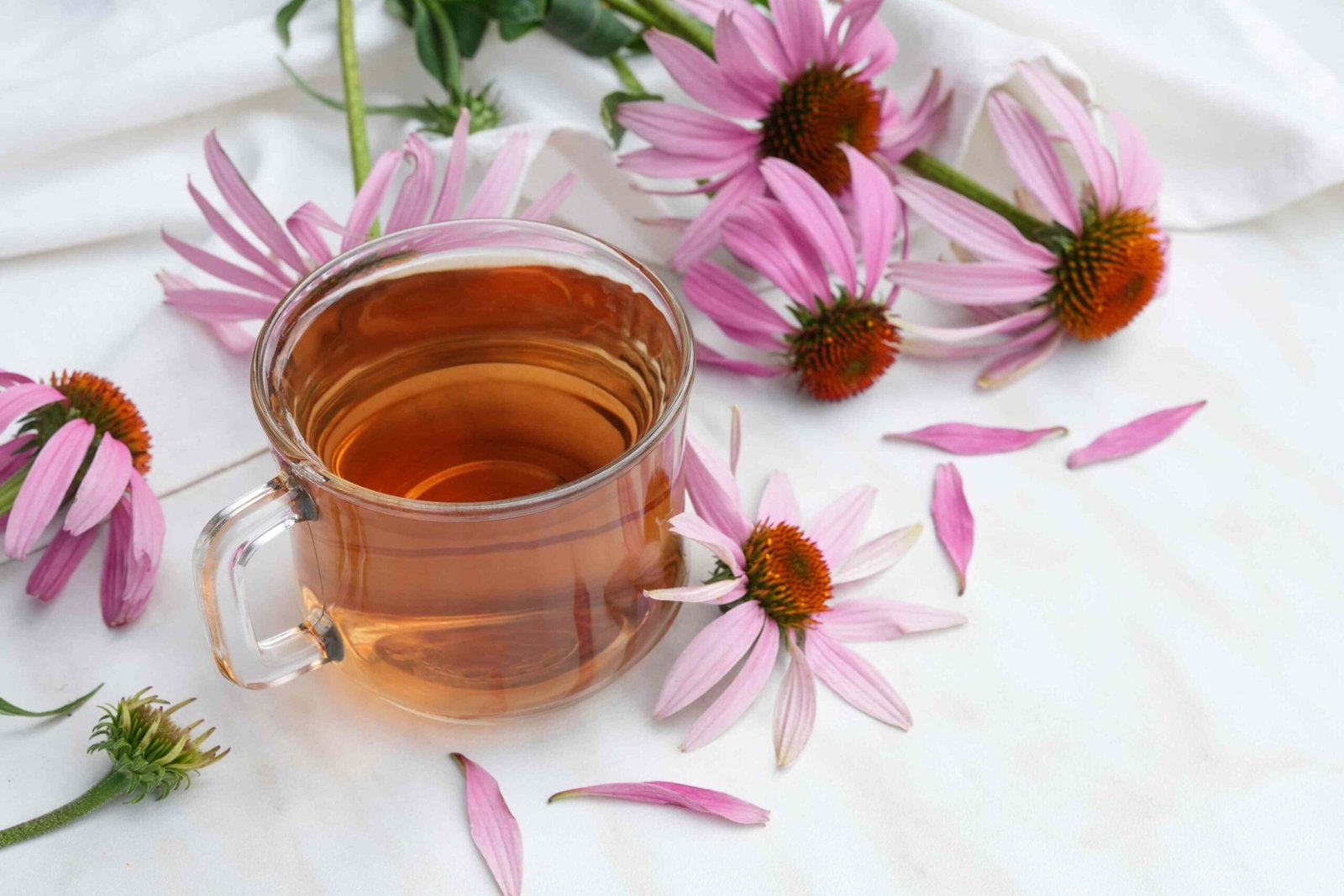
Echinacea, also known as purple coneflower, is a spiky-petaled flowering plant related to daisies and ragweed. It has a long history in herbal medicine and is rich in nutrients that may support your immune system, lower inflammation, and protect your cells. Many people drink echinacea tea to support their immune system or ease cold symptoms.
Echinacea contains antioxidants, substances that protect your cells from damage linked to early aging, inflammation, or illness. This damage, called oxidative stress, happens when your body has more free radicals (harmful chemicals) than antioxidants that protect it.
Some of the strongest antioxidants in echinacea include:
- Caftaric, chicoric, and chlorogenic acid
- Cynarin
- Echinacoside
Echinacea also contains flavonoids, which are the antioxidants that give the plant its color. They not only help lower oxidative stress but also ease swelling, fight viruses, and support blood vessel health.
The roots and flowers in echinacea usually have the highest levels of antioxidants, with the flowers carrying twice as many antioxidants as the leaves or stems.
Inflammation is your body’s way of responding to an injury or illness. It often causes redness, swelling, or pain and helps with healing in the short term. However, inflammation that doesn’t go away raises your risk for long-term health conditions.
Echinacea may help reduce inflammation by changing how your immune system reacts. Most of the available research comes from lab studies using extracts, not clinical trials on people drinking echinacea tea.
Echinacea may support your immune system because of its antioxidants, which support cell health, and may protect against bacteria and viruses.
Some studies show benefits, while others don’t, when it comes to echinacea’s ability to fight colds and viruses. Experts think these mixed results stem from the difference in the plant parts, amounts, or extraction methods researchers use in their studies.
One 2019 review of 29 studies found people who took echinacea were 22% less likely to catch a cold, but it didn’t reduce sick time or symptom severity. In another 2021 study, children who took 400 mg of echinacea extract daily for two months had fewer sick days and complications.
Echinacea may help soothe irritated skin, making it useful for acne, eczema, or dry skin. It may also help support skin repair and wounds heal faster, which can reduce irritation and early signs of aging.
Research suggests that certain types of echinacea extract may help skin cells close wounds 55% faster than untreated cells. Supplements containing echinacea may also help people with acne have fewer breakouts.
Maintaining a healthy glucose (blood sugar) level helps prevent type 2 diabetes. Research suggests that echinacea may improve how your body handles glucose and responds to insulin. Insulin is the hormone that moves sugar from your blood into your cells.
The antioxidants in echinacea may also help protect your pancreas, the organ that controls blood sugar. Early animal research shows echinacea may also help protect the kidneys when your blood sugar stays high, especially when combined with ginger. More research is needed to see if echinacea works the same way in humans.
Research in animals suggests that antioxidants in echinacea may help slow cancer cell growth and trigger damaged cells to self-destruct. However, more research is needed. Human studies have not confirmed whether echinacea has any benefit against cancer in people.
Research shows that some types of echinacea may help ease anxiety by interacting with the part of the brain that influences mood.
Some studies suggest that taking 40 milligrams of echinacea extract twice daily for a week may result in feeling less worried and stressed. However, it won’t reduce symptoms of anxiety, such as a racing heart.
These findings are based on either animal-led studies or smaller human clinical trials. Larger, longer-term human studies are necessary to confirm echinacea’s effects on anxiety.
Echinacea may protect your liver by reducing inflammation, fighting harmful substances, and supporting healthy cells. Lab studies show it may also help fight hepatitis B and alcohol-related liver damage. Since most studies are in animals, further human research is needed.
You can brew echinacea tea at home using commercial blends or dried flowers, leaves, or roots.
Echinacea tea has an earthy, slightly bitter, herbal flavor. For added flavor or benefits, you might add:
If you’re buying tea, most store-bought blends are made from the leaves, stems, and flowers. If you want more antioxidants in your tea, choose blends with flowers or roots and let them steep a little longer.
However, whether store-bought or homemade, consider options that only use flowers and leaves. The roots do have a lot of antioxidants, but using them in high amounts may stress your liver. It’s safest to use small amounts or skip the roots.
Echinacea tea is naturally low in calories and caffeine-free. It doesn’t provide significant amounts of protein, fat, or carbohydrates, which is the main source of energy in the body. Its main benefits come from its antioxidants, which may support your immune system and reduce inflammation.
Echinacea tea is typically safe if you use it for the short term. The most common side effect is an upset stomach. Some precautions to consider include:
- Limit or void it if you have allergies to chrysanthemums, daisies, marigolds, or ragweed, as they can increase your risk of an allergic reaction.
- Use caution with long-term use, especially over six months, because it may negatively affect the immune system or liver.
- Consult your doctor if you are pregnant or breastfeeding, have an autoimmune condition, or take medications that affect your liver or immune system before trying it.
