

Why It Works
- Browning the butter and shallots before mixing them into the pumpkin purée builds nutty, caramelized depth that makes the filling savory instead of one-note sweet.
- Layering each component thinly—pumpkin, chard, béchamel, pasta—makes the lasagna light and silky rather than heavy or stodgy, and allows the flavors to mingle without collapsing into mush.
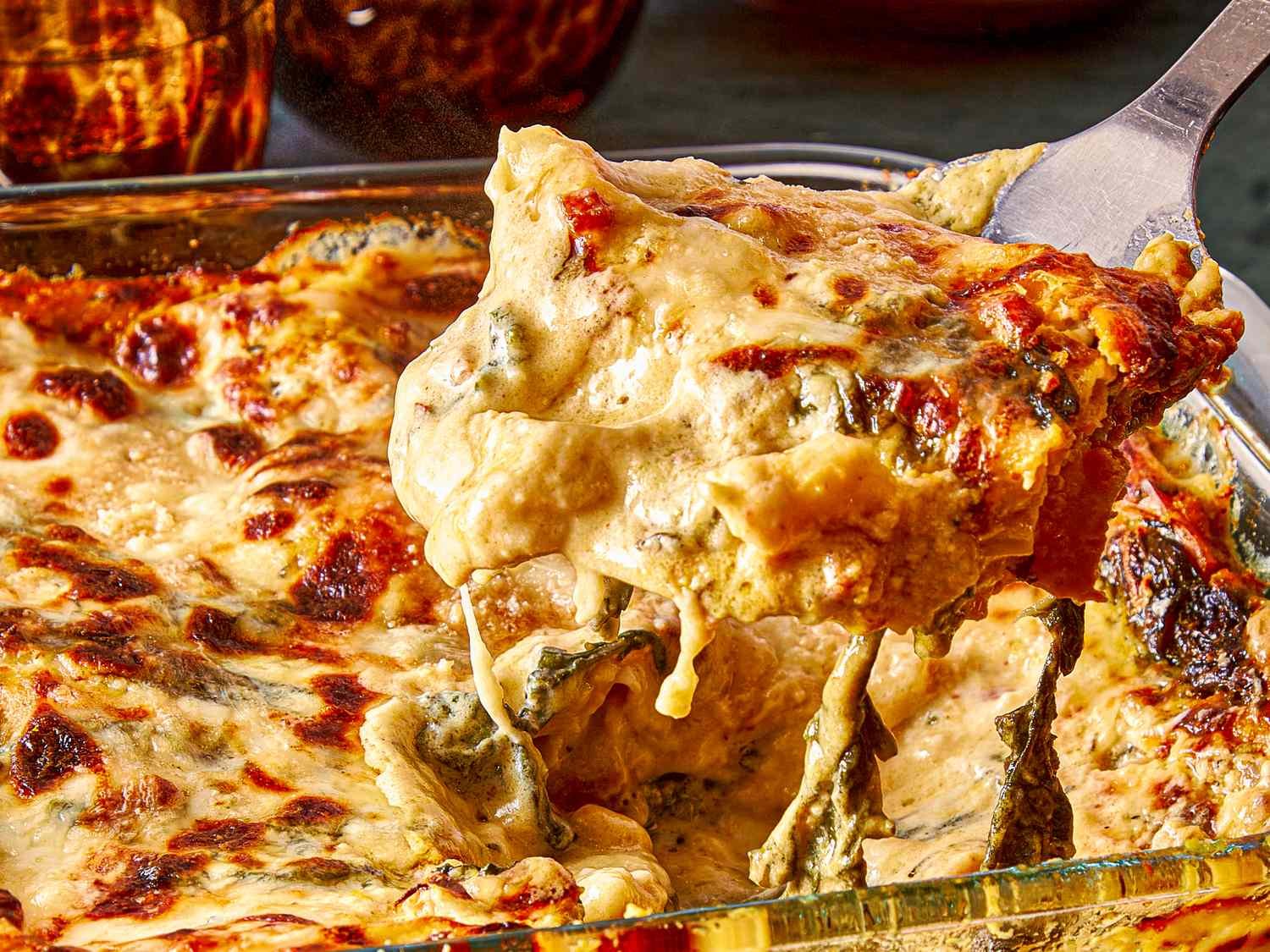
There are weeknight dinners, and then there’s this beautiful beast of a lasagna. Layered with browned butter, silky pumpkin, salty pancetta-laced Swiss chard, and bubbling fontina béchamel, it’s unapologetically autumnal—golden, rich, and perfumed with sage. It’s not quick, but every component earns its keep. When you pull this bronzed, bubbling pan from the oven, you’ll know you’ve made something special. It’s so impressive and rich with fall flavor, I even plan to serve it for Thanksgiving alongside the turkey this year, and I fully anticipate it will upstage the bird.
While not a “classic” lasagna, lasagne di zucca e besciamella fits comfortably in the Northern Italian canon of baked pasta (pasticci or pasticcio), which are lush, layered baked dishes of noodles, vegetables, and sauce that blur the line between pasta and casserole. In Emilia-Romagna, Lombardy, and Veneto, pumpkin (zucca) is a loved and celebrated seasonal vegetable. There’s tortelli di zucca, delicate pasta filled with sweet-savory squash and Parmigiano; gnocchi di zucca, tender dumplings that almost melt in butter and sage; and now, there are iterations of pumpkin lasagna popping up in the modern Italian kitchen.
My version is a love letter to Northern Italian cuisine and cooking that requires time and devotion. The pumpkin, sage, and browned butter form one layer of flavor; pancetta and chard bring another, deeply savory and just-bitter-enough layer to balance the sweetness of the squash. Everything is held together by a fontina-laced béchamel, that glorious white sauce that Italians sometimes insist they invented and the French claim as their own. (Frankly, I don’t care who started it. I’m just grateful someone did.)
The Pumpkin-Sage Filling
I’ll admit that pumpkin purée on its own can taste like the ghost of a vegetable that once knew sweetness. It needs help. Specifically, heat, salt, and fat. That’s where browned butter and shallots enhance this filling. The butter brings nutty richness, and the shallots and sage perfume the whole thing with that earthy, woodsy scent that instantly reads as “fall.”
The egg whisked in at the end does more than enrich the filling; it stabilizes the mixture so it bakes up custardy instead of collapsing.
Serious Eats / Lorena Masso
The Swiss Chard and Panchetta
The buttery pumpkin layer paired with the silky béchamel alone can be too much of a good thing—rich on rich, soft on soft. That’s where the pancetta and Swiss chard layer steps in to add balance and contrasting texture to the lasagna. The pancetta should render until golden and crisp at the edges but still retain a slight chew in the center—that balance of textures keeps it from disappearing into the mix and offers a satisfying counterpoint to the tender pasta and creamy fillings. As it cooks, the rendered fat forms the foundation for flavoring the garlic, thyme, and red pepper flakes that infuse the greens. The red pepper flakes are optional but recommended—I think the subtle sting of heat keeps this dish interesting.
Once the aromatics are fragrant, add the chard, cover the pan, and let it steam until wilted and tender. Then uncover and continue cooking until most of the liquid has evaporated. You want the greens supple and concentrated, not soggy. The chard’s mild, earthy bitterness and the pancetta’s salt and savory flavor cut cleanly through the pumpkin’s sweetness and the béchamel’s richness, so every bite is balanced, layered, and far from “baby food” territory.
The Béchamel (or Besciamella, Depending on Who You Ask)
Some people claim to hate white sauce, and I’ll never understand that. Béchamel is a culinary sleight of hand that transforms just a handful of humble ingredients (butter, flour, milk) into silk. The French call it one of their mother sauces. Italians also claim besciamella as their own, and fold it into almost every lasagna north of Rome. I’m not here to mediate that particular custody battle, but I will say this: In the right hands, béchamel is not bland. Here it’s the creamy bridge between the sweet pumpkin, the bitter greens, and the soft pasta sheets.
A classic béchamel is all about ratios. Too much flour, and you’re eating paste; too little, and you’re basically pouring milk. For lasagna, a thinner béchamel is ideal—about a tablespoon of flour per cup of milk—because it will thicken more as it bakes. My version includes shredded fontina, a rich Alpine cheese that’s buttery, slightly nutty, and gloriously melty. A pinch of nutmeg ties it all together, echoing the sweetness in the pumpkin.
If you’ve ever whisked a roux in a panic, worried about lumps, relax—béchamel is more forgiving than its reputation suggests. Melt the butter, stir in the flour, then whisk in the milk slowly; a bit of thorough whisking is all it takes to ensure a smooth sauce.
Serious Eats / Lorena Masso
Choosing and Treating the Pasta
As Daniel covers in his lasagna Bolognese recipe, you don’t have to be a martyr about noodles to make great lasagna. Yes, homemade fresh lasagne rolled from an egg-rich dough are the apex—silky, pliant, and undeniably special—but they are not a requirement for a really great lasagna. Supermarkets carry increasingly solid fresh (and even frozen) lasagna sheets that deliver delicious results with far less effort, and dried pasta, including dry no-boil noodles, can absolutely work here too.
Lasagna noodles aren’t meant to be al dente like spaghetti. They should relax past al dente in a baked dish so a fork glides through with minimal resistance. That’s why decent dried pasta can hang with fresh in this context—it tolerates the “beyond al dente” treatment nicely.
If you’re up for making dough, Niki Achitoff-Gray’s fresh-pasta recipe is a great place to start. One advantage of DIY sheets is control over thickness. Aim for the six or seven setting on a pasta machine. This is thin enough to keep the layers delicate, but not so thin that they veer into translucent territory and get lost in the assembled dish. Cut rolled sheets into manageable rectangles, about eight inches long. Here are some tips for cooking each type of pasta.
Par-cooking and holding fresh homemade pasta: Boil in well-salted water until just done with the faintest chew (it’ll soften more in the oven). Chill immediately in an ice bath, drain thoroughly, and rub each sheet lightly with oil to prevent sticking. If you’re staging assembly, layer the oiled sheets on a parchment-lined tray with plastic wrap between layers; they’ll hold for a few hours without fusing into a tragic pasta brick.
Using store-bought fresh or frozen sheets: Treat them like homemade: quick boil, ice bath, drain, light oil, and hold. They’re a fast path to silky, pliant layers.
Using dried pasta: Boil just shy of al dente, then ice-bath, drain, oil, and hold as above. Dried pasta shines in baked applications because it finishes to that tender, sliceable texture we want.
Using no-boil noodles (yes, they’re welcome here): For the most reliable results, give them a head start: Soak in warm water for about 30 minutes to pre-hydrate, then pat dry and assemble. This prevents chalky centers and lets the sheets meld with the fillings instead of stealing moisture from your béchamel.
However you get there—hand-rolled, store-bought fresh, classic dried, or no-boil—the goal is to have thin, supple sheets that play nicely with the pumpkin, chard, and fontina béchamel.
The Assembly
When assembling the lasagna, the goal is to build a delicate strata where each layer is balanced. Too much pumpkin and it’s baby food; too much béchamel and it’s a dairy-based soup. Each layer should be thin enough to see a hint of pasta through it. I layer in this order: pumpkin, chard, béchamel, cheese, repeat. Finish with more béchamel, a snowfall of Parmigiano, and a scatter of fontina.
Bake until the top is bronzed and bubbling, then—and this is the hardest part—let it rest for at least 20 minutes. It needs time to set, so you can cut a proper slice instead of scooping out a delicious but runny mess. This lasagna may be a labor of love, but it’s one that pays off in golden, bubbling dividends.
This Bubbly, Cheesy, Sage-Scented Lasagna Tastes Like Fall in Northern Italy
Cook Mode
(Keep screen awake)
For the Pumpkin Filling:
4 tablespoons (57 g) unsalted butter
1 medium shallot, finely chopped
2 tablespoons minced fresh sage
1 (15-ounce) can pumpkin purée
1 large egg
1 teaspoon Diamond Crystal kosher salt; for table salt, use half as much by volume or the same weight
For the Swiss Chard:
6 ounces (170 g) pancetta, cut into 1/4 to 1/2 inch cubes or lardons
2 cloves garlic, minced
1 teaspoon fresh thyme leaves, minced
1/2 teaspoon red pepper flakes
2 pounds (907 g) Swiss chard, tough ends trimmed, cut crosswise into 1/2-inch strips
For the Besciamella alla Fontina:
4 tablespoons (57 g) unsalted butter, plus more for greasing baking dish
4 tablespoons all-purpose flour (1.25 ounces; 35 g)
3 cups (700 ml) whole milk
8 ounces (227 g) fontina cheese, shredded (2 cups shredded), divided
Kosher salt
Freshly ground black pepper
Pinch freshly grated nutmeg
For the Lasagna:
2 pounds (900 g) fresh homemade plain egg pasta or store-bought fresh lasagna noodles, or 2 (450 g) boxes dry or no-boil lasagna noodles (see note)
3 ounces (85 g) grated Parmigiano-Reggiano cheese (about 3/4 cup grated)
Vegetable oil for oiling lasagna sheets
For the Pumpkin Filling: In a large skillet, melt butter, shallot, and sage over medium heat. Once melted, continue to cook, swirling skillet occasionally until butter is browned and shallot is softened, 3 to 5 minutes. Quickly transfer mixture to a large bowl and let cool slightly, about 5 minutes. Do not wipe out skillet.
Serious Eats / Lorena Masso
Whisk pumpkin purée, 1 egg, and salt into butter mixture; set aside while preparing rest of filling components.
Serious Eats / Lorena Masso
For the Swiss Chard: In now-empty skillet, add pancetta. Cook over medium heat until fat is rendered and pancetta is golden but still retains a slight chew, 8 to 12 minutes. Add garlic, red pepper flakes, and thyme, and cook until fragrant, about 30 seconds. Stir in chard until well combined. Cover pan and cook until chard is wilted, 2 to 5 minutes. Uncover, stir, and cook until mostly dry, about 2 minutes longer. Season to taste with salt and pepper. Set aside to cool.
Serious Eats / Lorena Masso
For the Besciamella alla Fontina: In a medium saucepan, melt butter over medium-high heat (do not allow it to brown). Add flour and whisk to form a paste. Continue to cook, stirring, until raw flour scent is gone, about 1 minute. Whisking constantly, add milk in a thin, steady stream, or in increments of a couple of tablespoons at a time, whisking thoroughly and getting into all corners of the pan to maintain a homogeneous texture. Sauce will initially become very thick, then get very thin once all the milk is added.
Serious Eats / Lorena Masso
Heat, stirring, until sauce comes to a simmer and begins to thicken slightly. Reduce heat to low and cook, stirring, until sauce is just thick enough to coat the back of a wooden spoon, about 3 minutes.
Serious Eats / Lorena Masso
Season with salt and pepper to taste. Whisk in nutmeg. If any lumps form, simply whisk thoroughly to remove them and smooth out sauce, or use a hand blender or countertop blender if lumps are particularly large or tough. Stir in 6 ounces shredded fontina cheese until melted. Use béchamel sauce right away, or transfer to a container and press a piece of plastic wrap over surface of sauce to prevent a skin from forming and keep warm until ready to use.
Serious Eats / Lorena Masso
If Using Homemade Pasta: Follow our recipe for homemade fresh pasta through step 10 (you will end up with long sheets of fresh pasta), doubling the quantity to yield 2 pounds total (this will make more pasta than you will need, but it’s best to have extra and avoid running out midway through assembly). Cut those sheets into roughly 8-inch-long rectangles.
If Using Homemade or Store-Bought Fresh or Dried Lasagna Noodles: Prepare a large ice bath. In a pot of salted boiling water, cook pasta, working in batches if necessary, until al dente (this will vary depending on the pasta you use, but for store-bought, it’s typically about 1 minute less than package instructions). Then, use a spider or mesh strainer to transfer immediately to ice bath to cool.
If Using No-Boil Pasta: Soak it in warm water for 30 minutes to partially hydrate it, then drain on paper towels or kitchen towels.
Drain pasta well, then rub each sheet lightly on both sides with vegetable oil (to prevent sticking). You can hold the cooked pasta sheets for up to 3 hours, but if you’re doing this, it’s best to lay them out on a parchment-lined baking sheet, with layers of plastic wrap between the layers of pasta (once again, to prevent sticking).
To Assemble and Bake Lasagna: Preheat oven to 375°F (190°C). Grease a 9- by-13-inch baking dish with butter. Spoon a thin, even layer of béchamel on bottom of baking dish, then lay down a layer of lasagna noodles; it’s OK if they overlap somewhat, but you can cut any sheets that are too large to avoid excessive doubling up.
Serious Eats / Lorena Masso
Top pasta with a third of pumpkin mixture, using a large spoon or offset spatula, spread it into a thin layer (thin enough that you can see the pasta through the sauce in some spots). Top evenly with a third of cooked Swiss chard. Drizzle a third of remaining béchamel all over chard, spread it into an even layer, then top with a showering of grated Parmigiano-Reggiano. Repeat this layering process 2 more times with pasta, pumpkin mixture, chard, béchamel, and grated Parmigiano. Sprinkle top with remaining 2 ounces shredded fontina and remaining grated Parmigiano.
Serious Eats / Lorena Masso
Transfer to a rimmed baking sheet and bake lasagna until bubbling and browned on top, about 35 minutes. Let rest 20 minutes, then slice and serve.
Serious Eats / Lorena Masso
Special Equipment
Large skillet, medium saucepan, 9- by-13-inch baking dish, spider or mesh strainer, pasta maker (optional)
Make-Ahead and Storage
The cooked Swiss chard can be refrigerated in an airtight container for up to 3 days before assembling lasagna.
Béchamel sauce can be cooled and stored in a sealed container in the refrigerator for up to 3 days. Reheat very gently on the stovetop or in a microwave to use.
Leftover lasagna can be refrigerated, covered, for up to 4 days. Reheat covered with aluminum foil in a 350°F oven until heated through.
The assembled lasagna can be frozen covered for up to 2 months. Cook from frozen, covered with aluminum foil, until cooked through; remove foil for the final 15 minutes of cooking.
