

Why It Works
- Simmering the mixture briefly lets the tomatoes, chiles, cilantro, garlic, and spices meld while keeping their flavors bright.
- Adding lemon juice and vinegar off heat preserves their brightness and acidity, giving the finished sauce a clean, sharp finish that balances the warmth of the spices.
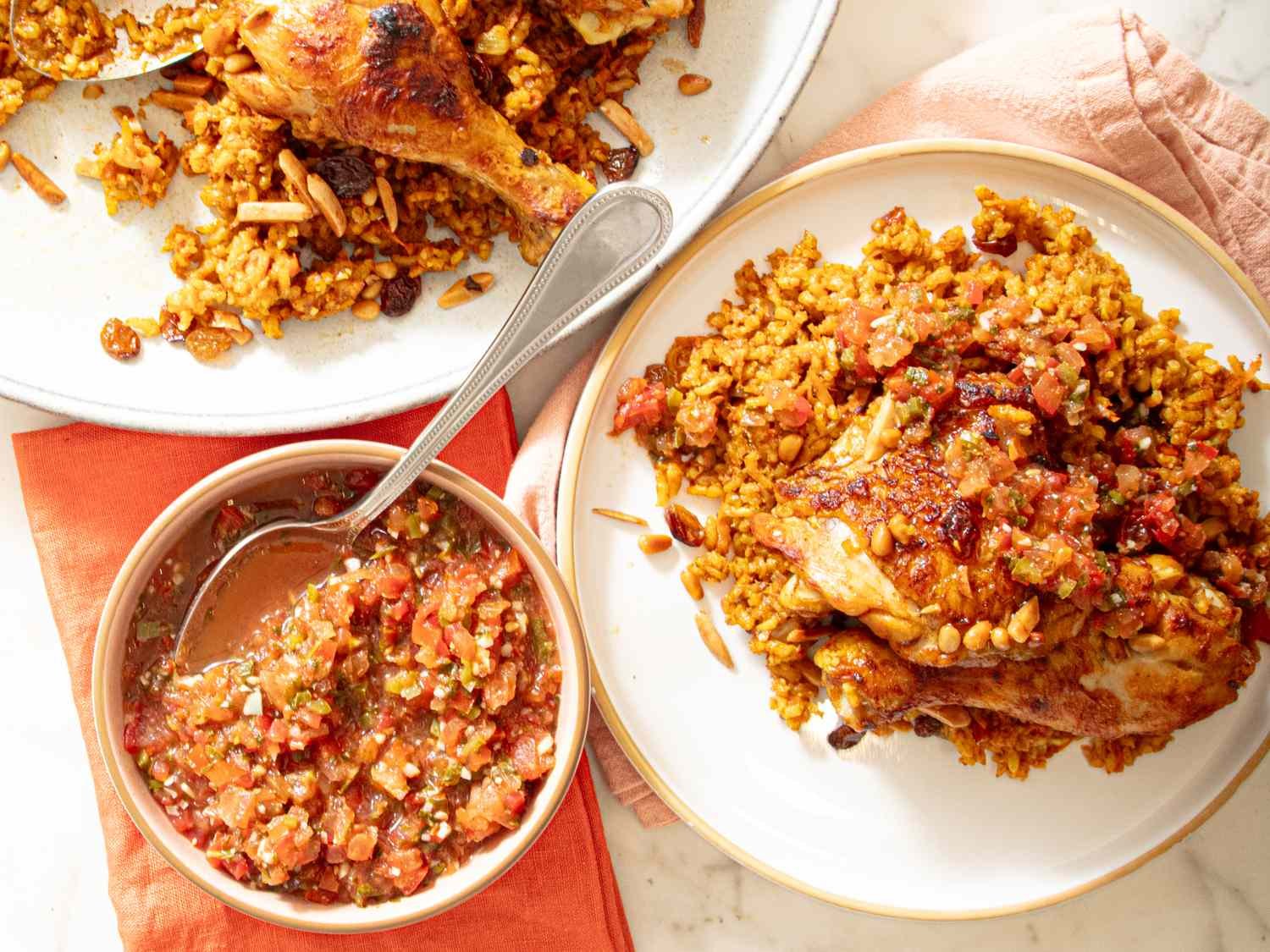
If you’ve ever eaten kabsa, mandi, or machboos, you’ve likely met daqoos—the tomato-chile condiment that shows up on nearly every table in Saudi Arabia, Yemen, and throughout the Gulf. Bright, spicy, and tangy, it cuts through the richness of the region’s rice and meat dishes and brings everything on the plate into balance.
Though daqoos is traditionally served alongside rice, meats, and fish, the condiment is just as good with roasted vegetables and grilled prawns, or even poured over labneh for a quick dip with warm flatbread. Plus, one of the perks of making it at home is that it comes together in about 10 minutes with little more than ripe tomatoes, green chiles, cilantro, garlic, and a few pantry spices (cumin and coriander).
Serious Eats / Amanda Suarez
In flavor, daqoos shares some kinship with pico de gallo—fresh, tangy, and slightly spicy—and in many ways plays a similar role, cutting through richness and bringing balance to a meal. But unlike a raw salsa, it’s briefly cooked, which softens the tomatoes and rounds out their flavor without dulling their brightness.
Depending on how long it’s cooked, daqoos can range from slightly thick and saucy to looser and chunkier, highlighting the tomatoes and herbs. The cook time is a matter of preference. While daqoos is never cooked for long, some versions are simmered for a shorter time than others. I prefer a very brief simmer—just long enough for the flavors to meld—while preserving the sauce’s bright, fresh quality, which I find especially nice alongside the warmly spiced dishes it’s often served with.
Serious Eats / Amanda Suarez
In some variations the mixture is blended until smooth before cooking, while in others, it’s kept rustic and chunky. I prefer the chunkier version for the bit of texture and gentle crunch the green chile brings to rice dishes.
Recipes vary slightly in aromatics, too. Some call for tomato paste for savory depth, or green onions instead of yellow or white. Slight variations in the spice mixture exist as well, though cumin seems to be present in most versions I’ve encountered in Saudi and Yemeni households, as well as in Yemeni restaurants in Jordan and the US.
Serious Eats / Amanda Suarez
Once the sauce has finished simmering, lemon juice and vinegar are stirred in off heat—an essential detail, since heat would dull their acidity. That burst of sharpness enhances the sauce and balances the spices’ warmth.
The final sauce is as simple as it is essential. It’s bright, punchy, and endlessly useful alongside just about anything that needs a hit of heat and acidity.
Serious Eats / Amanda Suarez
