

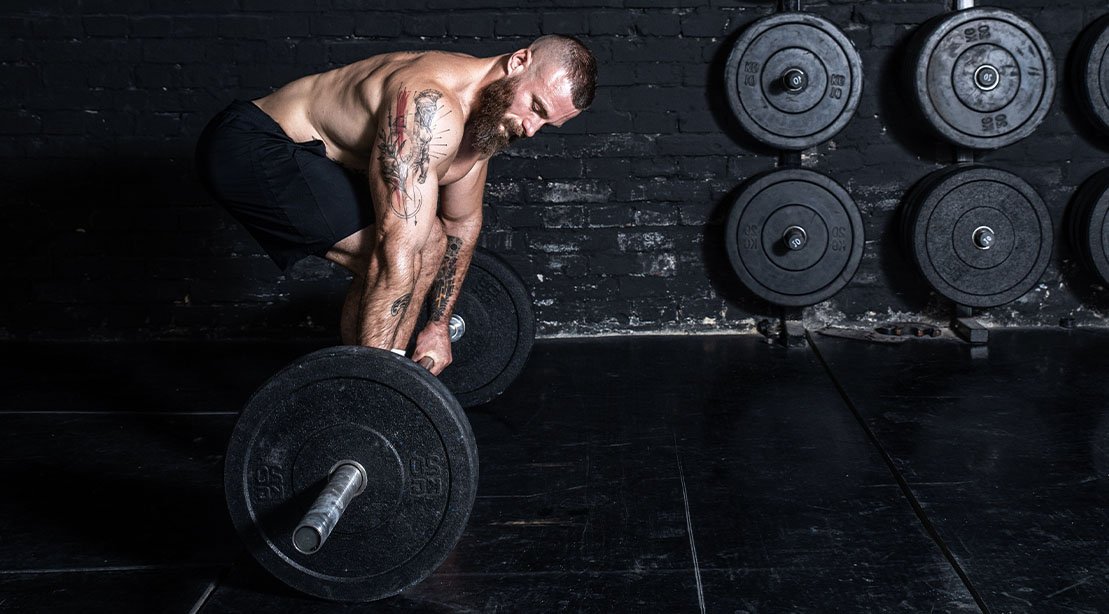
I approached the bar just like any other deadlift I performed—or so I thought. I set my feet, hinged to the bar, gripped and ripped it. It wasn’t necessarily a very heavy weight, but this time the lift felt different, literally. I heard a crack in my lower back that ended up being three herniated disks.
Any number of elements to my normal deadlift setup could have obviously off on that set. But without really going through every single step of the lift in my head, it’s hard to pinpoint just what made a seemingly routine lift go catastrophically the other way.
That’s why the having a deadlift pre-lift checklist can help you maximize each and every lift while hopefully reducing the risk of injury. Deadlifting requires your entire body to be dialed in, because it could be the difference between a PR lower back injury and a PR. Because, unlike the squat or bench, the deadlift begins in a bottom-loaded position. This means that there’s no stretch reflex. You have to create tension, stability, and power from the ground up.
That’s why a repeatable pre-lift checklist is a must. With help from Tasha “Iron Wolf” Whelan, a world champion powerlifter and strongwoman athlete who has a 515-pound deadlift personal best, we’ll guide you through a solid deadlift pre-lift checklist.
Your Deadlift Pre-Check List
There aren’t many exercises that come close to building the full-body strength of the deadlift, but being a full-body move, having a routine before the pull is imperative.
Note: Not every lifter will have the same setup. Limb length, mobility, and training style create minor differences—that’s normal. This checklist covers the major universal principles that apply to every conventional deadlifter.
Foot Position and Spacing
Before your hands touch the bar, you need a rock-solid base. Deadlift mistakes like tipping forward, the bar drifting, and low-back strain begin with poor foot placement.
- Stand with feet roughly hip-width apart.
- Toes pointed straight or slightly outward.
- Barbell lined up directly over the midfoot—not over your toes, not jammed up against your shins.
Why your midfoot? That’s your center of balance. If the bar starts forward of the midfoot, it will swing away from you. If it starts too close, it will drag you forward when the plates leave the ground.
Internal cue: “Feel your whole foot.” External cue: “Bar over the laces.”
Tasha’s Tip: There’s no single “perfect” width. It depends on your build, leverages, and muscle dominance (quad vs hamstring dominant).
- Narrow stance: More hamstring and posterior chain emphasis.
- Wider stance (still conventional): Allows slightly more quad involvement.
- General starting point: Your feet should be around hip-width apart, toes slightly turned out, then adjust based on how it feels and where you generate the most power.
Get Grounded
Getting your feet in the right spot is half the job—now you need to turn them into anchors. Rooting your feet creates tension through the hips, glutes, and hamstrings before the pull. This action creates external rotation through the hips, helping your knees track properly.
- Grip the floor with your toes.
- Try to rip the ground in two with your feet.
- You should feel your arches rise and your hips engage.
Internal cue: “Screw your feet into the floor.” External cue: “Spread the floor apart.”
Tasha’s Tip: Grip the floor with your feet as if you’re trying to “spread” the floor apart. A stable base equals more power and less energy leak.
Hip Hinge and Position
Deadlifts begin and end with the hinge. If you bend your knees first and drop into a squat, the bar tends to drift forward. If you take your hinge too far and lock your knees out, now it’s a stiff-legged deadlift. The sweet spot lies between the two.
- Set your hinge by pushing your hips back first and loading the hamstrings.
- Then bend your knees just enough so your shins lightly touch the bar.
- Your hips should now sit between your shoulders and knees.
Internal cue: “Hamstrings tight, spine long.” External cue: “Reach your butt to the wall behind you.”
Tasha’s Tip: Find your hip position:
- Too high: Your back becomes the dominating muscle group, with less leg drive.
- Too low: Now you’ve turned it into a squat. Your hips will shoot up before the bar moves.
- Just right: Your hips are between both extremes, roughly a 45-degree angle where you feel tension in your glutes and hamstrings.
Grip and Hand Placement
Once your feet and hips are locked in, it’s time to get your hands on the bar—but how you grip it matters, too. A weak or uneven grip can throw off bar path, waste energy, and steal strength from the pull before it starts.
- Hinge down with a neutral spine as above.
- Set your hands outside of your knees.
- Choose your grip: Double overhand, hook grip, or mixed grip.
- Squeeze the bar hard to engage the forearms and upper back.
Internal cue: “Crush the bar in your hands.” External cue: “Bend the bar.”
Tasha’s Tip: If your grip feels funky before you lift, it will feel worse once the bar moves. Reset and crush the bar.
Set Your Back and Lats
A mighty deadlift gets better with a locked-in spine and rock-solid lats. If your back rounds or your lats aren’t tight, the bar will drift away from you, your leverage disappears, and your lower back takes the hit.
- Flatten your spine by pulling your shoulders slightly down and back.
- Grip the bar harder and pull the slack out until you feel the plates tighten.
- Engage the lats to keep the bar glued to your body as it travels upward.
Internal cue: “Squeeze oranges in your armpits.” External cue: “Bend the bar toward your shins.”
Tasha’s Tip: Pull the slack out and lock everything tight before starting. Keep your arms long: Think about REACHING as long as you can through the floor and think about “squeezing oranges in your armpits.”
Breathe and Brace
Don’t move a muscle until your midsection is braced. The deadlift demands full-body tension, which is enhanced with proper breathing and bracing. This combo of breath and brace stabilizes your spine and increases force transfer from the floor to the lower body.
- Take a deep belly breath, filling 360 degrees around your core.
- Lock your ribs down and tighten your torso as if preparing to take a punch.
- Hold the brace as the bar breaks off the floor and ascends.
Internal cue: “Fill your torso with air.”
External cue: “Push your abs out into your belt.”
Tasha’s Tip: Take a deep 360-degree breath, expanding into your belly, sides, and back. This intra-abdominal pressure stabilizes your spine and protects it under load. Reset between reps if you need to—sloppy breathing ruins strong pulls.
The Green Light Checklist
This final pause takes around two seconds, but it can save your lift. Before the bar leaves the floor, run through this rapid-fire system check:
- Midfoot under the bar
- Feet rooted, spreading the floor
- Grip tight and even
- Hips set between knees and shoulders
- Shins touching the bar
- Lats locked, slack pulled out
- Brace solid
- Eyes fixed ahead
If all seven are locked in, you’re ready to pull.
takoburito/adobe stock
Common Deadlift Setup Mistakes
Here, Whelan explains further how to clean up your deadlift setup for a stronger, smoother pull.
Bar Too Far Away
- Problem: The bar starts over the toes instead of the midfoot.
- Result: Bar drifts forward, pulling you out of position and stressing your lower back.
- Fix: Set the bar over the middle of your foot before gripping it. The bar should skim your shins as it leaves the floor.
Rushing the Setup
- Problem: Grabbing and yanking the bar before building tension.
- Result: Loss of spinal stiffness, hips shoot up, bar path becomes erratic.
- Fix: Get tight before you pull—breathe, brace, lock in your lats, then lift.
Rounded Back
- Problem: Collapsing the chest or letting the shoulders fall forward.
- Result: Shear stress on the lumbar spine, reduced leg drive.
- Fix: Keep your chest proud and lats tight—lead with your sternum, not your chin.
Hips Too High or Too Low
- Problem: Too high equals back-dominant while too low turns your deadlift into more of a squat.
- Fix: Find the middle ground where you feel tension in your hamstrings and glutes, and the bar stays tight to your shins.
