

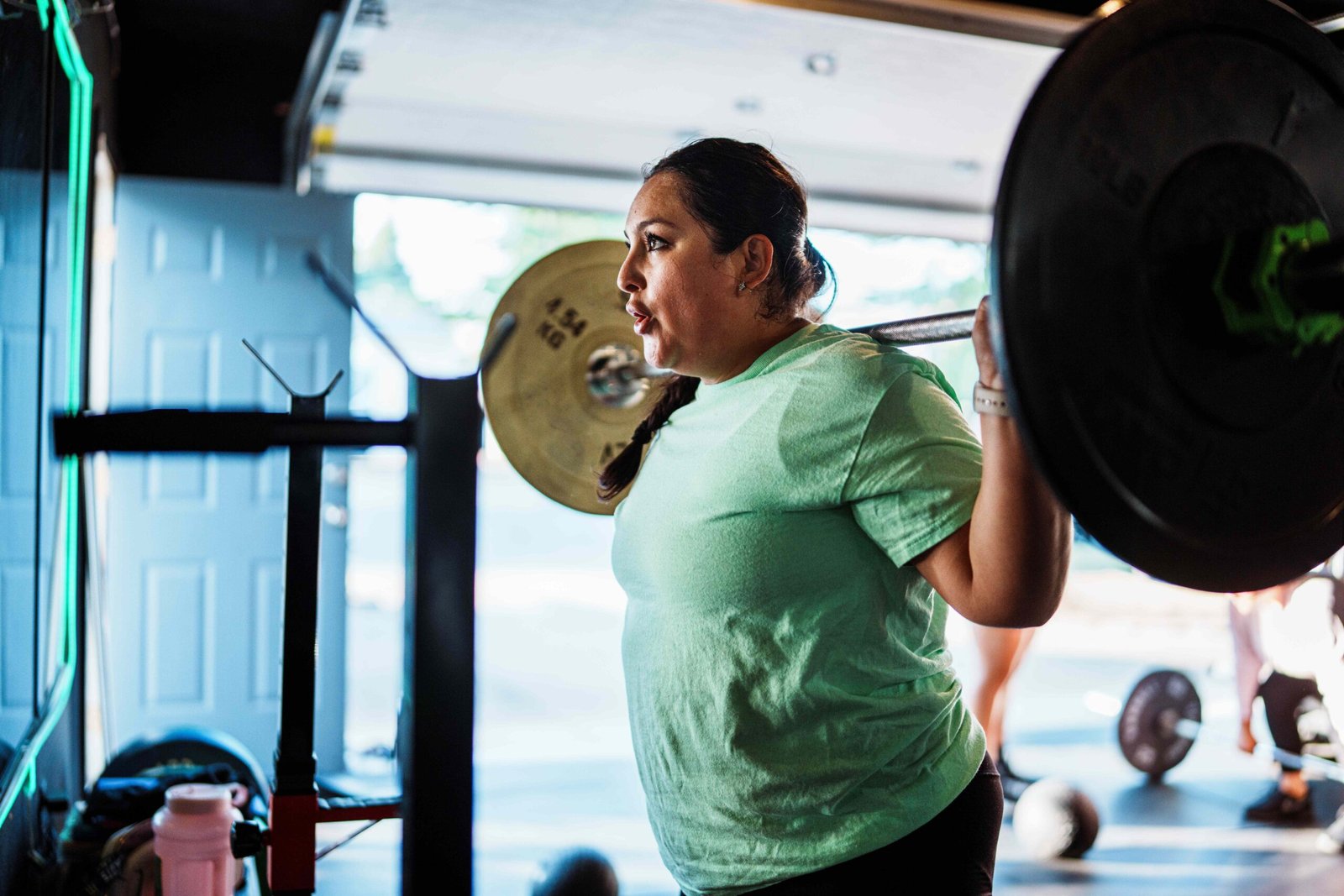
The body’s maximal strength and power tend to be higher in the late afternoon and early evening hours compared to the early morning. This means you may perform better during your strength training sessions if you do them later in the day.
Your body follows a 24-hour clock, known as your circadian rhythm. This affects your muscle performance throughout the day, as well as your hormones, body temperature, and nervous system. When it comes to strength training, your circadian rhythm plays an important role in when your muscles are the strongest and are most ready to work hard.
Your body being stronger later in the day is likely due to three reasons:
- Your neuromuscular system is more awake
- Your body temperature is higher, contributing to improved flexibility
- You have more energy available from the calories you’ve eaten throughout the day
However, this doesn’t mean that early morning workouts don’t work when it comes to building strength. It simply means that peak performance during a single exercise session is often higher in the afternoon or evening.
Strength training in the evening doesn’t appear to negatively affect the quality of your sleep, as long as it is not performed too close to your bedtime. Working out in the afternoon or evening can actually increase deep sleep and therefore improve both energy and cognitive function. It can also reduce the risk of injury, since your body temperature is the highest in the evening, helping your muscles be more flexible and warmed up.
When you train consistently, at the same time of day, your body adapts to perform better at that time. The more consistent you are, the more your nervous system and muscles learn to adapt to the schedule of your choice.
Researchers examined multiple studies comparing morning vs. evening strength training and their effects on strength and muscle size. Here’s what the researchers found:
- Strength tends to be higher in the evenings.
- Consistent morning training can raise morning strength levels to those comparable to evening strength.
- Overall increases in strength and muscle size were similar whether training in the morning or the evening.
This suggests that your routine matters more than the time of day alone. In other words, even though you may feel stronger at certain times of the day, long-term strength gains don’t depend solely on the time of day but more so the consistency of the workout routine.
Here’s how to apply this research in real life:
- Train at a time that best fits your schedule: The fact that you strength train at the same time every day matters more than the time itself. Training at the same time each day can help your body adapt more effectively. If you want to lift when you’re strongest, afternoons and evenings may feel easier and allow your body to lift heavier. However, morning workouts can still produce the same strength and muscle gains over time.
- Don’t train too close to bedtime: Lifting heavy right before going to sleep may affect your ability to fall asleep. It is good to try to finish your workout at least one to two hours before going to bed to improve deep sleep.
- Pay attention to the way your body responds: You may feel better strength training in the morning compared to the afternoon or evening. The most important factor in results is regular, consistent training and progressive overload—not the clock.
Time matters most when:
- You’re training for a specific event or competition
- You want to match your strength-training time with performance tests or a successful athlete’s schedule
In these cases, training at the same time as your event is scheduled may give you a slight advantage when it comes to neuromuscular readiness, or how ready your brain and muscles are to work together so you can move, lift, and react quickly and strongly.
