

Strength training and longevity-focused fitness are having a moment—and for good reason, said Kelyssa Hall, ACSM-EP, CSCS, exercise physiologist at the Hospital for Special Surgery. “Strength training preserves function, mobility, resilience and recovery, mental wellbeing, and overall independence,” she told Health.
But with so many exercises to choose from, it can be hard to know which ones actually build muscle and support long-term health. That’s why we asked fitness experts to share their top recommendations.
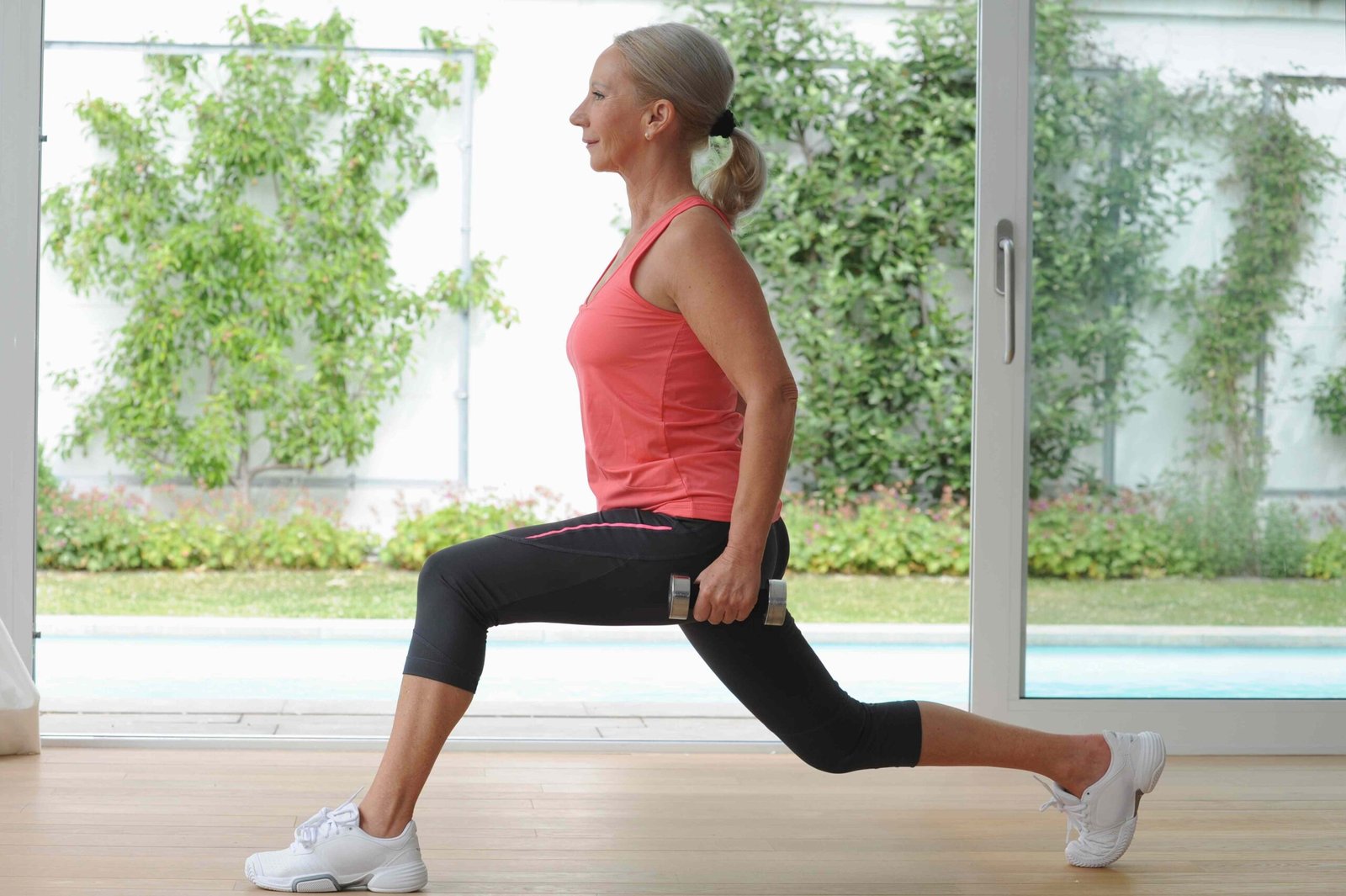
Leg strength is an important area to focus on when it comes to longevity, according to Grayson Wickham, DPT, CSCS, personal trainer and founder of Stretch Mode. Lunges target your quads and glutes, which are some of the biggest muscle groups.
“Of all the leg exercises to choose from, lunges are a top choice as they work on single-leg strength, which can help improve balance, joint mobility, and stability,” he told Health.
How to do a lunge:
- Stand with your feet hip-width apart and your hands clasped in front of your chest or on your hips.
- Keeping your torso upright, step your right foot forward 1 to 2 feet.
- Bend your right knee to a 90-degree angle with your right thigh parallel to the floor.
- Push through the bottom of your right foot and shift your weight to your left foot to step your right foot back to the starting position.
- Repeat on the other side.
Because push-ups work multiple muscle groups at once—including the upper and lower back, chest, shoulders, biceps, and core—they’re especially effective at preserving strength and healthy movement as you age, according to Hall.
“This exercise can help maintain the ability and strength to support our overall postural alignment and to be able to get up off the ground, such as when playing with grandkids or gardening,” she told Health. “Building muscle in these areas will improve longevity and preserve functional ability while empowering us to stay active throughout the lifespan, no matter what we want to do.”
How to do a push-up:
- Start in a high plank position. Your body should form a straight line from head to heels, and your hands should be slightly wider than shoulder-width apart, palms on the floor.
- Bracing your core and glutes, bend your elbows and lower yourself to the floor until your elbows are at a 90-degree angle.
- Extend your elbows and push back up through your palms to the starting position.
This exercise—which involves pulling a weight toward your torso—targets the muscles in the upper back, shoulders, arms, and core, helping to open the chest and support the spine, Hall explained.
“Strengthening these muscles helps improve posture, which can lead to reduced risk of falling or injury to the spine,” she said, adding that bent-over rows may be especially helpful for counteracting the forward head and rounded shoulder positioning that can result from frequent cell phone use.
How to do a bent-over row:
- Stand with your feet hip-width apart and hold a dumbbell in each hand, palms facing in.
- Bend your knees slightly and lean forward by hinging at your hips until your torso is roughly parallel to the floor.
- Keeping your back straight, lift the dumbbells up to your sides, keeping your elbows close to your body.
- Squeeze your shoulder blades and back muscles at the top of the movement.
- Slowly lower the dumbbells back down to the starting position.
