

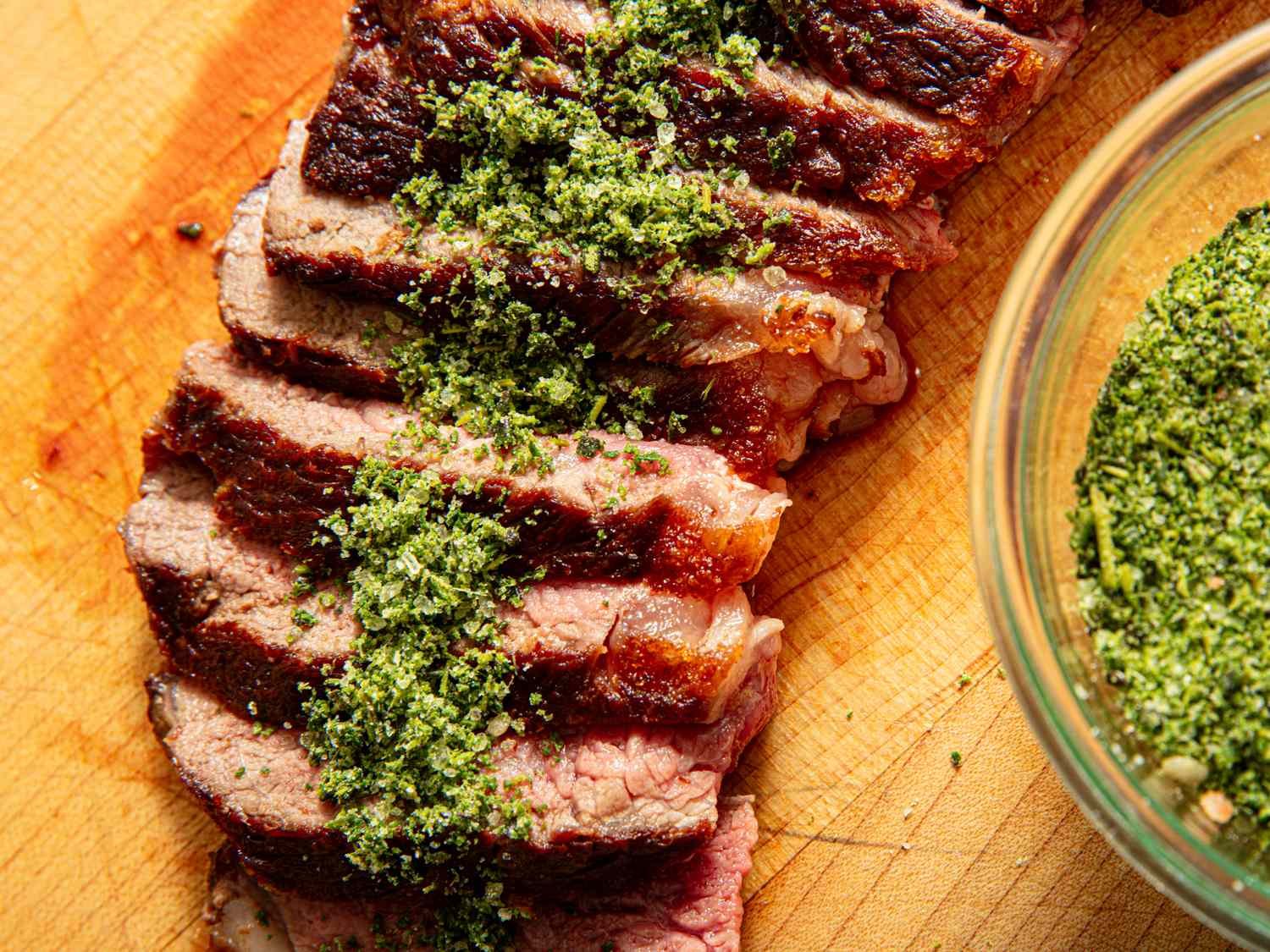
Why It Works
- Grinding herbs with salt releases their aromatic oils, infusing the salt with fresh, concentrated flavor.
- Salt preserves the herbs by creating conditions that are hostile to molds and spoilage microbes.
I’ve tended gardens—including my father’s meticulously groomed patch in New Jersey and the hydroponic system on my Brooklyn patio—my entire adult life. As a rule, I only grow edible things. The easiest, most reliable plants are herbs. Unfortunately, they grow faster than I can use them: There may be a jungle of parsley one week, and the next, I’m staring at wilted sprigs. The freshness of herbs is fleeting, and even with the best storage tricks, it’s hard to take advantage of the season’s bounty before it’s too late.
Turning fresh herbs into pesto and chimichurri and then freezing them is one way to make the most of them. But here’s another option: Herb salt, which preserves your herbs and creates a flavorful, versatile seasoning you can keep in your fridge. Pulverizing herbs with salt creates conditions that are hostile to the molds and microbes that hasten spoilage, in turn extending the herbs’ usable life. This process also infuses the salt with aromatic oils, creating a fragrant, long-lasting seasoning that instantly boosts the flavor of whatever you put it on.
Keep a jar handy, and you’ll have a versatile rub for steaks, chops, and chicken; a finishing salt for roast potatoes and vegetables; and an herbaceous seasoning for eggs, popcorn, and even breads and sweet-savory pastries. All you need are two ingredients, a food processor, and a little drying time.
Serious Eats / Amanda Suarez
Which Salt Should You Use?
Not all salts are created equal. Salts differ in density and crystal shape, which changes both their flavor and how they behave. A teaspoon of table salt holds more sodium chloride—and therefore tastes far saltier—than the same volume of kosher or coarse sea salt. The structural differences among salts affect how quickly they dissolve and whether they season in a fine, uniform dusting or a crunchy, irregular bite. Even two brands of kosher salt—Morton and Diamond Crystal kosher salts, for example—differ in density. For consistent results, it’s best to use a scale and work by weight, not volume.
For herb salt, you want a coarser crystal that won’t dissolve too quickly, so the salt slowly draws out moisture to preserve the herbs and dries into distinct, crumbly crystals—rather than dissolving on contact and leaving you with a pile of salty green mush.
- Coarse Sea Salt: This is the sweet spot. Coarse sea salt’s larger crystals don’t dissolve immediately. Instead, they gradually draw moisture out of the herbs, lowering the water activity—the amount of water available for microbes to grow—which helps preserve the herbs.
- Coarse Grain Salt: Any mineral salt, including pink Himalayan salt, can work well, as the salt dissolves slowly, allowing the mixture to dry into crumbly, distinct crystals instead of collapsing into a green paste. A paste won’t keep nearly as long, and it defeats the whole purpose: You want herb salt, not herb spread. If your salt is especially large, like the pebble-sized chunks you see in salt grinders, give them a few pulses in the food processor so they are closer in size to standard coarse sea salt.
- Kosher Salt: At Serious Eats, Diamond Crystal is our default for everyday cooking, but it’s not the best salt to use here, as its small, jagged crystals dissolve too quickly once moist. Morton’s kosher salt is a slightly better option for herb salt, as its more coarse grind holds up longer and maintains some crystalline crunch even after processing.
- Flaky Finishing Salt, such as Maldon: These salts are gorgeous on finished dishes, but they’re expensive and not worth using here, as the delicate pyramids break down instantly in the processor.
- Table Salt: Avoid using table salt; its tiny, uniform crystals dissolve almost instantly, and its density results in a very salty green paste. Many brands are fortified with iodine and blended with anti-caking agents, both of which can leave a faint metallic or bitter aftertaste.
Which Herbs Work Best?
- Sturdy Herbs: Rosemary, thyme, sage, oregano, and marjoram are good options. Thanks to their potent oils, their flavor and aroma linger for months. One common combination home cooks use is equal parts rosemary, thyme, and sage; in grocery stores, the three are often sold together as “poultry blend,” since the trio is often used to prepare roast chicken or turkey.
- Tender Herbs: Basil, dill, parsley, tarragon, cilantro, chervil, chives. After washing, spin or pat them thoroughly dry, then let them air-dry until no surface moisture remains. Their flavor will last for several months, but their color will eventually fade from bright green to muted olive. Note, though, that tender herbs have a higher water content and tend to have a more delicate flavor and fewer long-lasting aromatic oils in their leaves, which means they’ll produce herb salts that are more prone to becoming pasty and will not last as long or deliver as much aroma and flavor. Still, they do work, especially the more fragrant ones like dill and tarragon.
- Mix and Match: Pair herbs you already like to use together. Dill and tarragon for fish. Basil and oregano for pasta. Thyme and parsley for French cooking. The possibilities are endless.
Tip: I’d personally avoid sage or rosemary on their own. Their essential oils are powerful, and when used solo, their flavor can come across as unpleasantly medicinal. They shine best in an herb salt when blended with other herbs.
Serious Eats / Amanda Suarez
How to Use Herb Salt
Use it as a finishing salt on roasted veggies, grilled meats, or fish, as a rub before cooking, or in place of regular salt in soups or stews. Stir it into eggs or scatter it over avocado toast. Dust it onto popcorn. One of my favorite suggestions is to stir it into olive oil to make a quick herb oil for drizzling or dipping.
Think of herb salt as flavor dust: A two-ingredient upgrade that makes almost everything taste better.
Cook Mode
(Keep screen awake)
77 g fresh herbs (2 3/4 ounces; about 3 cups), tender leaves and stems only (see notes)
113 g coarse sea salt or pink Himalayan salt (4 ounces; about 1/2 cup)
Wash and dry herbs thoroughly; make sure herbs are fully dry before proceeding. There are many ways to do this, but we like to use a salad spinner to remove most of the water after washing, and then spread the herbs on a paper towel–lined tray or on a wire rack to fully air dry after that.
Serious Eats / Amanda Suarez
In a food processor fitted with the blade attachment, combine herbs and salt. Pulse in 1-second intervals until you have a coarse mixture and herbs are evenly distributed; be careful not to make a paste. If the herb salt mixture is wet, spread on a rimmed sheet tray and air dry overnight. Refrigerate in an airtight container, such as a 12-ounce glass jar.
Serious Eats / Amanda Suarez
Special Equipment
Food processor, sheet tray, air-tight container (such as a 12-ounce glass jar)
Notes
A mix of fresh sturdy herbs such as rosemary, thyme, sage, oregano, and/or marjoram works best and lasts longest, but tender herbs such as basil, dill, parsley, tarragon, cilantro, chervil, and chives can be used as well.
Make-Ahead and Storage
The herb salt can be refrigerated in an airtight container for up to 3 months.
