

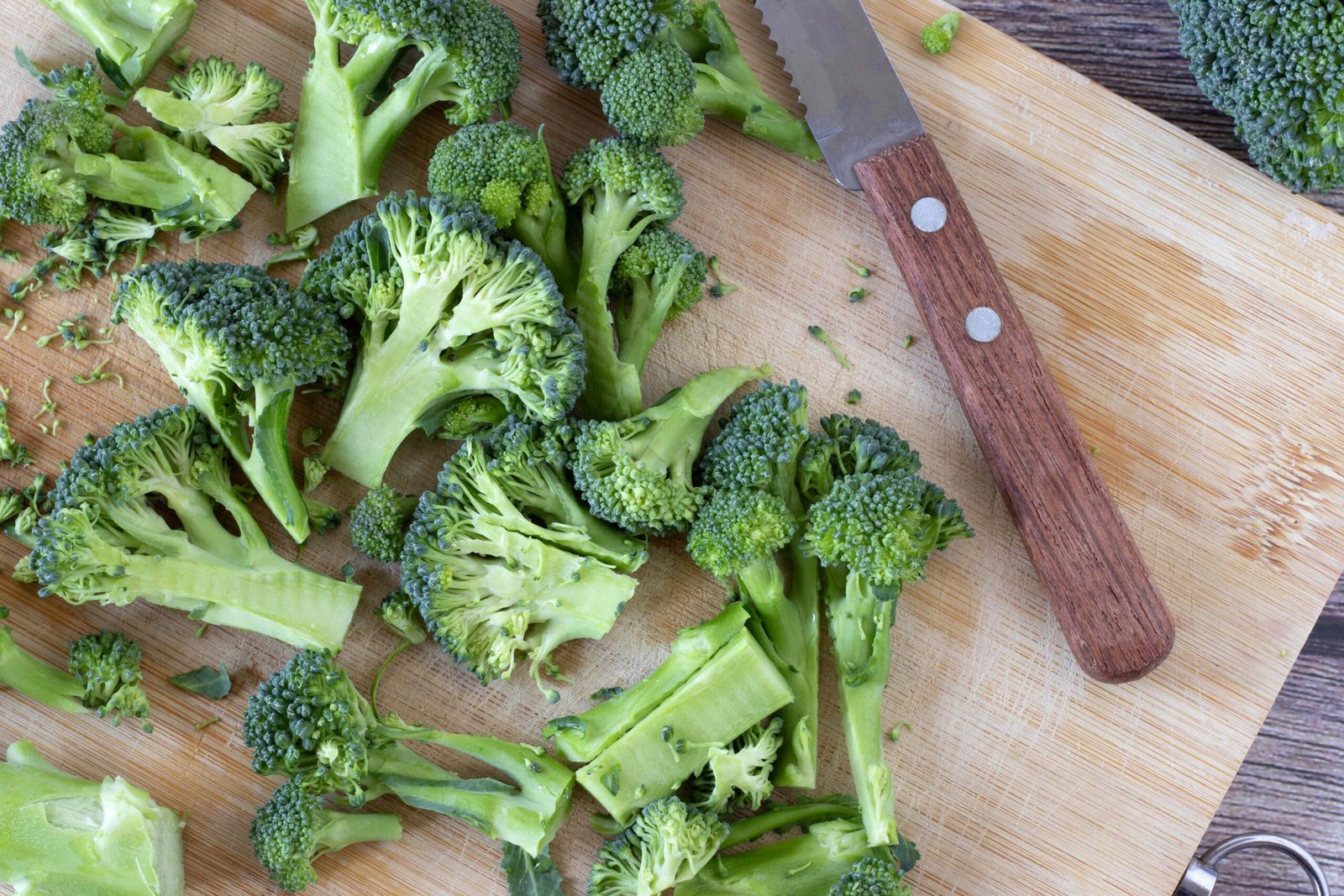
One small tweak can help you get the most bang for your buck when preparing broccoli: chopping it and letting it sit before cooking it. Why? It’s all about a phytochemical called sulforaphane that has a whole host of benefits (antioxidant, anti-inflammatory, and anti-cancer properties, to name a few).
The advice comes from a 2018 report, published in the Journal of Agricultural and Food Chemistry, that examined the effects cooking has on the potent plant compounds—specifically sulforaphane—in broccoli.
One quick note: Broccoli doesn’t actually contain sulforaphane—it contains another compound called glucosinolate; when you chop broccoli, an enzyme called myrosinase interacts with glucosinolate and releases sulforaphane.
Researchers found that stir-frying broccoli reduced its sulforaphane content—but cutting broccoli and letting it sit for 90 minutes before stir-frying helped it retain some of those plant compounds.
“Our results suggest that after broccoli florets are cut into small pieces, they should be left for [approximately] 90 [minutes] before being cooked,” the study authors wrote. Although they hadn’t experimented with a shorter time, they said, “we believe that hydrolysis for 30 [minutes] would also be helpful.”
The one downside: The broccoli florets were chopped into 2-millimeter pieces—more research needs to be done to see if the broccoli can be cut into larger pieces and retain the increased nutritional value.
Even after chopping broccoli and letting it rest, you should still avoid cooking it at high temperatures if you want to preserve nutrients. (High heat inactivates myrosinase, which inhibits sulforaphane).
“Excessive heat can damage these benefits, therefore boiling and frying are not recommended,” registered dietitian Eleana Kaidanian, RD, told Health.
Other than eating it raw, steaming for up to five minutes is likely the best way to cook broccoli to preserve nutrients, according Emily Ho, PhD, a distinguished professor at Oregon State University, who studies antioxidants. This will help preserve myrosinase and release sulforaphane while you’re chewing. It also helps retain key nutrients like chlorophyll and vitamin C.
If you can’t part with your boiled or roasted broccoli, you may still be able to increase your sulforaphane levels by adding raw chopped broccoli to cooked, or including other foods with myrosinase (mustard, radish, arugula, wasabi, or other uncooked cruciferous vegetables) to your meals.
Though there are ways to get as many nutrients as possible out of your broccoli, the most important thing is to actually eat it as part of a balanced diet. According to Ho, simply eating more broccoli on a regular basis is more important than preparation or cooking methods.
