

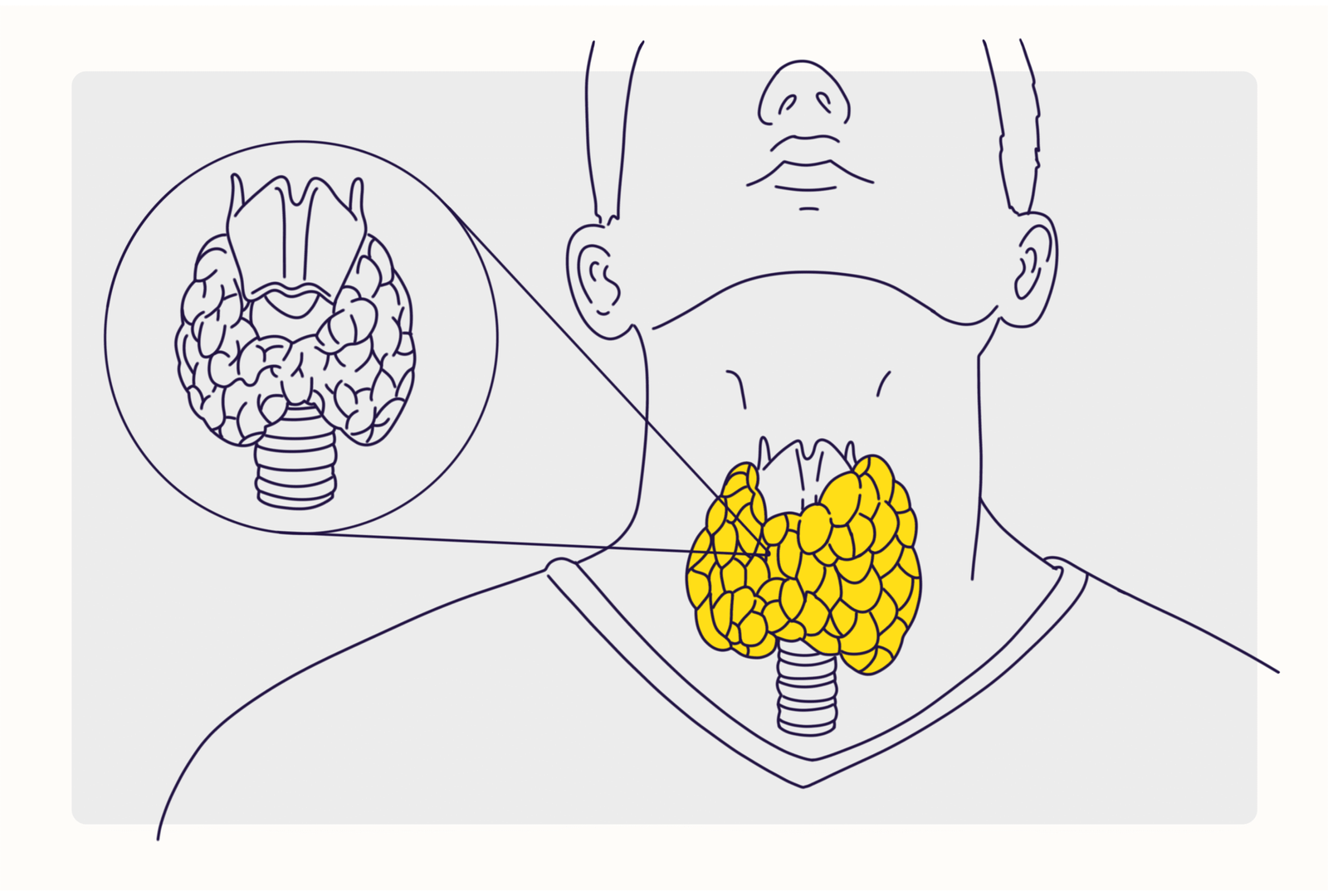
Hashimoto’s disease—known as Hashimoto’s thyroiditis, chronic lymphocytic thyroiditis, or autoimmune thyroiditis—damages the thyroid, which leads to a hormone imbalance. It often causes increased fatigue and weight gain.
Symptoms of Hashimoto’s disease are often similar to those of other thyroid conditions. Early on, you might have no symptoms or mild symptoms that can worsen over time.
Common symptoms include:
- Increased tiredness
- Weight gain
- Constipation
- Sensitivity to cold
- Fertility problems
- Irregular or heavy menstrual periods
- Pain in muscles and joints not explained by other causes
- Decreased heart rate
- Dry skin
- Thinning hair
In the less likely case that Hashimoto’s disease causes overactive thyroid, symptoms may include:
- Anxiety and irritability
- Sweating
- Hand tremors
- Increased or “racing” heart rate
- Difficulty sleeping
- Weight loss
Some people with Hashimoto’s disease develop a “goiter,” a swelling at the front of the throat from an enlarged thyroid. It may cause an uncomfortable feeling of fullness, but it’s usually not painful.
Goiters can disappear on their own, but some people opt for surgical removal.
Hashimoto’s disease happens when your immune system attacks the thyroid, damaging it so that it cannot make hormones. The exact cause is not known, but it often runs in families.
One hypothesis suggests it occurs in genetically predisposed people exposed to environmental triggers. However, more research is needed.
Risk factors thought to contribute include:
- Hepatitis C infections are thought to trigger autoimmune thyroid diseases like Hashimoto’s disease. The virus has been shown to destroy thyroid tissue.
- Certain medications or medical therapies affect how the immune system functions, including lithium (a mood stabilizer) and irradiation (excessive exposure to radiation).
- Consuming too much iodine, whether in your diet or in medications.
- There’s some evidence to suggest that excess stress may be a cause of Hashimoto’s disease, but more research is needed in this area.
Who’s at Risk?
Risk factors for this disease include increased age, being female, being pregnant, having Down’s syndrome, and having other autoimmune diseases.
To diagnose you, a doctor will ask about your medical history and perform a physical exam. They will inquire about your symptoms and any family history of Hashimoto’s disease. If you are concerned about having Hashimoto’s and it runs in your family, let a doctor know.
A doctor may check your neck for a goiter. They will also order blood tests to confirm the diagnosis, such as:
- Triiodothyronine (T4): T4 is a thyroid hormone. Usually, a high blood level of T4 means you have hyperthyroidism, and a low level means you have hypothyroidism.
- Thyroxine (T3): T3 is another thyroid hormone. You may have hyperthyroidism even though your T4 level is normal, so a T3 test is used to confirm the diagnosis. Like T4, a high blood level of T3 indicates hyperthyroidism and a low level indicates hypothyroidism.
- Thyroid-stimulating hormone (TSH): This is a hormone made in the pituitary gland (the small gland located below your hypothalamus at the base of your brain) that tells the thyroid how much T4 and T3 to make. A high TSH level often indicates hypothyroidism, and a low TSH level usually indicates hyperthyroidism.
- Thyroid antibody tests: Testing for certain proteins made by the immune system (called antibodies) can help diagnose an autoimmune thyroid disease. A doctor may use this test after doing the other tests listed above to confirm your diagnosis.
In most cases, blood tests are enough to confirm the diagnosis. If not, you may need a thyroid ultrasound. It lets a doctor see the thyroid’s size and other features.
While there’s no cure for Hashimoto’s, there are effective medications and lifestyle modifications that can decrease or eliminate symptoms.
The most common treatment for Hashimoto’s disease is the medication levothyroxine, also known under the brand names Levothroid, Levoxyl, Synthroid, Tirosint, Tirosint-Sol, and Unithroid. Levothyroxine comes in pill or capsule form and is identical to the thyroid hormone T4.
It’s commonly recommended that you take this pill 30-60 minutes before your first meal in the morning. Taking this pill on an empty stomach can be important since many foods and beverages can impair how well your body absorbs the medication.
While you are on this medication a doctor will order regular blood tests to make sure the medication is at the appropriate dose.
There’s some evidence that following an anti-inflammatory diet may help with managing Hashimoto’s disease. An anti-inflammatory diet encourages plant-based protein and fish, increased fiber, plenty of fruit and vegetables, and certain herbs and spices.
While this diet has been proven to help many illnesses. However, more research is still needed on how effective it is for Hashimoto’s disease.
Since the cause of Hashimoto’s disease is not known, there’s no sure way to prevent it. However, limiting your exposure to environmental factors known to cause Hashimoto’s disease may be a way to lower your risk of developing the illness.
For example, hepatitis C is transmitted through contact with the bodily fluids (blood, semen, etc.) of a person with hepatitis C. Using barrier protection during sex and never sharing sharps like needles or razors could lower your risk of catching it.
Research has shown that people with Hashimoto’s disease are more likely to have other autoimmune diseases. This is more prevalent in adults than in children and adolescents but was found in both groups.
Some autoimmune diseases that occurred with Hashimoto’s disease were more likely to be present in adults rather than children and vice versa.
Autoimmune diseases more likely to be found in adults include:
- Arthropathies: Diseases affecting the joints like psoriatic arthritis and rheumatoid arthritis.
- Connective tissue diseases: Connective tissue includes fat, bone, blood, cartilage, and lymphatic tissue. The most common connective tissue disease in this study was Sjögren’s syndrome, a disease that causes dry eyes and mouth.
The related conditions more commonly found in children and adolescents include:
- Celiac disease: This disease damages the small intestine and is provoked by eating foods with gluten in them.
- Type 1 diabetes: A condition where the pancreas can no longer make enough (or any) insulin, a hormone needed to control blood sugar.
Several autoimmune diseases, such as vitiligo, a skin condition, and Addison’s disease (affects the adrenal glands), occurred at a similar rate between age groups.
