

While both traditional soy sauce and tamari—which is a type of soy sauce that’s made without wheat—provide a delightful boost of umami to whatever they’re used in, they have differences in production method, flavor profile, and viscosity. They can sometimes be used interchangeably, but there are some considerations to keep in mind when cooking with them, which we’ll explore below.
With their rich aromas and umami notes, soy sauce and tamari don’t just add savory depth to the dishes they’re used in, they also enhance subtle flavors you otherwise wouldn’t notice—like salt, these sauces can help make something taste more of itself. Soy sauce has been around for centuries: The fermented condiment originated in China over 2,000 years ago, and eventually spread to Korea and Japan during the 6th and 8th centuries, respectively. Today, the ingredient is a staple in many Asian cuisines, with numerous variations, including light soy sauce, dark soy sauce, and tamari, a wheat-free sauce created in Japan during the 14th century.
Sho Spaeth
While many soy sauces look similar and have common ingredients, such as soybeans and salt, they have distinct characteristics and preparation methods that set them apart. To learn more about the differences between tamari and other soy sauces, I spoke with Andy Matsuda, chef and founder of the Sushi Chef Institute in Torrance, California, and Erik Bruner-Yang, chef and owner of the Michelin Bib Gourmand–winning Washington D.C. restaurant Maketto.
The Key Differences Between Soy Sauce and Tamari
Both soy sauce and tamari are salty sauces that add umami to foods. However, how soy sauce is made impacts its flavor and texture, and there are key differences that might make you reach for one over the other.
Production of Traditional Soy Sauce vs. Tamari
Traditional Soy Sauce
To make traditional soy sauce, brewers soften soybeans by soaking them in water for several hours before steaming them. Once they’re cooked and while they’re still warm, the beans are mixed with roasted wheat flour and a mold called Aspergillus oryzae to form a mash called koji. This process produces enzymes, primarily proteases and amylases, that give soy sauce its signature umami flavor. While Japanese soy sauces are typically made with an equal amount of soybeans to wheat, Chinese soy sauces are usually made with more soybeans than wheat, with ratios of four parts soybeans to one part wheat or seven parts soybeans to three parts wheat.
Chris Anderson
The koji is then left to sit for three days in a wooden barrel. In the book FoodUnfolded, science writer Samantha Oton explains that this resting period is a crucial step in the fermentation process. “It is during this period of fermentation that starches are broken down into simple sugars, proteins into amino acids, and oils into fatty acids,” she notes. “One of these simpler molecules is glutamic acid,” the amino acid responsible for the umami notes in food.
After this resting period, the koji is mixed with salt and water and left to ferment for several months or years. How long the mixture is aged and the vessel used play large roles in determining the sauce’s color, consistency, and flavor. The shorter the fermentation, the lighter and thinner the sauce. (Though wood barrels are traditional, many soy sauces are fermented in stainless steel vats today for efficiency and consistency from batch to batch.) Once the beans have fermented, brewers press the mash through cloth to extract and filter the aromatic sauce.
Tamari
Unlike other soy sauces, tamari is wheat-free. Traditionally, tamari refers to the liquid that naturally pools on the surface of miso after the paste has fermented for about a month. Due to tamari’s popularity today, many producers have had to abandon the traditional method in favor of a commercial process that yields higher results and faster outcomes.
Today, most tamari is made with a method similar to the one used to produce other soy sauces. Once the soybeans are steamed, they’re shaped into balls, then coated with Aspergillus oryzae. After three to four days, a salt brine is added to the beans, and the mixture is left to ferment in wood barrels for six months to three years. Because tamari is often fermented longer than soy sauce, it is typically thicker than soy sauce (though there are traditional soy sauces that are fermented for several years, too).
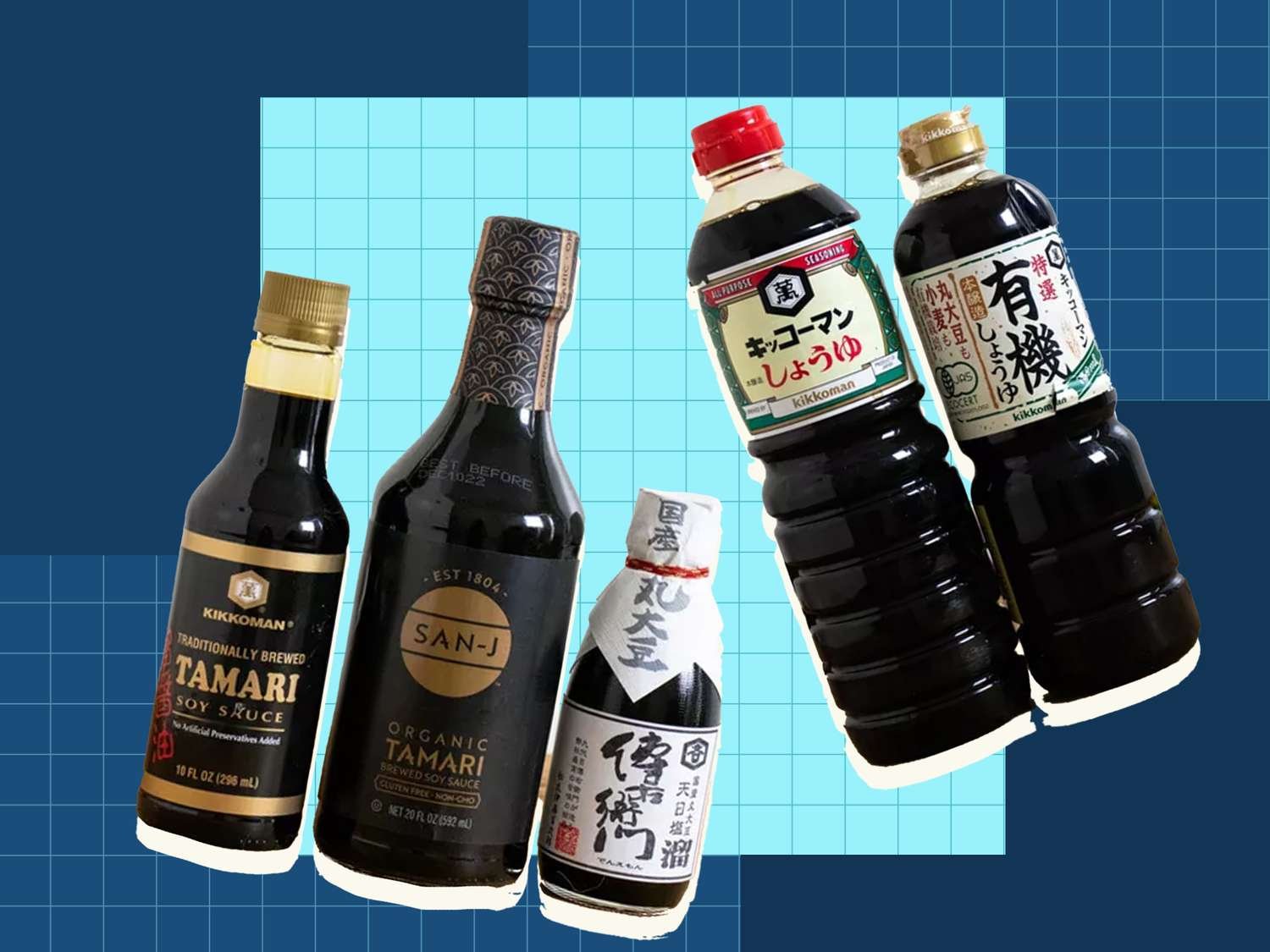
Kikkoman tamari, San-J tamari, and Ito Shoten tamari.
Sho Spaeth
Flavor
Soybeans are high in natural glutamic acid, which gives soy sauce its distinct savory and umami-packed flavor. Tamari has a rich, full-bodied flavor with a savory tang, and is less sharp and salty than other soy sauces. According to Matsuda, true Japanese tamari skimmed from fermenting miso is richer, smoother, and sweeter than tamari that’s commercially made in the US.
Bruner-Yang tells me that because tamari contains no wheat, he finds that it typically tastes mellower than most soy sauces, and describes its flavor as almost watered down.
Viscosity
Another difference between traditional soy sauce and tamari is consistency. Tamari is typically a little thicker and darker than regular soy sauce, but not as viscous as dark soy sauce, which is almost syrupy, says Matsuda. Many dark soy sauces are aged for up to five years, and some commercially produced dark soy sauces are enhanced with sugar to give them a treacly texture.
Price and Availability
In the United States, soy sauce is more ubiquitous and generally less expensive than tamari, likely because it’s widely used in various cuisines, including Chinese, Japanese, and Korean, among others. In the US, soy sauce has been a pantry staple for many since the 1960s, when the increasing number of Japanese restaurants opening across the country made it a more well-known ingredient for many Americans.
Tamari, on the other hand, was mostly reserved for Japanese cooking in the US until the growing macrobiotic movement in the mid-1970s made tamari a staple at health food stores. The ingredient became increasingly popular in the US and other countries in the 2010s as more people started eating gluten-free diets, but tamari still often costs slightly more than the average soy sauce you’ll find at the grocery store. For comparison, a 10-ounce bottle of Kikkoman soy sauce costs $3.29 at Safeway in Colorado, and the same size bottle of San-J tamari costs $4.29.
Premium brews are their own story: For example, organic and imported tamari can fetch $35 and up for a 17-ounce bottle (about $2 an ounce), while premium aged soy sauces can cost more than $12 an ounce.
Best Uses for Soy Sauce and Tamari
Soy sauce is a staple in many Asian cuisines, and some home cooks may want to stock their pantries with a handful of different varieties. Matsuda, for instance, keeps at least four types in his Japanese pantry, including tamari, dark soy sauce, and even a rare clear soy sauce, but he mostly uses regular soy sauce.
Soy Sauce
Soy sauce’s saltiness and thin consistency make it ideal for flavoring braises and stir-fries. (You can use tamari in a stir-fry, but be sure to taste as you go and season accordingly.) Soy sauce is also great for finishing off congee or egg drop soup.
Light soy sauces are good for stir-fries, too. The ingredient is specifically called for in many Southeast Asian recipes, including those from Thailand, Malaysia, Indonesia, and Laos. It pairs exceptionally well with ingredients that have a delicate flavor, including seafood, where you don’t want the darker soy sauce’s heaviness and dark color to mask the main ingredients. Light soy sauce can also be used in combination with other types of soy sauces to give dishes a more complex flavor.
Serious Eats / Diana Chistruga
Dark sweet soy sauce is great for making stir-fried noodles such as lo mein and pad see ew, as the condiment’s additional sugar helps encourage caramelization. Dark soy sauce can also add depth to noodle soups like ramen and soba, and braises like moo palo (Thai pork belly stew). Unsweetened dark soy sauce is also a staple in Chinese cuisine, where it stars in dishes such as soy sauce chicken and stews.
Tamari
Tamari has a mellow flavor that complements many foods without overpowering them, while its thicker consistency means it coats foods well. Traditionally, the ingredient is used for dipping sauces, including ponzu and eel sauce, as well as marinades and glazes for grilled meats, such as teriyaki. It’s excellent as a finishing touch to dishes where you want a more pronounced umami flavor, including sushi, poke, and steak. Tamari’s milder flavor also makes it easy to pair with oils and vinegars for salad dressings.
Serious Eats / Amanda Suarez
Tamari’s gluten-free nature makes it the go-to sauce for those with the autoimmune disorder Celiac disease and gluten sensitivities, as well as those who simply prefer to avoid gluten and wheat products.
Can You Substitute Soy Sauce for Tamari and Vice Versa?
While tamari and soy sauces can often be used interchangeably, there are some differences to keep in mind.
Because tamari sometimes tastes less salty than soy, you might need to adjust the salt in your recipe accordingly. Conversely, substituting soy sauce for tamari in recipes may result in a saltier-tasting dish, so start with half the amount called for and then taste and adjust your seasoning as needed.
“It’s definitely interchangeable, but it’s also a matter of personal preference,” says Bruner-Yang, who switched to using tamari in his restaurant exclusively in 2015. “It allows us to capture the essence of the dishes that we were doing while being as friendly to dietary restrictions as possible,” he says.
Bruner-Yang has used tamari for so long that he now finds regular soy sauce too salty, and recommends that cooks try several different brands and types of soy sauce to find out what works best for their cooking.
The Takeaway
Understanding the differences between tamari and soy sauce can enhance your cooking and allow you to choose the most appropriate condiment for your dishes. While both provide a delightful boost of umami in whatever they’re used in, their different production methods and flavor profiles make each a unique ingredient that may be better suited for certain applications. Whether you opt for tamari’s rich, smooth taste or soy sauce’s salty, robust flavor, both have valuable places in the culinary world.
