

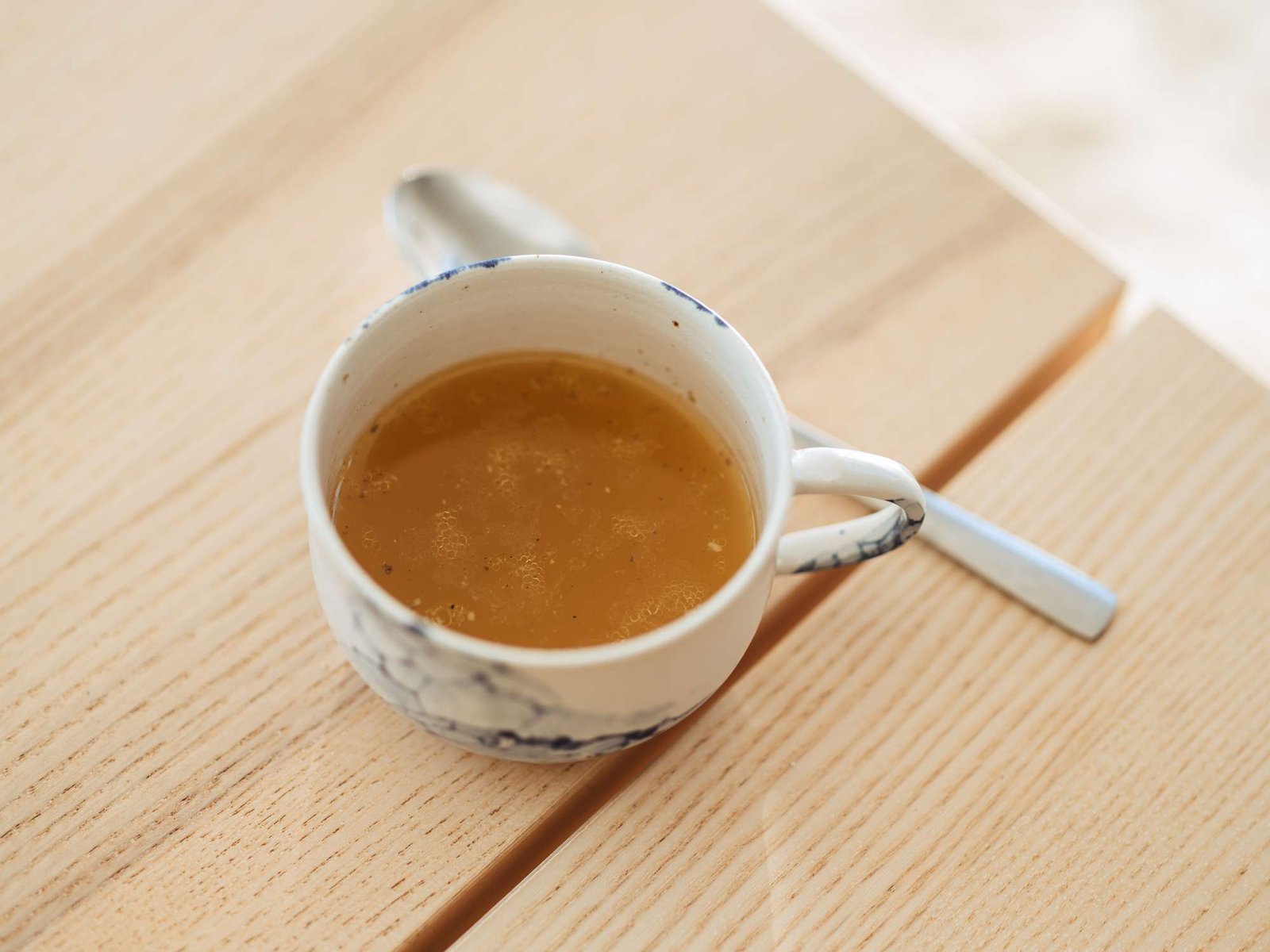
Bone broth has more protein than coffee, which may offer health benefits for some people. However, its high sodium content may be a drawback for people with hypertension (high blood pressure).
Bone broth has gained attention, especially in alternative health circles, for its potential benefits. It’s said to help ease joint pain, support gut health, and decrease wrinkles.
However, “the scientific evidence backing these claims is not robust,” Kristin Draayer, MS, RD, a registered dietitian, certified intuitive eating counselor, and certified personal trainer, told Health.
Most bone broth studies focus on animals, not humans. More research is needed for clinical certainty.
A 2021 study in mice found that bone broth might reverse damage from ulcerative colitis. Earlier studies on its anti-inflammatory effects, like a 2015 study on respiratory health, also used mice.
Few studies have definitively linked bone broth to human health benefits. Those who do may only paint part of the picture.
“Most studies focus on specific collagen types versus bone broth as a whole, and many bone broths on the market don’t specify the collagen type they contain,” said Draayer.
Still, this does not mean that bone broth has no benefits.
“Bone broth is a good source of protein, an essential macronutrient,” said Draayer. “While it’s not a complete protein, meaning it lacks some amino acids, it can still contribute to your daily protein intake.”
For example, 1 cup of organic beef bone broth contains 9 grams of protein, which is 18% of the Daily Value (DV) for someone on a 2,000-calorie diet. Protein supports muscle growth, weight management, and wound recovery.
While both can be served from a steaming mug, bone broth and coffee do not really have a lot in common.
They certainly do not have similar tastes, with coffee’s acidic, bitter flavor profile and bone broth’s savory, umami one. Swapping coffee for bone broth will come with some significant changes.
Nutritionally, the two drinks are also quite different. One cup of coffee contains around 2 calories per cup. The same amount of bone broth contains around 40 calories.
Depending on how much you drink, bone broth could add to your morning caloric intake. Then again, if you regularly stir cream, sugar, or syrups into your morning coffee, bone broth might actually cut down on calories, sugars, and fat.
“Drinking bone broth can be a better choice than coffee, especially if individuals tend to add a lot of sugar to their coffee, since drinking sugary beverages in the morning can cause energy crashes after consumption,” Wan Na Chun, MPH, RD, CPT, registered dietitian and owner of One Pot Wellness, told Health.
Sodium is another notable nutrient dissimilarity between the two drinks. Though Draayer noted that there’s technically no established limit for safe bone broth consumption, stay mindful as you drink.
Bone broth can have nearly 350 milligrams, or 15% of the recommended daily limit of sodium, in each cup. Coffee, on the other hand, has very little sodium at 4.7 milligrams per cup.
This could be a particular drawback for people with an elevated risk of hypertension, heart disease, or kidney disease.
The primary nutritional difference between bone broth and coffee, though—the one that accounts for the social media hubbub—is protein. Again, a typical cup of bone broth provides 9 grams of this macronutrient, while coffee supplies none.
According to Chun, bone broth fans are correct in claiming that the savory drink provides energy without jitters or a “crash” later on. Though bone broth does not contain caffeine (so you will not necessarily have an immediate burst of pep), it may provide a steadier flow of energy throughout your morning.
Bone broth’s protein may come with more benefits than you will get from coffee.
“The high protein content of bone broth can help keep you full and satisfied for longer, which has the benefits of reducing cravings for sweet foods that are associated with a low-protein breakfast,” said Chun.
Deciding whether to make the switch from a traditional brew to a cup of bone broth is up to you. However, if coffee brings you joy, it may not be worth nixing it from your routine.
“Bone broth serves as an excellent option for those aiming to reduce caffeine,” said Draayer. “Yet, for avid coffee drinkers, there’s no pressure to quit—enjoy your brew as part of a balanced diet.”
According to Chun, there’s no harm in drinking both beverages, either altering them from day to day or consuming them together.
“Drinking a combination of the two beverages in the morning can help reduce the jitters associated with consuming coffee alone,” said Chun. “In my opinion, the benefits experienced with bone broth and coffee are complementary.”
