

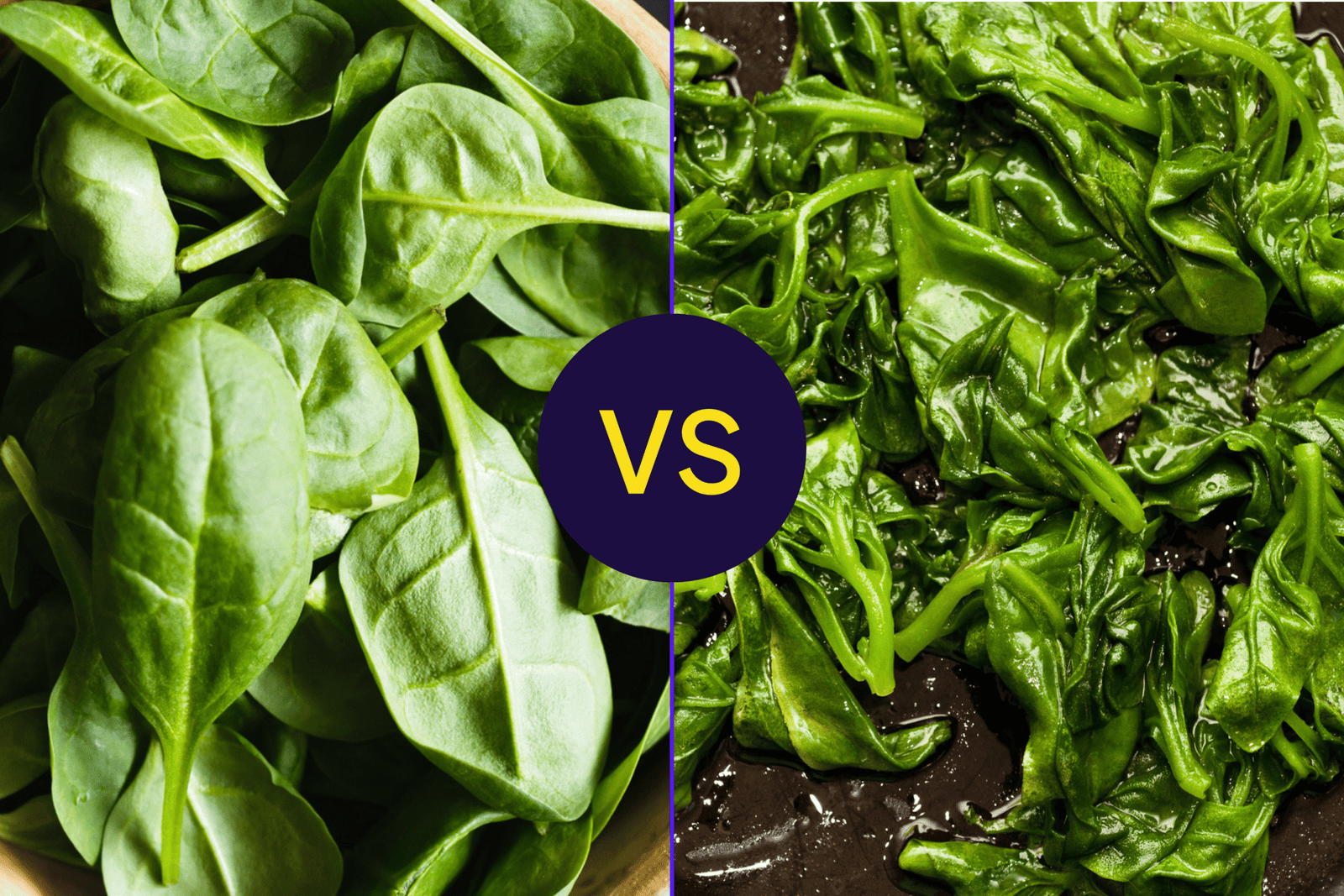
Spinach is a nutrient-dense green that’s full of vitamins, minerals, and antioxidants. While there’s no question that spinach is healthy, some people may wonder whether it’s best eaten raw or cooked. While both forms offer benefits, cooking spinach concentrates nutrients and makes it easier for your body to absorb certain protective compounds.
When spinach is cooked, the heat breaks down certain compounds that inhibit nutrient absorption while concentrating levels of certain vitamins and minerals.
Certain vegetables, like spinach, contain compounds called oxalates, which can bind to minerals like calcium and magnesium in the digestive tract and reduce how much of these minerals your body absorbs. Cooking spinach can reduce these compounds and enhance nutrient absorption. For example, studies have shown that boiling spinach can reduce oxalate levels by over 80%.
Additionally, cooked spinach contains less water and is therefore more nutrient-dense than raw spinach. A serving of cooked spinach contains significantly more fiber, folate, potassium, magnesium, and calcium than a serving of raw spinach.
Cooking methods that involve added fat, such as sautéing spinach in olive oil or butter, can also increase the absorption of fat-soluble vitamins and antioxidants, including vitamin A and carotenoid compounds. However, it’s important to note that certain cooking methods, such as boiling, significantly reduce vitamin C levels.
When you cook spinach, the heat changes its chemical structure, which affects how you digest it and absorb its nutrients. Raw spinach is particularly high in oxalates, which can interfere with mineral uptake when consumed frequently or in large amounts.
By softening spinach’s cell walls, cooking increases the bioavailability of fat-soluble nutrients, such as the carotenoid antioxidants beta carotene and lutein, which support eye health and regulate inflammation.
Additionally, cooking causes spinach to shrink, so you end up eating much more spinach per serving than you would if it were raw.
While some cooking methods, such as boiling, can reduce water-soluble nutrients like vitamin C, cooked spinach still delivers a meaningful amount because it shrinks significantly during cooking.
Though cooked spinach contains higher levels of nutrients per serving, raw spinach is still a nutritious choice.
Raw spinach contains the same nutrients as cooked spinach, but you have to eat a much larger volume to get comparable amounts. Plus, raw spinach is much higher in oxalates, which impact how well your body absorbs certain nutrients, like the minerals calcium and magnesium.
That said, raw spinach has a crisp texture that many people prefer and works better in salads, smoothies, and wraps than cooked spinach. If you prefer fresh foods or want something that requires little prep, raw spinach is a simple way to add more vegetables into your diet.
How you cook spinach significantly affects its nutritional value. Boiling and blanching causes the greatest loss of water-soluble nutrients, like vitamin C. This is because these nutrients dissolve into the cooking water.
Steaming has also been shown to result in significant losses of vitamin C.
To preserve nutrients while enhancing the absorption of fat-soluble compounds, like carotenoid antioxidants, lightly sauté spinach in olive oil. Microwaving is another effective option, as it helps retain certain nutrients, including vitamin C, and works well when you’re short on time.
People who regularly eat spinach can benefit from eating it cooked, as it’s a more concentrated source of vitamins and minerals and is lower in nutrient-blocking compounds.
Additionally, people concerned about kidney stones may want to opt for cooked spinach, as a high intake of oxalates can increase the risk of kidney stone formation in susceptible individuals. That said, studies show that both raw and cooked spinach are significant sources of oxalates, so people who are prone to kidney stones should limit their overall intake.
That said, for most people, enjoying both raw and cooked spinach as part of a healthy diet is a practical way to meet nutrient needs while accommodating personal taste and texture preferences.
