

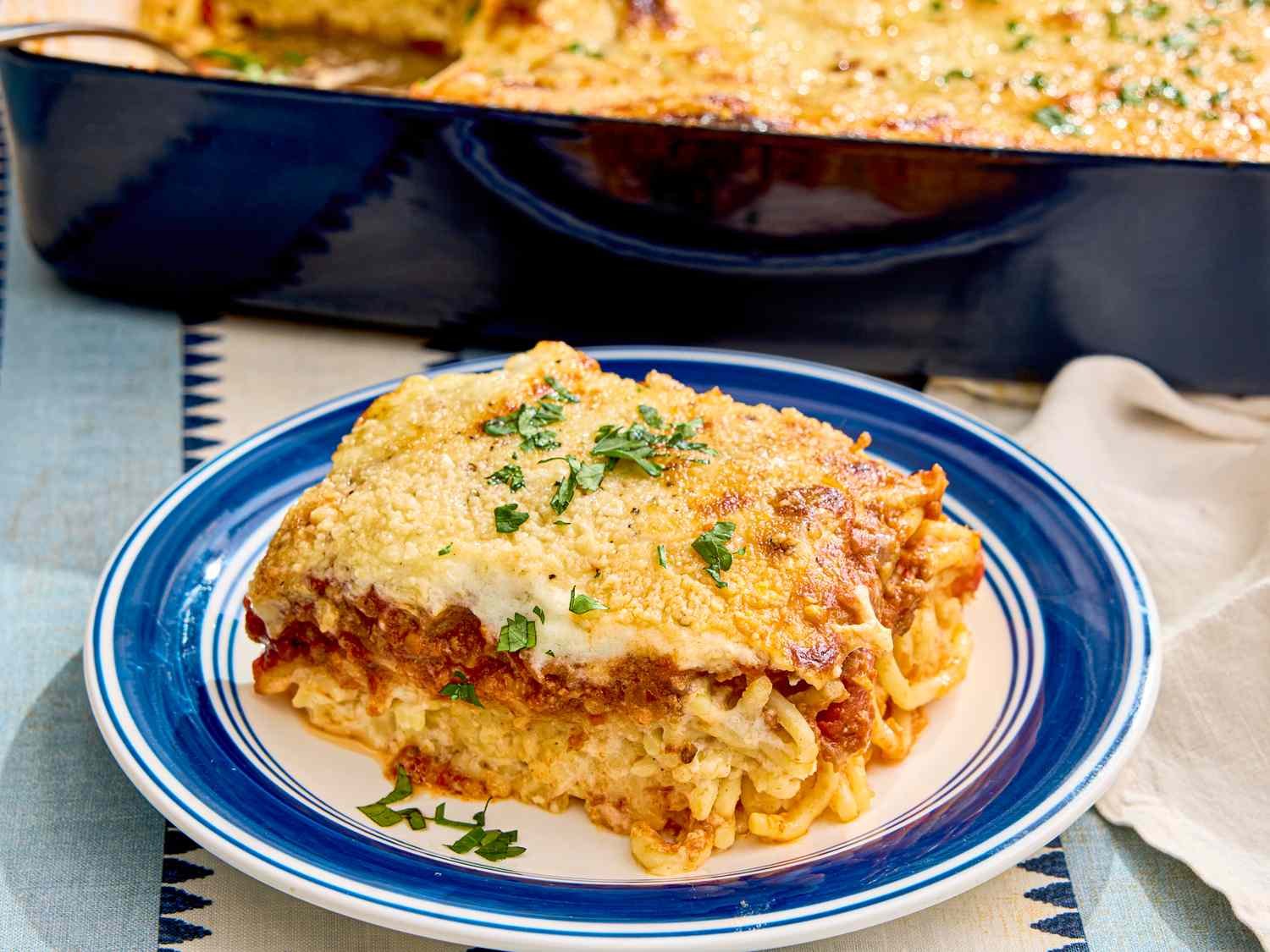
Why It Works
- A robust meat sauce of beef, Italian sausage, tomato paste, and a touch of fish sauce delivers concentrated flavor that balances the rich dairy elements.
- A mozzarella- and Parmesan-enriched béchamel replaces the cream cheese and cottage cheese or ricotta mixture often used for this dish, creating a smoother, silkier layer that enriches the casserole without any graininess.
There’s rich, and then there’s Million Dollar Spaghetti—an unapologetically indulgent church-social classic that’s been holding potlucks together across the Midwest and South for decades. Traditionally, it’s built on layers of spaghetti, a quick meat sauce, and a mixture of cream cheese and cottage or ricotta cheese. But as we tested my way through the dish, we kept coming back to one big question: What if we traded the grainy dairy layer for something silkier, smoother, and just a little more luxurious?
This recipe, developed by Nicole Hopper in our Birmingham, Alabama, test kitchen, does just that. Instead of using a ricotta or cottage cheese layer, she makes a béchamel enriched with mozzarella and Parmesan. It becomes a velvety, pourable cheese sauce that glides between the noodles and meat as it would in a creamy lasagna—minus the fuss of stacking noodles and hoping everything stays upright.
The meat sauce leans Italian American–style and deeply savory, thanks to a mixture of beef and Italian sausage simmered with onion, tomato paste, and a splash of fish sauce that fades into the background, lending the whole pan a quiet but undeniable depth. The result is a casserole that eats like the best parts of lasagna, baked ziti, and mac and cheese all tangled together.
Serious Eats / Robby Lozano, Food Stylist: Margaret Dickey, Prop Stylist: Christina Daley
Once assembled, the dish bakes into a hefty, bubbling slab with golden edges and a top layer of cheese-enriched béchamel that browns beautifully and oozes into the pasta when sliced. Fresh from the oven is when it’s best, but leftovers do keep and reheat well.
This dish is also wonderfully make-ahead friendly. Both the meat sauce and the béchamel can be prepared up to a day in advance and stored separately in the refrigerator; a gentle rewarm makes them easier to layer. You can even assemble the entire dish through Step 4 up to three days ahead—just cover it tightly and refrigerate. When baking from chilled, tack on an extra 5 to 10 minutes to ensure the center heats through.
It also tolerates the freezer surprisingly well. For the best results, freeze the assembled casserole (before baking), thaw it overnight, then bake as directed. If you need to go straight from freezer to oven, it works in a pinch—just plan on a much longer bake time and expect a slightly softer, less saucy result, since the extended time in the oven gives the pasta more opportunity to absorb the sauce and encourages the béchamel to thicken further as it cooks.
Whether you’re feeding a crowd, stocking your freezer, or just leaning into the comfort-food maximalism the name promises, this casserole delivers every bit of its million-dollar swagger.
This recipe was developed by Nicole Hopper; The headnote was written by Leah Colins.
