

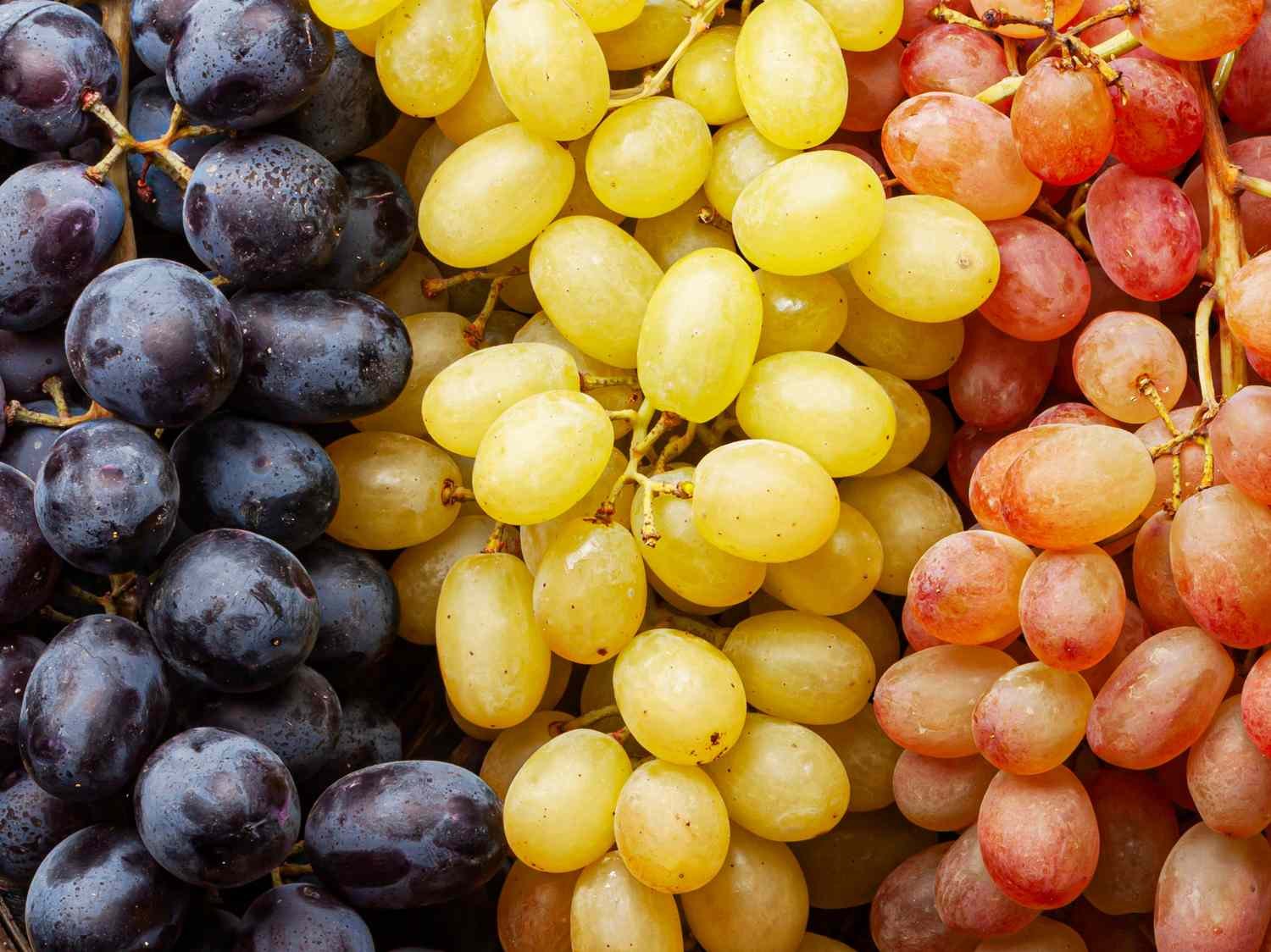
Grapes are berries that grow on vines in the Vitis genus, with most table grapes belonging to Vitis vinifera (native to Europe and the Mediterranean) or Vitis labrusca (native to North America). Here, we’ll discuss popular table grapes, including the differences between seedless and seeded varieties, and how to select, store, and use them.
Grapes aren’t just a convenient, portable snack—they’re also an excellent addition to salads, cheese boards, and desserts. Plus, they give us two other faves: wine and raisins. Thanks to year-round growing seasons in the US and elsewhere, grapes are almost always in season. Most grocery stores reliably stock classics, such as Thompson Seedless and Crimson Seedless, along with specialty varieties including Cotton Candy (which tastes just like it sounds) and Moon Drops, known for their unusual oblong shape and sweet, crisp bite, and Concords, the musky, slip-skin grape famous for its association with grape jelly.
Below, I’ll discuss popular table grapes, including the differences between seedless and seeded varieties, as well as how to select and use them. I’ll also fill you in on what wine grapes are all about and what sets them apart from table grapes.
What Are Grapes?
At their core, grapes are berries that grow on vines in the Vitis genus, with most table grapes belonging to Vitis vinifera (native to Europe and the Mediterranean) or Vitis labrusca (native to North America). California is the heart of US table grape production, with the Southern San Joaquin Valley leading the way. “California grows 99% of the table grapes in the US, and 80% of that comes from a 100-mile area in the Southern San Joaquin Valley,” says Jim Beagle, CEO of Grapery, a well-known grape grower. Table grapes thrive in the region’s hot, dry climate with warm nights—perfect conditions for developing their signature sweetness and texture.
Seeds vs. Seedless
Most table grapes these days are “seedless”—or close to it. Technically, seedless grapes do have seeds, but they’re tiny, soft, and unnoticeable. They are, in fact, immature seedsthat never fully develop. Seeded grapes, on the other hand, such as Concords and heirloom varieties, typically have fully developed seeds. Some people don’t mind eating seeded grapes , but seedless grapes are more popular, which is why growers developed and continue to grow these varieties. In contrast to table grapes, most wine grapes have seeds, which—along with their skins—help contribute to a wine’s structure and flavor.
Popular Table Grapes
Thompson Seedless
All hail the reliable, everyday green grape. Sweet, mild, and crisp, Thompson Seedless grapes are the ones you’re most likely to find in any grocery store year-round. They’re the go-to for snacking, adding to salads, or even freezing for smoothies or sorbets. They’re also the grapes typically used for both purple and golden raisins. (The difference in raisin color is a result of the drying process, not the color of the grape itself.)
Getty Images / ArtemKutsenko
Crimson Seedless
Crimson Seedless grapes are a staple red seedless variety you’ll often find alongside Thompson Seedless in the grocery store. They’re bright red with a crisp, satisfying crunch and a balanced sweet-tart flavor. Because they’re seedless and hold their shape well, they’re a jack-of-all-trades kind of grape—great for snacking, adding to salads, or stashing in lunchboxes. Similar in convenience to Thompson Seedless, Crimson Seedless offers a slightly bolder flavor and a bit more snap.
Getty Images / ksena32
Cotton Candy
Yes, they really do taste like their eponym. These sweet, green, seedless grapes are typically available from American growers in stores from mid-July through September. Developed by California-based fruit breeder International Fruit Genetics (IFG), Cotton Candy grapes were first commercially grown in 1996 by Grapery, which continues to grow them in the US. Growers in other countries also have licenses to produce Cotton Candy grapes, often supplying US markets during the off-season.
Getty Images / RussieseO
Witch Fingers/Moon Drop
Deep purple, long, and cylindrical, these grapes are renowned for their bold sweetness and crisp bite. Originally named Witch Fingers, they were rebranded Moon Drops in 2016 to broaden appeal. “About 50% of our consumers loved the original name, and the other 50% hated it,” Beagle said. Moon Drops won people over. In the not-too-distant future, you might see black, green, and red varieties, as Grapery hopes to expand the color range and extend the harvest window, making them available in stores for a longer season. They’re currently available from August to November in the US, making them the perfect Halloween grape if you want to call them by their original name.
Getty Images / Montree Lakchit
Autumn Royal Grapes
These dark, almost black grapes are a late-summer through fall treat. Larger and thicker-skinned than most red grapes—and seedless, too—they deliver a big, sweet flavor with subtle complexity and a firm, satisfying bite—a nice standout grape.
Getty Images / Kateryna Bibro
Concord Grapes
Concords have deep blue-purple skin with a light, dusty bloom; this bloom creates a slight barrier against pathogens and water, which helps stave off mold and keep them fresh. They’re what’s known as a slip-skin grape, so the skin slides right off to reveal juicy, translucent light green flesh that’s a bit gelatinous and full of large seeds. Grape juice, jelly, and jam are longtime favorites often made from Concord grapes.
Sometimes a grape variety is so tied to a region that you can practically smell it in the air. In New York’s Lake Erie region, Concord grapes—used mostly for juice and jelly—ripen in September and flood the area with their signature aroma. “The whole place smells like grape bubble gum,” says Terry Bates.
Terry Bates, Senior Research Associate at Cornell’s School of Integrative Plant Science and Director of the Cornell Lake Erie Research and Extension Laboratory, says that while Concord is the best-known slip-skin grape, there are a few lesser-known varieties—such as Mars, Reliance, and Everest Seedless—that have a similar flavor and texture without the seeds. You won’t find these seedless varieties at the supermarket; however, they do sometimes appear at farmstands in the Northeast or Midwest, so keep an eye out!
Getty Images / Image Professionals GmbH
Red Globe Grapes
These grapes are big, juicy, and have a nice crunch. They’re a showstopper because of their size—you’ll get approximately 40 Red Globe grapes to a pound vs. 90 to a pound of Thompson Seedless or Crimson Seedless—especially on fruit platters or cheese boards. But they do have seeds, making them less convenient for snacking. Their XL size and balanced sweet-tart flavor sort of make up for it.
Getty Images / Ed Young /Design Pics Editorial/Universal Images Group
Wine vs. Table Grapes
Table grapes, such as the ones grown in California’s San Joaquin Valley, are bred to be large, sweet, and eaten fresh. Wine grapes, on the other hand, come in hundreds of varieties grown around the world, and most thrive in places with warm days and cool nights—think coastal areas, valleys, or near large bodies of water—where temperature swings help build flavor and balance sugar and acidity, which is key to producing complex, well-structured wines.
“Wine grapes need high acidity—it’s the backbone of wine,” says Jim Beagle. “Table grapes need low acidity and high sweetness.” A good fresh wine grape should taste sour. The bottom line: Planting Cabernet grapes inland, where there aren’t as many temperature fluctuations, would produce grapes far too sweet for good wine.
What’s the Deal With Skin Contact?
Red wines, made from dark-skinned grapes such as Pinot Noir or Cabernet Sauvignon, ferment with their skins for weeks, which gives the wines their deep color, tannins, and structure. Rosé wines are also made from red grapes, but the juice only stays in contact with the skins for a few hours—just long enough to turn it pink. Orange wines are made in a similar way to red wines, but with white or green-skinned grapes; the juice is left in contact with the skins for days or weeks, adding color and complexity. Meanwhile, the process for making white wine pretty much takes the skin out of the equation. As Erin St. John Kelly, a tasting room associate at Ravines Wine Cellars, succinctly puts it: “Typically, white wine grapes (including Riesling and Chardonnay) go directly to press [which separates the juice from the skins], and the skins are not at all involved in fermentation.”
How to Shop for Grapes
When shopping for grapes, look for firm, plump clusters attached to green, flexible stems. If the stems are brittle or brown, the grapes are past their peak; likewise, if the grapes are mushy or the skins are wrinkled. Look for grapes that are evenly colored and have a fresh, fruity aroma. Grapes come into peak season in late summer and early fall, so that’s when you’ll find the best variety.
How to Store Grapes
Store grapes in the refrigerator, unwashed, in a breathable container to keep them fresh and crisp. Washing them too early can trap moisture, leading to mold or spoilage, so wait until you’re ready to eat them. Grapes are at their best within the first few days but can last up to a week. For more extended storage, you can freeze them: Rinse, dry, and spread them out into a single layer on a parchment-lined baking sheet, let them freeze, then transfer them to a container.
How to Use Grapes
We probably don’t have to tell you how to use grapes. But if you need some inspiration, they’re wonderful on cheese and charcuterie plates, when pickled, turned into jam, and incorporated into salads, cocktails, and desserts, including this peanut butter and jelly pie. And, of course, you can always eat them on their own, fresh or frozen.
