

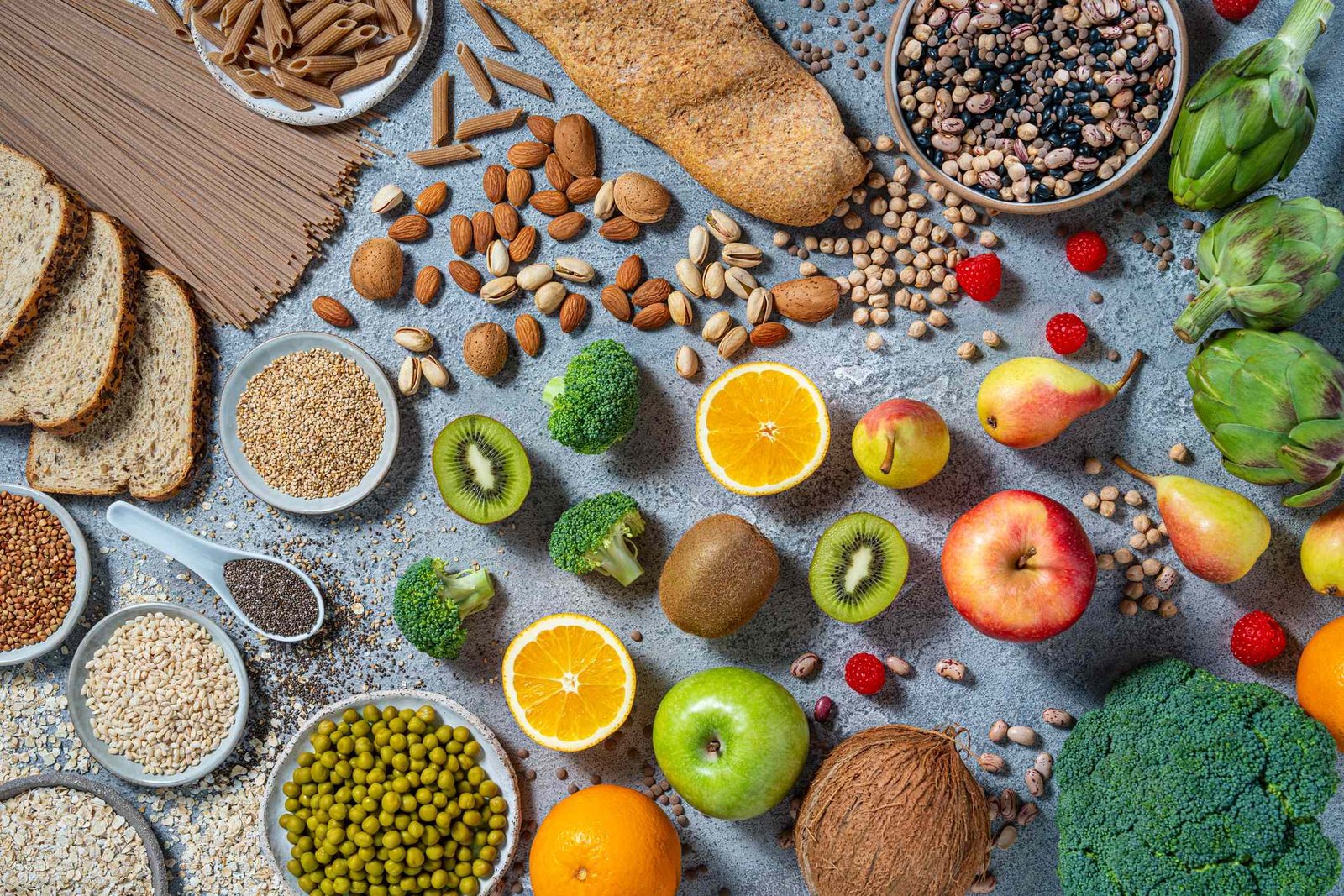
Fiber is a type of carbohydrate that the body doesn’t digest. There are two main types: soluble and insoluble fiber. Both types are found in foods. Insoluble fiber helps with bowel movements. Soluble fiber helps lower cholesterol and blood sugar levels, and promotes satiety (feelings of fullness).
Most adults need to eat 22-34 grams of fiber per day, depending on their age and sex. However, most Americans consume about half of the recommended daily fiber intake.
There is no exact number that defines a high-fiber diet, but meeting or exceeding the daily recommendations for fiber intake is generally considered a high-fiber diet.
High-fiber intake can cause mild digestive discomfort in the beginning. You should gradually increase your fiber intake to allow your digestive system to adjust.
Day 1
Start with lower amounts of fiber on day one and gradually increase your fiber from there. You can try the following meals to help ease the transition:
- Breakfast: Green frittata with eggs, kale, red potatoes, bell pepper, and onion—3 grams (g) fiber
- Lunch: Black bean burritos with salsa and yogurt—6 g fiber
- Dinner: Meatball soup with brown rice, spinach, and vegetables—6 g fiber
- Snack: Peanut butter dip with mixed fruit—4 g fiber
Total fiber: 23 grams
Day 2
On day two, you can up your fiber intake by incorporating a variety of high-fiber ingredients into your meals:
- Breakfast: Breakfast bars with oats, cashews, beans, cherries, dates, and cinnamon—6 g fiber
- Lunch: Pasta salad with carrots, broccoli, bell pepper, and green onions—3 g fiber
- Dinner: Salmon vegetable burgers with sweet potatoes—1 g fiber
- Snack: Fruit pizza on whole wheat English muffin—5 g fiber
Total fiber: 25 grams
Day 3
For day three, stick with nutrient-dense meals with high fiber:
- Breakfast: Banana pancakes served with cooked apple slices—5 g fiber
- Lunch: Pancakes made with lentils, potatoes, and cheese—7 g fiber
- Dinner: Kidney bean and vegetable salad—1 g fiber
- Snack: Apple slice sandwiches with nut butter and dried fruit—3 g fiber
Total fiber: 26 grams
Day 4
On the fourth day, ease the fiber load on your digestive system by distributing fiber across each course:
- Breakfast: Sweet potato pancakes with mushrooms in balsamic maple sauce—7 g fiber
- Lunch: Quinoa salad with shrimp and vegetables—7 g fiber
- Dinner: Lentil stew with tomatoes, carrots, onions, and garlic—7 g fiber
- Snack: Parfait with granola, yogurt, and strawberries—7 g fiber
Total fiber: 28 grams
Day 5
For day five, keep adding a little more fiber with the following meals:
- Breakfast: Overnight oats made with yogurt and berries—9 g fiber
- Lunch: Falafel sandwich with tomatoes and lettuce, served with yogurt—12 g fiber
- Dinner: One-pot chicken and rice cooked in broth with peas—3 g fiber
- Snack: Hummus with carrots—5 g fiber
Total fiber: 29 grams
Day 6
By day six, you’ve doubled the fiber intake of most Americans:
- Breakfast: Breakfast bruschetta with cheese, eggs, avocado, and tomatoes—9 g fiber
- Lunch: Pepper boats and lettuce wraps with brown rice, fish, and salsa—5 g fiber
- Dinner: Green cabbage and carrot salad with grilled lamb—8 g fiber
- Snack: Bean dip with tortilla chips—8 g fiber
Total fiber: 30 grams
Day 7
At the end of the week, you will have met or exceeded your recommended daily fiber intake by having the following meals:
- Breakfast: Omelet wrap with broccoli, pepper, and mushrooms—3 g fiber
- Lunch: Crunchy rice with tofu and vegetables—8 g fiber
- Dinner: Pasta bake with butternut squash, shallots, and cheese—9 g fiber
- Snack: Smoothie with green tea, banana, berries, yogurt, and flax seeds—14 g fiber
Total fiber: 34 grams
You can increase your daily fiber intake by adding high-fiber foods to your regular meals. This can help with the transition from a low- to high-fiber diet. Here are some high-fiber foods with their fiber content per serving:
- High-fiber bran cereal: 14 grams in ½ cup
- Bulgur: 4.1 g in ½ cup, cooked
- Whole wheat crackers: 2.9 g in 1 ounce
- Lima beans (white): 13.2 g in 1 cup of cooked
- Artichoke: 9.6 g in 1 cup of cooked
- Navy beans: 9.6 g in ½ cup of cooked
- Green peas: 8.8 g in 1 cup of cooked
- Lentils: 7.8 g in ½ cup of cooked
- Brussels sprouts: 6.4 g in 1 cup of cooked
- Sweet potato: 6.3 g in 1 cup of cooked
- Avocado: 5 g in ½ cup
- Carrots: 4.8 g in 1 cup
- Raspberries: 8.0 g in 1 cup
- Blackberries: 7.6 g in 1 cup
- Pear: 5.5 g in 1 medium fruit
- Kiwifruit: 5.4 g in 1 cup
- Pumpkin seeds: 5.2 g in 1 ounce
- Chia seeds: 4.1 g in 1 tablespoon
- Almonds: 3.5 g in 1 ounce
Only about 5% of American adults meet the recommended daily fiber intake. You’re likely consuming less fiber than needed if you don’t regularly eat whole grains, legumes, fruits, vegetables, nuts, and seeds.
Here are some other things to consider if you’ve decided to follow a high-fiber diet:
- Increase fiber gradually to avoid digestive symptoms such as gas, bloating, cramping, or changes in stool.
- Your fiber needs are individual and depend on your age, sex, calorie intake, and gut health. Women aged 18–50 need about 25-28 grams of fiber per day, while men aged 18–50 need about 31-34 grams. Older adults may need less due to lower energy intake.
- Consult your doctor if you have digestive conditions such as inflammatory bowel disease (IBD) or gut dysbiosis. You may benefit from a personalized fiber regimen based on your gut health.
- Different types of fiber have different effects on the body. You need both soluble and insoluble fiber, and whole foods typically contain a natural mix. Ask your healthcare provider for guidance if you’re considering fiber supplements.
- Read the nutrition facts labels carefully when buying packaged products. Some foods may be high in added fiber but also high in sugar, sodium, or saturated fats.
These tips can help with your transition into and maintain a high-fiber diet:
- Choose whole foods instead of refined and ultra-processed foods. This can be a quick way to improve your fiber intake without planning every meal. For example, whole grains contain much more fiber than refined grains.
- Add nuts and seeds to your diet. They contain high amounts of fiber in small portions, so adding them to yogurt, smoothies, or baked goods can significantly boost your fiber intake.
- Be consistent. Maintaining a high-fiber diet is just as important as starting one. In the beginning, you may experience mild digestive symptoms, but your body will adapt as you gradually increase your fiber intake.
- Distribute your fiber intake throughout the day. This helps avoid overloading your digestive system in a single meal.
- Take note of which foods trigger your digestive symptoms. Your symptoms may be caused by only some fibrous foods or by non-fiber foods. It’s helpful to observe and note your symptoms and what you eat, so you can discuss any concerns with a healthcare provider.
- Meal prep high-fiber foods. At the beginning of the week, prepare foods like bean burritos or steamed vegetables to add to salads. Those can be options when you don’t have time to prepare high-fiber food.
Most Americans don’t consume enough fiber. A high-fiber diet has many benefits, including supporting heart, metabolic, and digestive health. Gradually increase your fiber intake to avoid digestive symptoms such as bloating, discomfort, and flatulence.
