

Key Takeaways
- Eating disorders existed since ancient times and were seen as a form of religious fasting.
- Anorexia nervosa was officially described in the 1600s but got its name in the 1800s.
- Bulimia nervosa was identified as a variant of anorexia in 1979.
Given the modern-day sociocultural fixation with thinness, you might conclude that eating disorders are relatively recent phenomena. However, historical evidence shows these disorders have been around for quite some time—albeit in somewhat different forms.
Learn about the history of eating disorders, including when they first appeared and how they were diagnosed. We also discuss when and how three common eating disorders—anorexia nervosa, bulimia nervosa, and binge eating disorder—were first recognized to give you a better historical perspective of eating disorders over time.
When Eating Disorders First Appeared
The earliest historical descriptions of people experiencing symptoms consistent with modern-day eating disorders date back to Hellenistic (323 BC-31 BC) and medieval times (5th -15th century AD). Around this time, purification through the denial of physical needs and the material world emerged as a religious theme.
Deprivation of food was seen as a spiritual practice, such as in a report of an upper-class twenty-year-old Roman girl starving herself to death in pursuit of holiness. Women were disproportionately afflicted by extreme religious fasting, which some contemporary authors have dubbed “holy anorexia.”
There were additional accounts of extreme self-induced fasting that often led to premature death by starvation from the Middle Ages. Catherina of Siena is one example.
St. Catherine of Siena died at the age of 33 after reportedly practicing extreme food abstinence as a form of religious fasting, making it difficult for her to eat or even drink water. Yet, she was always able to receive the Eucharist.
The motivation for this form of fasting seems to be different than the drive for thinness that dominates modern-day discussions of eating disorders. Despite this, many believe it to be the same disorder merely assuming different meanings based on the sociocultural climate.
History of Anorexia Nervosa
In 1689, English physician Richard Morton described what are considered the earliest modern cases of the illness we now know as anorexia nervosa, one in a male and one in a female. He indicated the lack of a physical explanation for the loss of appetite and wasting and, hence, determined “this Consumption to be Nervous.”
The next cases reported were about 200 years later. In 1873, Sir William Gull, another English physician, coined the term “anorexia nervosa” in published case reports. Also, in 1873, a French physician, Ernest Charles Lasegue published descriptions of individuals with “anorexie hysterique.”
In 1982, the American doctor Hilde Bruch greatly influenced the understanding of modern anorexia nervosa with a foundation lecture. It was at this time that anorexia became more widely known.
More recent research has advanced our knowledge and some of Dr. Bruch’s ideas—such as those that implicate early family dynamics as causing the disorder—are now considered outdated. Earlier psychoanalytic explanations of the illness have been replaced as our understanding of genetic and biological processes has increased.
In 2003, researchers Keel and Klump proposed that the differing motivations for food refusal across historical periods may represent culturally meaningful ways to understand a disorder that leaves people—disproportionately, females—feeling unable and unwilling to eat.
History of Bulimia Nervosa
In contrast to anorexia nervosa—which appears to have been noted throughout history—bulimia nervosa appears to be a more modern development. Bulimia nervosa was first described as a variant of anorexia in 1979 by British psychiatrist, Gerald Russell.
Russell reported that some early Roman emperors were observed to eat to excess and then vomit, sharing that purging was a practice in ancient Egypt, Greece, Rome, and Arabia—cultures in which it was used to prevent diseases believed to come from food. Physicians also prescribed it.
Russell believed bulimia nervosa was a culture-bound condition and not relevant to our modern understanding of the disorder. Some disagree and propose that this behavior was an early historical variant of bulimia nervosa, lacking—as in the case of the early accounts of anorexia nervosa—the modern drive for thinness.
Among the earliest cases that bear a clear resemblance to modern bulimia nervosa is the case of Nadia, described by Pierre Janet in 1903. She displayed dietary restriction, fear of fatness, and episodes of binge eating.
Another early description was described by Mosche Wulff in 1932. This patient engaged in periods of fasting alternating with periods of overeating and vomiting.
In 1960, U.S. psychiatrists Bliss and Branch published case histories that included a number of cases of bingeing and vomiting. The German psychiatrist Ziolko published papers in the 1970s describing patients who engaged in compulsive food intake and vomiting and experienced increased weight concerns.
In 1979, Gerald Russell published his case series of 30 patients who reported self-induced vomiting as an attempt to mitigate the effects of episodes of overeating. It was determined that these represented a syndrome that was distinct from anorexia nervosa but shared the same fear of fatness. This famous paper was titled “Bulimia nervosa: an ominous variant of anorexia nervosa.”
In 1976, Christopher Fairburn also saw an early case of bulimia nervosa and began studying it and developing a treatment for it. The disorder was barely heard of before the latter half of the 20th century. Since then, it has become more common.
History of Binge Eating Disorder
Binge eating disorder was even later on the scene. This disorder was first described in 1959 by psychiatrist Albert Stunkard, who coined the term “night eating syndrome.” He later specified that binge eating could occur without the nocturnal component of that disorder.
Binge eating disorder was first studied in weight loss populations.
In 1993, a cognitive behavioral therapy manual for binge eating and bulimia nervosa was published by Fairburn, Marcus, and Wilson. This manual described how cognitive behavioral therapy could effectively treat bulimia nervosa and binge eating disorder. It went on to become the most studied manual for the treatment of eating disorders.
History of Eating Disorder Diagnosis
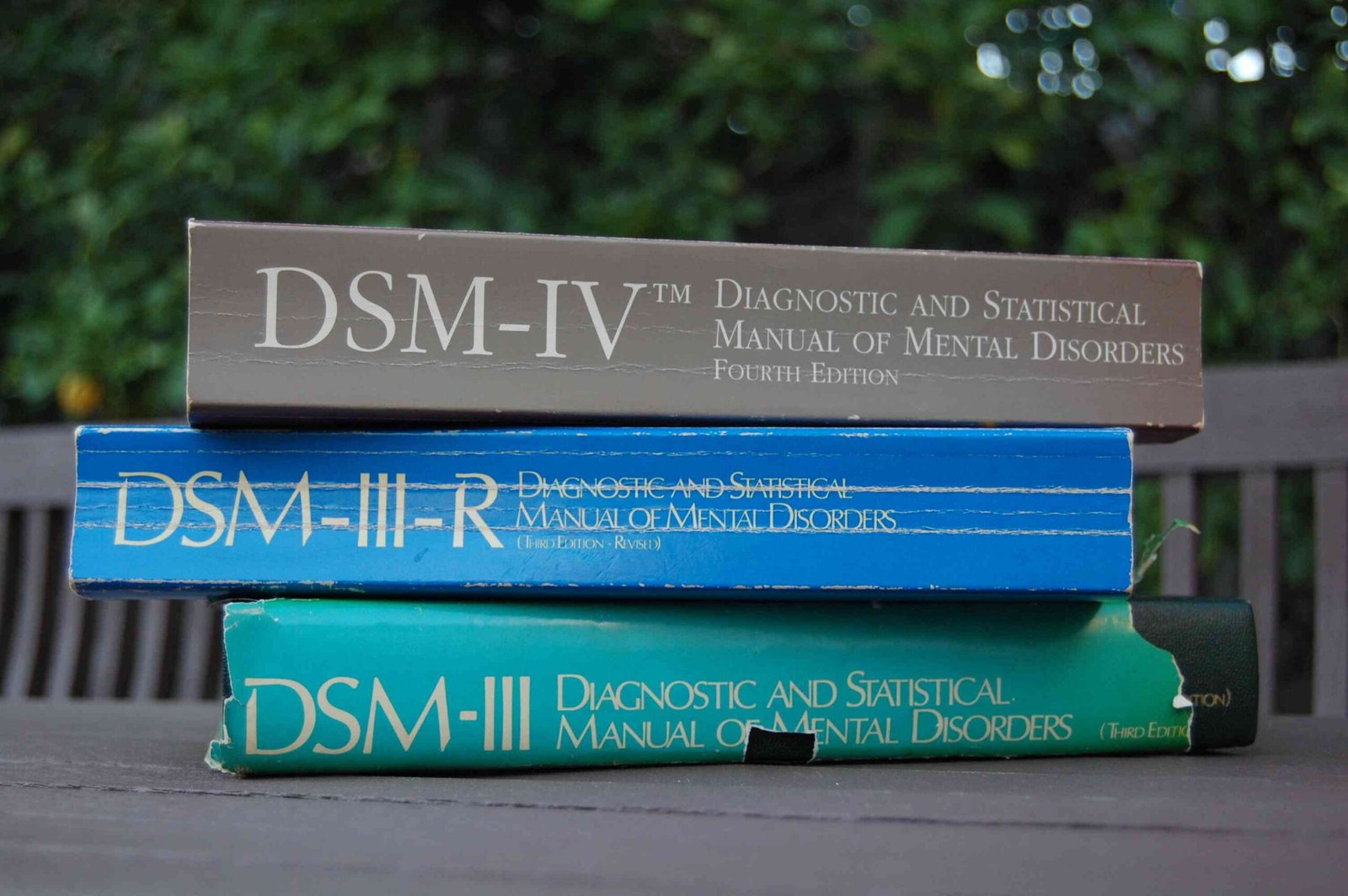
These three major disorders—anorexia, bulimia, and binge eating—entered the Diagnostic and Statistical Manual in the same order.
Anorexia Diagnosis History
Anorexia nervosa was accepted as a psychological disorder in the late 1800s after the early reports recounted above. In 1952, it earned a place in the first edition of the Diagnostic and Statistical Manual of Mental Disorder (DSM-I), the first eating disorder to do so.
However, it was officially categorized as a psychophysiologic gastrointestinal reaction, a broad category that included gastrointestinal disorders such as peptic ulcers, chronic gastritis, and ulcerative colitis. The common factor was that emotional factors were believed to play a causal role.
The DSM’s second edition (DSM-II) was published in 1968. In it, anorexia was categorized under special symptoms. This category included other “special symptoms feeding disturbances” such as pica and rumination.
Bulimia Diagnosis History
In the DSM-III, which was published in 1980, eating disorders debuted as a diagnostic category under the rubric of disorders of infancy, childhood, or adolescence. Bulimia—not yet called bulimia nervosa—made its first appearance in this edition.
Other eating disorders included in DSM-III were anorexia nervosa, the disorder known as pica, rumination disorder, and atypical eating disorder.
With the publication of the DSM-IV in 1994, bulimia nervosa appeared in its current form. This diagnostic criteria introduced the required feature of shape and weight concerns.
Binge Eating Diagnosis History
It was also in the DSM-IV that binge eating disorder (BED) was mentioned for the first time. At this point, BED was still not known as an independent disorder but was included in an appendix as a proposed diagnosis for future study.
In this edition, anorexia nervosa and bulimia nervosa were moved out of disorders of infancy, childhood, or adolescence and became their own category. Other eating disorders (pica, rumination disorder, and feeding disorder of infancy or early childhood) were not moved and remained infancy, childhood, and adolescent disorders.
Binge eating disorder finally made an appearance as an independent diagnosis in the DSM-5 in 2013. In this version of the DSM, the categories of “Eating Disorders” and “Feeding and Eating Disorders of Infancy or Early Childhood” were reunited in the new umbrella category of Feeding and Eating Disorders.
