

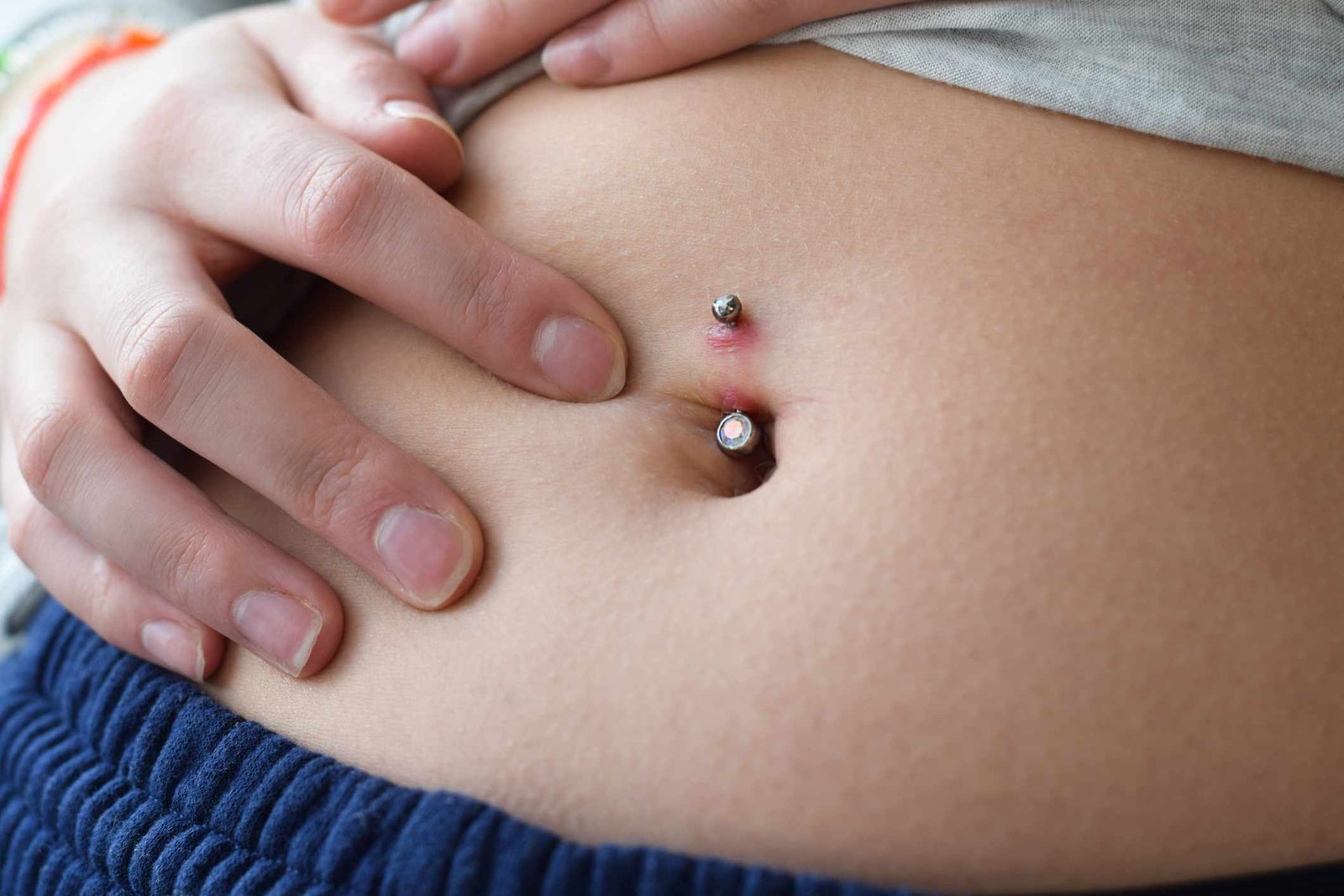
A complication with belly button piercings is rejection, or when your body tries to remove the piercing from your skin. This is an immune response—your body sees the piercing as a foreign object and tries to expel it so the skin can heal. However, it can cause problems like irritation and infection.
After you get your belly button pierced, it can take up to nine months for it to heal. During that time, you may experience irritation, infection, jewelry migration, rejection, and in severe cases, bacterial endocarditis (a serious infection inside the heart). The most common issues, though, are migration and infection.
Migration, which can lead to rejection at times, occurs when your jewelry moves closer to the surface or the tissue gets narrower between the openings of a piercing, explains Johnny Pearce, owner of Clementine Piercing and a member of the Association of Professional Piercers (APP). Rejection occurs when your piercing migrates so much that it is no longer viable or comes all the way to the surface.
“Many times, once a piercing has crossed the threshold from migrating to rejecting, it’s pretty noticeable,” says Pearce. “Rather than occasionally showing signs of irritation, your piercing often lives in the range of irritated to open wound, pushing the boundaries of what you’ve previously known it to look like.”
Pearce says other signs of navel piercing rejection can include:
- Tissue that looks paper-thin or transparent, and the barbell may be seen through the skin
- Two piercing points that have grown close together and may appear to be hanging by a thread of tissue
- Redness and swelling that have extended beyond the piercing site
- Tissue texture surrounding the piercing site looks raw, scale-like, shiny, dry, or is peeling
Migration is common for many piercings, especially navel piercings, says Pearce. Many people start to suspect migration when they notice their navel jewelry sits differently than it did previously. However, this doesn’t always mean your belly button piercing will experience rejection.
“Piercing rejection is essentially when your migrating piercing has continuously shifted without finding relief until it has finally reached a point where it is no longer able to successfully heal or even have jewelry safely worn in that area of the body,” says Pearce.
There are several reasons why a migrating piercing may reach rejection, such as:
- Piercing placement is in an area with not enough tissue or unsuitable tissue, often due to the piercer being inexperienced or not properly trained
- Selected jewelry is too small, too thin, or of poor quality
- Using harsh aftercare products or not following aftercare instructions
- Wearing high-waisted or tight clothing
- Bumping or irritating the piercing during physical activity
- Experiencing excessive physical trauma or emotional stress while healing
Sometimes, even when you do everything correctly, a piercing will still migrate or reject for no known reason, says Pearce. “Your body is exceptionally good at preventing foreign objects from staying in your body and actively works to expel them once it becomes aware that they are present.”
Potential Complications and Risks
According to Pearce, the biggest risks associated with rejection are permanent scarring and permanent tissue discoloration. There is also a higher risk of infection.
Your belly button piercing is an open wound that takes longer to heal, says Pearce. As an exposed wound, your piercing provides direct access for bacteria to enter your bloodstream, causing a bacterial infection.
If your belly button piercing never seems to recover or return to normal, despite home care efforts, Pearce says it may be time to meet with your piercer again. They can examine the jewelry quality, discuss your lifestyle, and recommend adjustments to make.
They can also help you address the rejection. Sometimes, this means safely removing the piercing. Your piercing may need to be removed if:
- The tissue between the piercing holes has become too thin: For safety reasons, your piercing should have at least a 5/16” inch of tissue between the entrance and exit holes. When the tissue between the entry and exit gets smaller or thinner over time, the piercing may need to be removed.
- The skin has signs of irritation: You may have to remove the piercing if your skin between the openings is peeling, inflamed, or hard and calloused.
- The jewelry is showing through the skin: Removal may be necessary if there is only a thin amount of nearly transparent tissue and the jewelry can be seen through the skin.
“Continuing to wear jewelry despite ongoing migration or rejection can result in the surrounding tissue beginning to thin and deteriorate until the jewelry pushes its way out of the body entirely,” says Pearce. “This [can leave] lasting, visible scarring.”
Keep in mind, removing jewelry on your own, especially when there is an active infection, could cause an abscess. If there is an infection, you may need to leave a high-quality body jewelry piece or a retainer in place so the infection can drain before removing it. A healthcare provider or experienced piercer can let you know when the piercing should be removed.
When To Seek Medical Care
If you suspect that you have a bacterial infection, see a healthcare provider right away, says Pearce. You should also seek medical attention if you notice any of these symptoms:
- Severe redness or red streaks from the piercing site
- Thick, green, yellow, or gray discharge
- Significant swelling that does not improve
- Discharge that has an odor
- Significant pain from the piercing
- Fever and chills
- Nausea and vomiting
- Dizziness or disorientation
Never ignore a suspected infection. Most infections begin as local infections at the piercing site and are relatively easy to treat. However, when left untreated, an infection can spread to other parts of the body and lead to serious complications.
When you get a navel piercing, your body needs to heal with a foreign object inside an open wound. Many factors can influence how well or quickly your piercing heals. “Every decision can make a difference in the outcome,” says Pearce.
When getting the piercing, follow these steps to ensure a safe piercing and initial healing process:
- Choose an experienced piercer who is a member of the Association of Professional Piercers
- Use certified titanium or 14K gold jewelry, as the body is more likely to accept these materials
- Follow the aftercare instructions
Here are some potential aftercare steps you may need to follow to promote healing. But always follow the specific instructions provided by your professional piercer:
- Wash your hands before you clean or touch your belly button piercing.
- Spray the piercing with sterile saline wound wash when cleaning it.
- Use disposable products like gauze or cotton swabs to gently remove build-up or crustiness.
- Leave your jewelry in at all times and contact your piercer for a non-metallic jewelry alternative if it needs to be removed for a medical procedure.
- Protect your piercing from irritation or trauma, such as when playing sports. A hard, vented eye patch can work well for this. Secure the patch over your piercing using an ace-type bandage.
Getting a body piercing, like a belly button piercing, is a common practice. But it can come with complications, including irritation, infection, and rejection.
Piercing rejection occurs when the body tries to remove the piercing on its own. A rejected belly button piercing typically needs to be removed. If you notice your belly button piercing is migrating or becoming irritated, see a piercing professional for an evaluation and tips. They can either remove the piercing or recommend steps to keep it from fully rejecting.
