

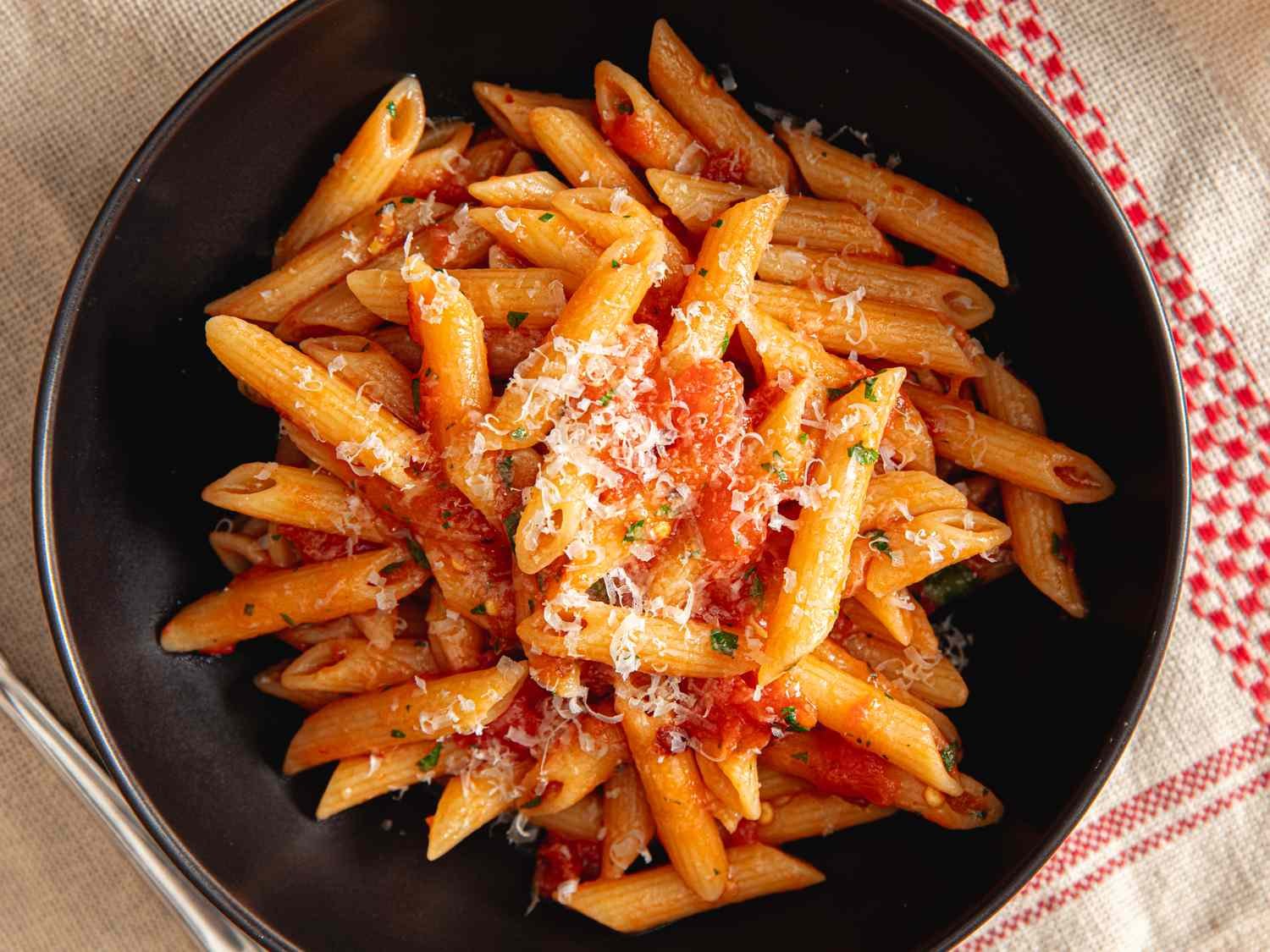
Leftover pasta usually turns sad and sticky because starches tighten and the sauce dries out. I tested five methods for reheating sauced pasta—including versions with tomato sauce and a creamy butter sauce—to determine the most effective way to restore a silky sauce and perfect noodles.
There’s a universal disappointment that happens when you reheat leftover pasta. You open the fridge to a promising bowl of last night’s spaghetti, gleaming red and perfectly coiled in its container, and think, “That’s lunch sorted.” Then you take it to the microwave, hit start, and three minutes later you’re staring at a sad, congealed mass—half dry, half soupy, the sauce split and the noodles gummy and vaguely cafeteria-like.
I’ve experienced that heartbreak enough times to want answers. Why does reheated pasta so often betray us? And more importantly, can it ever be brought back to its silky, sauce-clinging, just-cooked glory? To find out, I did what any sensible person (or mildly unhinged recipe developer) would do: I tested five common reheating methods side by side with two types of sauce: tomato and cacio e pepe.
When Reheating Pasta Matters
My testing and troubleshooting of reheated pasta applies mainly to sauced pasta that was properly cooked and finished in the first place—the kind we champion at Serious Eats, where noodles are cooked just shy of al dente and finished in their sauce so starch, fat, and seasoning come together in one cohesive dish.
When pasta and sauce are finished together, they become a single system. The noodles absorb some sauce, release a little starch back, and the two merge into a glossy emulsion that coats every strand. It’s delicious when fresh—but that same integration makes reheating tricky. Because the sauce and noodles are bound together, you can’t just warm each separately; heat and moisture have to be managed as one.
If you’re reheating plain boiled pasta or baked pastas like lasagna or ziti, that’s a different situation entirely. In those cases, the sauce and noodles aren’t fused the same way, and the reheating methods here don’t really apply. (Stay tuned for deep dives on how best to reheat in those cases.)
Set Yourself Up for Success
Before we get to the results, I need to acknowledge the most important, and maybe most overlooked, factor in how well pasta reheats: how it was cooked in the first place. I’ve already discussed at length how to avoid overcooked pasta, but the salient point here is this: If your pasta is already overcooked, no amount of clever reheating will save it. Once starches have swollen and burst, once the noodles have soaked up too much water and gone slack, there’s no resurrecting that structure. The best reheating strategy in the world can’t rebuild gluten or restore al dente chew.
The Starch Science of Pasta (and Why It Turns on You Overnight)
Pasta is mostly starch—long chains of glucose molecules that swell, absorb water, and gelatinize as they cook. When you nail the timing, those starch granules expand just enough to become tender while still holding together inside the protein network that gives pasta its chew.
But once pasta cools, those same starches begin to retrograde, a process in which the gelatinized starch molecules start linking back up into tighter, more crystalline structures. That’s why leftover pasta feels firmer or even a little rubbery straight from the fridge. The water that was once trapped inside the starch migrates out and evaporates, leaving the noodles drier.
This might sound familiar—Daniel’s pasta salad guide covers this same retrogradation process, the starch behavior that causes pasta to firm up in cold salads. The difference here is that instead of compensating ahead of time by “overcooking” pasta intended for salads, as we advise, we’re trying to undo that retrogradation after the fact.
Now add sauce to the equation. Because the sauce clings to the pasta’s surface via that thin layer of starch and fat, as moisture leaves the noodles, it also gets pulled from the sauce. The emulsion breaks, fat separates, and suddenly the beautiful marriage between sauce and pasta has fallen apart. Reheating can reverse some of this—heat loosens those starch molecules again—but only if you do it gently and with enough moisture to rehydrate the pasta without cooking it further.
That’s why so many reheating attempts fail: too much heat, not enough water, and no agitation to rebuild the emulsion. Once you understand the science, the logic behind the winning method I outline below becomes clear.
The Pasta Reheating Tests
For this test, I made two batches of pasta: one a simple spaghetti in tomato sauce, the other a buttery, emulsified cacio e pepe. Both were cooked to just under al dente and finished in their sauces until perfectly glossy. After cooling them to room temperature, I divided them into equal portions, sealed them in airtight containers, and chilled them overnight—your typical leftover scenario.
The next day, I reheated each portion using five different methods:
- Microwave, uncovered as is (no water)
- Microwave, covered, with 3 tablespoons of water
- Stovetop sauté with 3 tablespoons of water
- Gentle double boiler (indirect heat)
- Oven, covered with foil
Each method was scored for texture, sauce consistency, and flavor. Here were the results.
The Results
Uncovered in the Microwave
Microwaving pasta uncovered might be the default option, but as might be obvious to some, it’s also the worst one. Without moisture or any stirring, the noodles heat unevenly, drying out at the edges while remaining cold and chewy in the center. For the tomato-based pasta dish, the result was dry and slightly leathery, with the sauce tasting overcooked in spots and cold in others. The cacio e pepe fared even worse. The cheese seized almost immediately, forming a grainy, greasy paste that clung together in lumps. In other words, everything that makes pasta wonderful was gone. It’s fast, sure, but unless your definition of success involves disappointment, skip it.
Covered in the Microwave With a Splash of Water
Adding a splash of water and covering the dish does help somewhat. Steam builds up under the cover, softening the noodles and loosening the sauce. It’s a notable improvement over the bare microwave, but not by much. The tradeoff for that extra moisture is mush and dulled flavors. The tomato-sauced pasta became thin and bland, while the cacio e pepe turned gummy and greasy as the cheese clumped and separated. The cover reduced splatter but left the dish overly soft and soggy.
The Oven
The oven’s dry heat makes it ideal for reheating baked pastas like lasagna, manicotti, or baked ziti. For loose, sauced pasta, though, it’s a nonstarter. Even covered with foil, both the tomato and cacio e pepe’s sauce thickened and baked onto the sides of the baking dish before the noodles heat through. The results were tight, sticky, and oddly leathery around the edges. If you’re reheating something that was already baked, go for it. Otherwise, stay away.
The Stovetop Sauté
This method was the standout for the tomato sauce, and worked fairly well for cacio e pepe too. I added a couple of tablespoons of water to a nonstick skillet, then tossed in the cold pasta over medium heat. Within a minute or two, the water loosened the sauce, the starch rehydrated, and as I kept the pasta moving, tossing it continuously with tongs and giving the pan an occasional shake to keep the sauce circulating, everything came back together just as it had the night before—sauce glossy, noodles supple, and hot all the way through.
This method works because it mirrors the same physical principles as finishing pasta in sauce: heat, moisture, and agitation. The added water reintroduces a bit of steam, helping to dissolve congealed starches, while constant tossing and stirring encourage the sauce to re-emulsify. The starch and fat reunite into a cohesive system instead of separating into clumps and oil slicks.
If you have the foresight, it’s worth saving a cup of your pasta cooking water when you first make the dish. Adding a splash of that starchy, flavorful liquid during reheating in place of plain tap water gives you the perfect balance of moisture and emulsifying power, helping the sauce return to that silky, just-finished state instead of thinning out or breaking. If you think of it, set aside a little extra sauce too and add that when you reheat.
This method restored the pasta in tomato-based sauce to near-fresh conditon. Even the cacio e pepe held up well with gentle handling—though for more delicate butter or cream sauces, the next method edged it out.
The Double Boiler
This is a slightly fussier method, but it’s the most foolproof for cheese- or dairy-based emulsions. I placed a bowl of cold cacio e pepe with water over a pot of barely simmering water, stirring as it warmed. The results were excellent: no curdling, no broken sauce. The slow, indirect heat keeps dairy-based emulsions intact by preventing fat from separating or proteins from tightening too much.
It’s not fast—you’ll spend several minutes stirring while the steam does its work—but if you’ve gone to the trouble of making something like cacio e pepe or carbonara, this gentle approach is worth the patience.
Serious Eats / Vicky Wasik
The Takeaway
Across the board, it’s clear that the more your method recreated the conditions of that final pasta-in-sauce stage, the better your results. Moisture, movement, and gentle heat are your friends. The best reheating method for nearly all sauced pastas is the stovetop sauté—quick and controlled. For fragile butter, cream or cheese sauces, the double boiler takes the win for its precision.
