

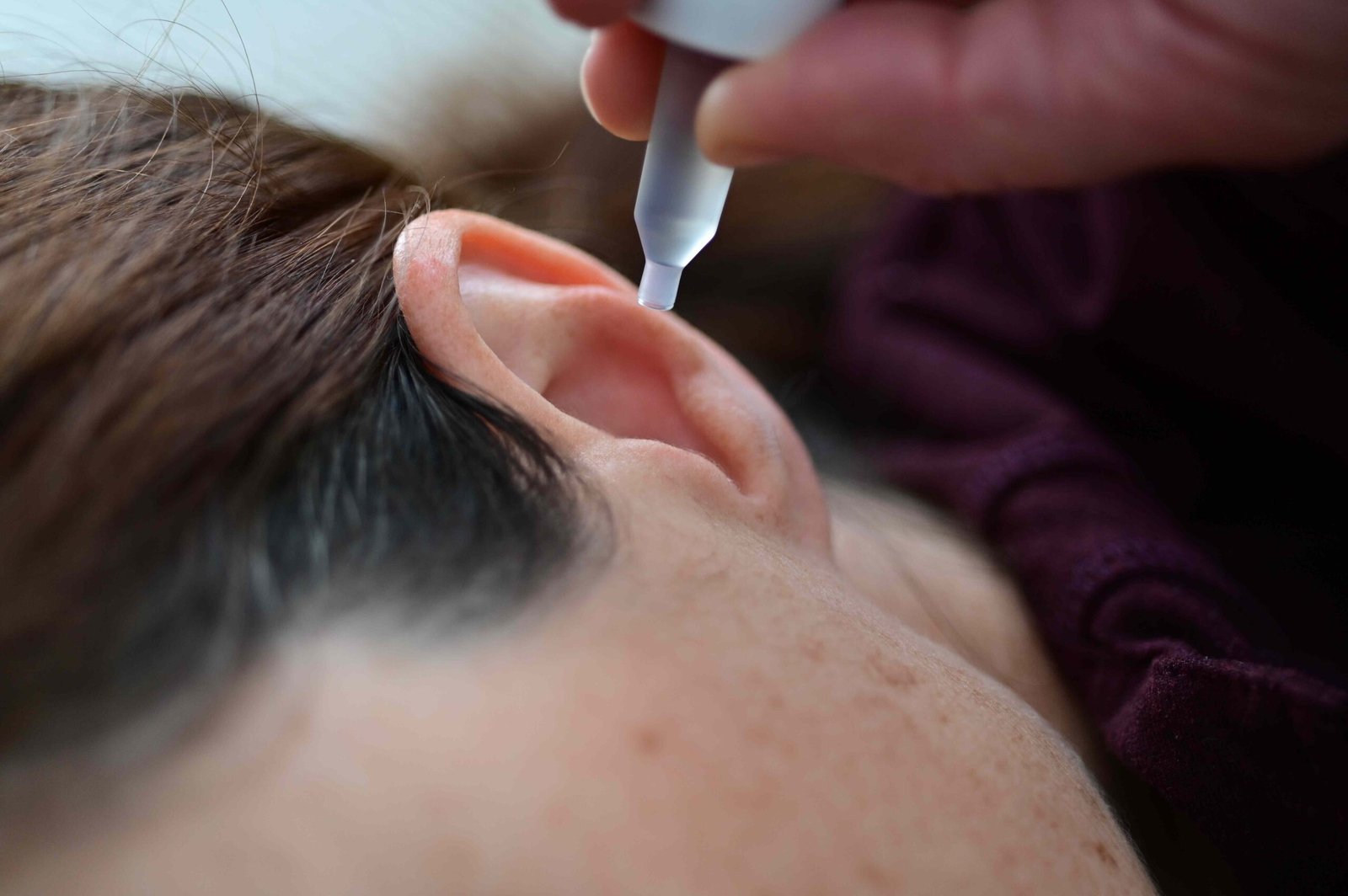
Earwax (cerumen) protects the inside of your ears from irritation and infection. As the body makes new wax, the old earwax usually drains out of your ears naturally. Sometimes earwax can build up and create a blockage. Flushing out your ears with diluted hydrogen peroxide is one effective way to soften earwax and allow it to exit the ear naturally.
Before trying to remove an earwax impaction yourself, consider speaking to a doctor to determine whether it’s safe for you to try. You can either mix a diluted hydrogen peroxide solution at home or buy over-the-counter (OTC) earwax softening drops (cerumenolytic agents) to help clear a buildup.
Using a Homemade Hydrogen Peroxide Solution
Here’s a step-by-step guide for how to make and use a hydrogen peroxide solution at home:
- Gather your supplies: You’ll need a bottle of 3% hydrogen peroxide—the standard strength found in most drugstores—a small dropper or bulb syringe, a towel, and a bowl to catch any drips.
- Dilute the hydrogen peroxide: Mix one part hydrogen peroxide with one part warm water. Avoid using water that’s too hot or too cold, as too much of a temperature difference from your body can make you feel dizzy.
- Lie down: Lie on your side with the affected ear facing upward. You can place the towel under your head to catch any spills.
- Add the drops: Gently pull the outside of your ear back and up to straighten the ear canal. Using the dropper or bulb syringe, carefully put five to 10 drops of the hydrogen peroxide solution into your ear canal. You might hear a bubbling or fizzing sound. This is normal and means the hydrogen peroxide is working.
- Stay still: Remain in this position for a few minutes. You might feel a tingling or fizzing sensation or a little pressure.
- Drain your ear: Tilt your head over the bowl or sink to let the solution drain. You might see some earwax come out with the solution.
- Gently clean your outer ear: Use the towel to gently wipe away any liquid and earwax from your outer ear.
You can repeat this process once or twice a day for a few days. Reach out to a doctor if you still have earwax buildup symptoms after trying this method.
Using a Cerumenolytic Agent
If your doctor recommends using earwax softening drops instead, they may prescribe carbamide peroxide, a common eardrop that breaks down into hydrogen peroxide when it comes in contact with water.
Following the same general instructions as the homemade eardrops, use five to 10 drops in the affected ear, twice a day, for up to four days. After using the drops, you can gently flush your ears with warm water if necessary.
Hydrogen peroxide releases oxygen into the ear, creating tiny bubbles. This is why you hear the bubbling or fizzing sound. The oxygen bubbles help soften and loosen earwax, making the wax easier to remove or drain naturally from the ear.
While hydrogen peroxide can be a safe and effective way to remove earwax for many people, it’s not safe for everyone. Some situations where you should never use hydrogen peroxide to remove earwax at home include:
- Perforated eardrums: Never use hydrogen peroxide if you think or know you have a hole in your eardrum. This can lead to serious complications like long-term hearing loss and vertigo, a condition that causes dizziness. Signs of a perforated eardrum include sudden ear pain, drainage from the ear, or a sudden loss of hearing.
- Recent ear surgery: Avoid using hydrogen peroxide if you’ve had any recent ear surgery, as it can potentially cause irritation, rash, or infection.
- Ear infections: Only use hydrogen peroxide for an ear infection if specifically directed by a doctor.
Using a hydrogen peroxide solution for earwax removal can have a few side effects. This may include:
- Itchiness or skin irritation
- Vertigo
- Ear infection
- Eardrum perforation
Avoid using cotton swabs or ear candling to try to remove earwax. These methods are not effective and can be dangerous. Cotton swabs can damage your eardrum or worsen earwax impaction.
Always check with your doctor before trying any new earwax removal method. If hydrogen peroxide irritates your skin or simply doesn’t work for you, they may recommend other safe methods of earwax removal at home, such as:
- Ear irrigation (flushing out) with warm water
- Baby oil, mineral oil, or glycerin, which softens earwax
- Oil-based cerumenolytic ear drops, which may include peanut, olive, and/or almond oils
Instead of at-home treatments, your doctor may recommend that you have an in-office procedure to remove earwax buildup. This may involve:
- Saline (sterile salt water) irrigation
- Physical earwax removal with special tools such as an otoscope, an instrument that examines the inside of the ear, and a cerumen curette, a scraping tool used to remove earwax.
- Suction
Tell your doctor if you have a health condition that causes a weak immune system, such as human immunodeficiency virus (HIV) or diabetes, or if you have had a perforated eardrum, ear tubes, or recent ear surgery. In these cases, they may recommend against using certain methods to remove earwax. They may also take special precautions during a removal procedure.
If you have symptoms such as mild hearing loss, ear pressure, pain, or dizziness, you may have an earwax blockage. A diluted hydrogen peroxide solution or OTC carbamide peroxide ear drops can help soften, loosen, and remove impacted earwax.
Ask your doctor whether this at-home method of earwax removal is safe for you or if you need alternative treatments. If you have a perforated eardrum from an injury or surgery, you should avoid using hydrogen peroxide in your ears.
