

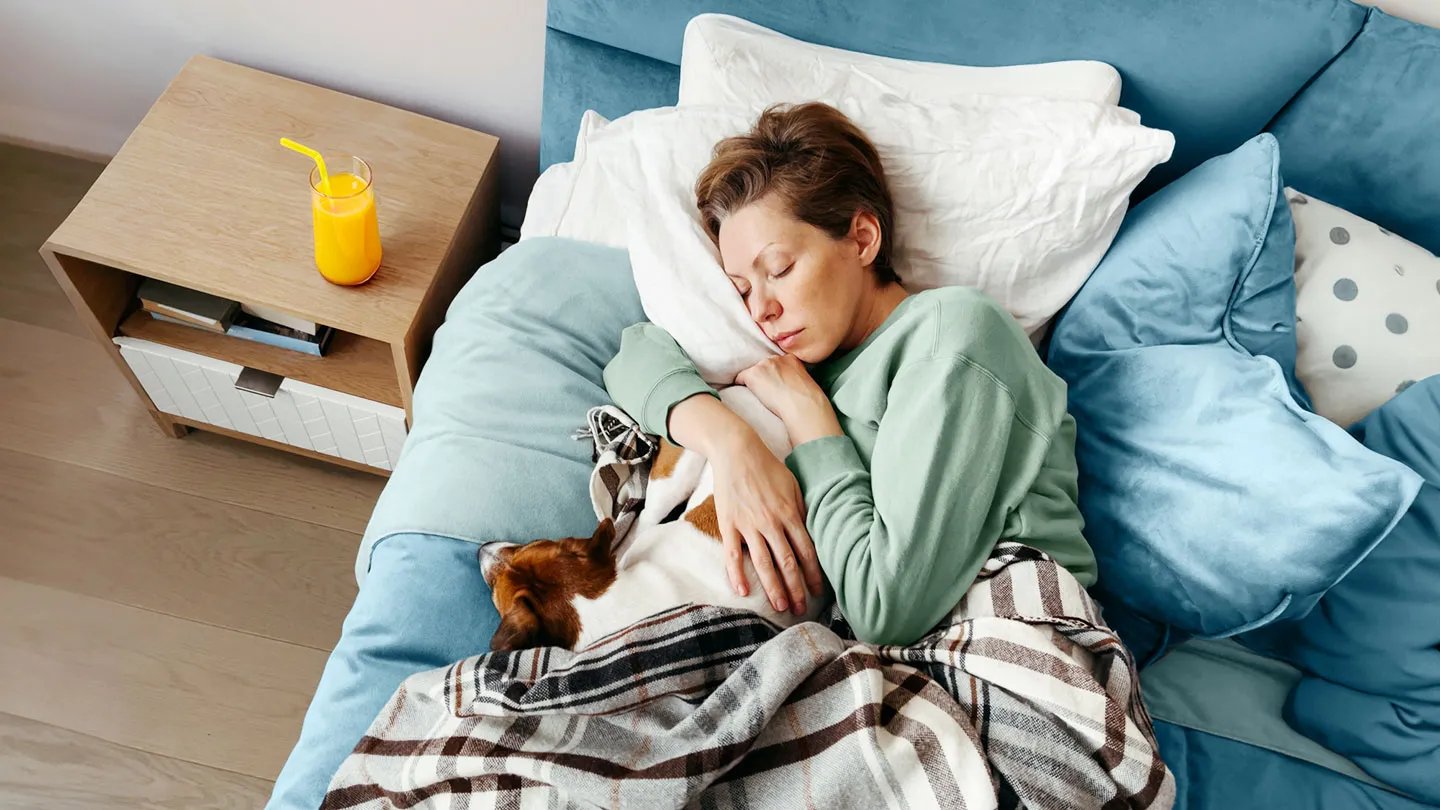
Getting a good night’s sleep can be a challenge for people with type 1 diabetes. From navigating blood sugar highs and lows to equipment alarms and device discomfort, there’s plenty that can interfere with quality rest.
Poor sleep isn’t just frustrating — it’s linked to suboptimal blood sugar management. People with type 1 diabetes who have poor sleep quality are more likely to have greater glucose fluctuations and more episodes of high and low blood sugar levels.
[1]
Fortunately, there are strategies for addressing the sleep problems that people with type 1 diabetes often face, to help ensure that nights are as restful as possible.
1. Adjust Your CGM Alarm Settings
People who have a continuous glucose monitor (CGM) can set alarms that alert them when their blood sugar is too high or too low. However, these alarms can be disruptive to sleep.
[2]
Pediatric endocrinologist Kristin Arcara, MD, clinical codirector of the division of pediatric endocrinology and diabetes at Johns Hopkins Children’s Center in Baltimore, says that adjusting overnight alarms can help ensure that your sleep is interrupted less frequently: “Some CGM devices allow you to customize settings to make them different for daytime and nighttime.”
It’s important to talk with your healthcare provider about how you customize your alerts for overnight use, she says, so that you can avoid alarm fatigue while remaining aware of blood sugar highs and lows.
2. Snack for Glucose Stability
“If your blood glucose levels are within target range but tend to drop overnight, having a snack that includes a quality carbohydrate and protein can help keep blood glucose levels steady,” says Toby Smithson, RDN, CDCES, senior manager of nutrition and wellness at the American Diabetes Association.
But be careful with late snacks, because they can have the opposite effect: Too many carbohydrates can spike your blood sugar overnight, and snacks that require insulin can risk overnight blood sugar lows and roller coasters.
[3]
“The snacks that are better suited for bedtime are the things that are better suited for the rest of the day: fiber, protein, healthy fat, and complex carbohydrates, as opposed to high-sugar foods,” says Dr. Arcara.
3. Try New Device Locations
Not every CGM or insulin pump location is equally comfortable. It may sound like common sense, but if your device is uncomfortable overnight, consider putting it in a new location on your body.
“You have to consider how you sleep,” says Arcara. “If you sleep on your right side, don’t put it on your right arm, because it’s going to go off all night.”
Your manufacturer’s instructions will tell you which parts of your body your device can attach to. Some people with diabetes choose to ignore these guidelines and stick their devices to different parts of their body, though this can’t guarantee optimal results.
“Devices are approved for certain sites, but patients certainly go outside of that and use them in different sites,” says Arcara. “It’s important to figure out what works for each patient.” For people who use an insulin pump and a CGM that communicate with one another, it may be helpful to put both devices on the same side of the body, she says.
4. Don’t Overtreat Compression Lows
If your CGM has ever woken you up with a low blood sugar alert that didn’t make sense, you may have experienced a compression low.
[4]
“Compression lows happen when a person puts weight on the CGM,” says Smithson. “For instance, if your CGM is on your upper arm and you’re sleeping on your arm, you may receive inaccurately low blood glucose results.”If a compression low wakes you up, it can be tempting to reach for your bedside juice and go back to sleep. However, since these lows aren’t true lows, consuming fast-acting sugar will cause your blood sugar to rise — possibly way out of your target range — only to set off another alarm.
[4]
[5]
“If you get an alert for a low in the middle of the night … and it doesn’t match how you’re feeling, it’s really important to do that finger stick,” says Arcara. “If it’s actually low, treat it, and repeat the finger stick in 15 minutes.” If the finger stick reads normal, go back to sleep.
5. Beware of the ‘Pizza Effect’
Sometimes, meals high in fat can lead to delayed blood sugar spikes, often occurring hours after eating.
[6]
If you have a rich, starchy meal like pizza for dinner, it could result in blood sugar highs that present after you go to sleep, leaving you unable to respond with exercise or insulin.
Pay attention to how different meals affect you. “Monitor glucose trends with what you eat, to understand which foods or combinations of foods affect your blood glucose levels,” says Smithson.
If you’re using an insulin pump with automated insulin delivery, your system should take care of these blood sugar elevations automatically. Insulin pumps that aren’t connected to a CGM also allow you to preprogram doses of insulin if you know your blood sugar is likely to rise after bedtime.
If you’re not using an insulin pump or are not comfortable trusting those features and you plan to splurge on a richer meal, consider eating it earlier in the day, which could preserve your ability to react to subsequent blood sugar changes.
“The approach might be different based on each person,” says Arcara, noting that some people may decide to avoid certain foods altogether, while others may choose to enjoy them only occasionally.
6. Take a Tech Vacation
The constant barrage of information, warnings, and decision-making that sometimes comes with using diabetes devices can be emotionally draining or overwhelming.
[7]
“For some people, taking a break from diabetes technology is helpful, although taking insulin and checking blood glucose levels is still required,” says Smithson.If you want to take a tech vacation with type 1 diabetes, you need to be comfortable with giving yourself multiple daily insulin injections and testing your blood sugar via finger sticks.
[8]
For some people, the solution may be simpler. “If you’re feeling like you want a pump break, talk to your provider,” says Arcara. “Maybe a different pump would work better for you. Maybe taking a look at your continuous glucose monitor alerts would work better for you … it really depends on what it is about the technology that’s causing you stress.”
7. Strategize Your Exercise
While exercise can help improve sleep quality, people with type 1 diabetes need to be careful, as certain levels of activity can lower blood sugar levels both during and after a workout.
[9]
Lowering blood sugar is usually one of the primary goals of diabetes management, but you still need to take care that a day of heavy exercise doesn’t drop your levels too low overnight.
[10]
“Having [an] idea of what your body does and how your body responds to different activities can help you make a proactive plan to avoid any issues with blood sugar overnight,” says Arcara.
For instance, people on injections may decide to decrease long-acting insulin on nights that they exercise. People using pumps and automated insulin delivery systems will have special settings designed for exercise. “Turning that on while you’re exercising and leaving it on for a few hours afterward might be a way to avoid hypoglycemia overnight as well,” says Arcara.
Timing exercise for the morning may also help, since evening and afternoon exercise may carry a greater risk of low blood sugar at night.
[11]
8. Keep Hypo Snacks Nearby
Like any time that you have low blood sugar, hypoglycemia that happens at night requires prompt treatment, but that can be tricky if what you need is located several rooms away from where you sleep.
[12]
“The last thing you want to do if your blood sugar is low and your brain is starving for energy is get out of bed and walk downstairs to the kitchen, because that’s not a safe thing to do sometimes,” says Arcara.
Instead, it’s helpful to keep something to treat low blood sugar within easy reach.
[13]
“Keep fast-acting glucose treatments like glucose tabs, hard candy, or juice boxes near your bedside,” says Smithson.
9. Fine-Tune Your Basal Dose
If you’re frequently waking up to low or high blood sugar, it may be time to tweak the amount of basal insulin you’re using.
[14]
Basal insulin is the insulin that your body uses in the background over the course of a day, regardless of whether you’ve eaten a meal, to keep your metabolism running as it should. An insulin pump delivers a constant small trickle of insulin to serve as basal insulin, while those on injections use long-acting insulin that’s formulated to become bioavailable very slowly throughout the day.
Work with your provider if you think you need a change to your overnight basal rates, says Smithson. “It’s trial and error with finding the best basal rate for each person,” she says.
“Depending on the pump system, there are different strategies you can use to ask the pump to be slightly more gentle with your blood sugar overnight,” says Arcara.
10. Switch to an AID System
An automated insulin delivery (AID) system allows your CGM and insulin pump to communicate with one another, with the goal being to keep your blood glucose in your target range, says Smithson. “It takes some of the constant thinking and adjustments of insulin dosing out of the picture, especially overnight when you should be sleeping,” she says.
For some people, an AID system can make sleep much better, since it can help prevent low blood sugar overnight and generally keep blood sugar more steady.
[15]
“Probably the most appealing feature of the automated insulin delivery systems is the overnight blood glucose management,” says Arcara, as they can decrease how often patients have to wake up in the middle of the night to address blood sugar.
11. Do a Safety Check as Part of Your Bedtime Routine
Needing to change an insulin or CGM site in the middle of the night can easily disrupt otherwise healthy sleep.
A quick bedtime check of your status and diabetes equipment can help you avoid unnecessary overnight interruptions. “Have a routine of making sure that everything is in a safe spot for you to have a great night with your diabetes,” says Arcara. Before falling asleep, she suggests checking the following:
- Blood sugar level
- Insulin pump charge or pump battery level
- Insulin pump reservoir
- CGM status and time of expiration
The Takeaway
- Adjust CGM alarms for fewer nighttime interruptions, and place devices on parts of the body that you don’t sleep on, to prevent discomfort and compression lows.
- Stabilize overnight glucose with high-protein, high-fiber bedtime snacks, and be wary of the “pizza effect,” where high-fat meals cause delayed blood sugar spikes long after you’ve fallen asleep.
- Strategize the timing of exercise to avoid delayed hypoglycemia, and work with your doctor to adjust your basal insulin dose or pump settings on days when you’re more active.
- Establish a bedtime safety routine that includes checking all of your diabetes equipment and your blood sugar, and keep fast-acting glucose treatments like juice or tabs right next to your bed in case of an overnight low.
