

If you’re feeling overwhelmed by all the nutrition advice, learn how to balance nutrition in a simple and wholistic way.
Nutrition has always been one of those topics that feels simple on the surface and complicated when you really think about it. We all know that food plays an essential role in overall health and wellness: it fuels our energy, supports efficient and healthy function of our organs, and affects everything from mood to sleep.
Eating should be simple, right?
We want to balance supporting our body’s needs with enjoying the cultural, social, and pleasurable parts of eating. Actually putting balanced meals together day after day can feel overwhelming, especially when life is busy and nutrition advice seems to change every five minutes.
Over the years, I’ve learned that diversity is one of the cornerstones of nutrition. Eating a wide variety of foods in the right amounts is one of the best ways to support a healthy body and feel your best. But I’ve also learned that following a truly balanced diet isn’t about perfection or strict rules. It’s about flexibility, listening to your body, and building meals that work for your real life.
In this post, I’m sharing a simple, realistic guide on what balanced nutrition actually means to me and how to make it happen without stressing over every bite. We’ll break down what balanced nutrition means, how to balance meals with the right amount of nutrients, and how small, consistent choices can add up over time.
How to Balance Nutrition
Creating balanced meals doesn’t come intuitively to everyone, which is why people are often looking for specific guidance on macros, food lists, meal plans, and shortcuts.
But in my opinion, the secret to finding a diet pattern that lasts is learning how to wholistically balance meals in a way that feels sustainable.
What Is Balanced Nutrition?
Balanced nutrition means eating a variety of foods from all the major food groups in proportions that support your body’s needs. Rather than focusing on one single nutrient or macro, I like to look at the big picture of your day and week: how do the carbohydrates, protein, fats, vitamins, minerals, and fiber all work together?
A nutritionally balanced diet typically includes:
- Carbohydrates for energy, ideally from whole foods like fruit, vegetables, and whole grains such as brown rice, oatmeal, and bread.
- Protein from good sources like beans, eggs, fish, dairy products, and meats
- Healthy fats from foods like olive oil, nuts, seeds, avocado, and fish
- Vitamins and minerals from a wide range of fruit and vegetables
Protein and fat get so much hype, but I actually think the most important category is carbohydrates because it includes the fruits and veggies, which are so important!
Rather than count numbers or grams, I like to think more broadly and consider these groups as checkboxes to include with almost every meal.
Why Is Balanced Nutrition Important?
As you probably know, what you eat affects nearly every aspect of health, from energy levels to long-term disease prevention. Here are some of the biggest benefits of prioritizing a healthy variety of foods.
Supports Your Body’s Systems Running Optimally
If you’ve ever noticed how lightheaded and distracted you feel when you’re really hungry, you know how much food affects your ability to think. Your systems rely on vitamins, minerals, and glucose to keep running smoothly. When meals include a mix of food groups, you’re more likely to eat the essential vitamins and minerals you need to support immunity, digestion, bones, and your brain. And while nothing changes dramatically with one meal, you want your overall day to include all the good stuff.
Keeps You Satisfied
Balanced meals can help keep hunger and blood sugar levels more stable throughout the day. Including protein, fiber, and fat together helps meals feel satisfying and reduces the urge to over-snack later. On the flip side, consistently unbalanced meals can lead to feeling too hungry, eating too much when you’re hangry, or having energy ups and downs.
Reduces The Risk Of Chronic Disease
A diet rich in whole foods can lower the risk of developing heart disease, type 2 diabetes, and high blood pressure. Balanced nutrition helps protect long-term health by emphasizing variety and moderation.
Supports Energy And Daily Performance
Food is fuel. Balanced meals help keep energy levels steady throughout the day, making it easier to focus, move your body, and feel good. I notice this especially when breakfast includes protein, fiber, and fat — like a yogurt bowl with fruit and nuts — instead of just carbs alone.
How To Eat A Nutritionally Balanced Diet
My philosophy on nutrition is to teach a (wo)man to fish. Rather than writing out meal plans or recomending specific number goals, I like to think of meals in big pieces: protein, carbs, fat, produce. Include them all in your meal and you’re likely to be getting the nutrients that you need and feel satisfied until your next full meal. These tips can help you build balanced meals in a realistic, sustainable way.
Eat From All Food Groups
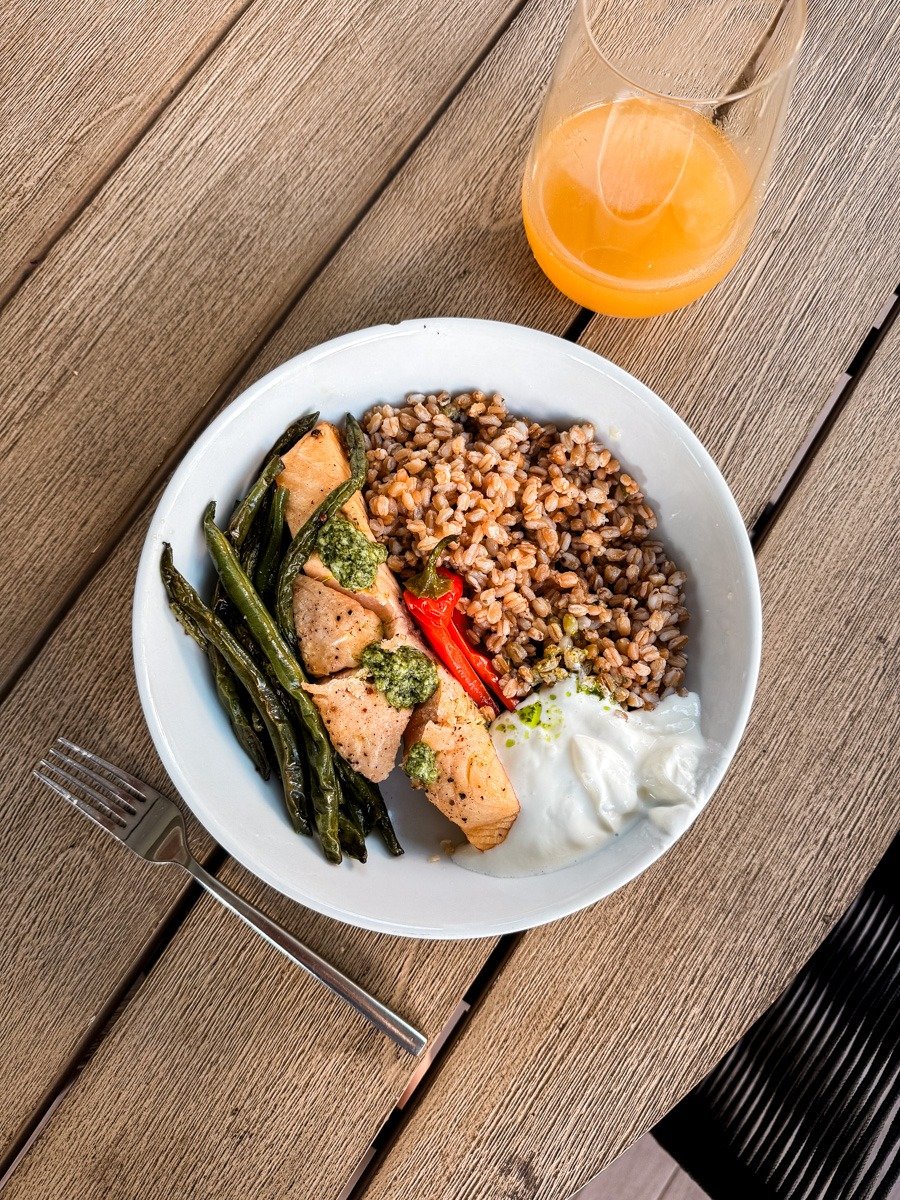
One of my pet peeves is when someone announces they aren’t eating any carbs. Each food group has a purpose, and skipping one entirely is just going to throw you off (I do realize there may be a specific reason to monitor carbs – for example, diabeties monitoring – so I’m only speaking in a general sense). Balance comes from variety. Try to include carbohydrates, protein, fat, and produce at most meals. For example, a simple dinner might include brown rice, roasted vegetables, and a good source of protein like fish or chicken.
Prioritize Good Sources Of Protein
Protein is definitely having a moment, and I find it’s the hardest macro to include in all meals because it’s expensive and more often includes prep or cooking. Protein supports muscle, keeps you full, and helps stabilize blood sugar. Good sources of protein include eggs, Greek yogurt, beans, lentils, tofu, fish, and lean meats. Fish like salmon and sardines are especially beneficial because they provides healthy fats and protein together.
Include A Fruit Or Vegetable With Every Meal
While fruits and veggies are techinically in the carbodrate family, I tend to put them in their own because they are so important! Fruits and vegetables are packed with fiber, vitamins, and antioxidants. I try to include either a fruit or vegetable at every meal I have. Aim for a rainbow of color throughout the day (or week): leafy greens, colorful berries, squash, peppers, broccoli, eggplant, carrots, and everything in between. Frozen and canned options count too and can make balanced meals easier on busy days.
Choose Whole Grains More Often
Whole grains like brown rice, oats, quinoa, and whole wheat bread provide more fiber and nutrients than refined grains, which means you’ll feel full longer. While white bread can absolutely fit into a balanced diet, choosing whole grains more often supports digestion and are a more efficient nutrition option (more bang for your bite!)
Watch Portions, Not Perfection
Balanced nutrition isn’t about eliminating foods; it’s about portion awareness. Enjoy richer foods in small amounts and pair them with nutrient-dense options. This mindset helps meals feel satisfying without restriction. I absolutely love cheese and almost always put it on my salads. I also butter my whole grain toast because who wants dry toast?! Sprinkling in richer foods that you love keeps you satisfied physically and emotionally.
Limit Highly Processed Foods
Highly processed foods, including processed meat, often contain excess sodium and additives that can contribute to high blood pressure and other health concerns. These foods don’t need to be avoided, but I would enjoy them more when you’re out of the house rather than making them a daily staple that you buy at the grocery store each week.
Balanced nutrition isn’t about getting in the weeds about your food. It’s about taking a bird’s eye view at each meal and asking if you’ve got the four main bases covered. Of course you can have a snack with one – an apple or a donut! But make the anchor meals for your week as balanced as you can. When you build meals that feel good, taste good, and support your body, you feel better inside and out. Over time, these small choices can have a big impact on health and how you feel day to day.
If you’re interested in digging deeper into why nutrition matters so much, I’ve shared more thoughts on what are the importance of good nutrition and how food choices affect long-term wellness.
Instagram Caption
Balanced nutrition doesn’t have to be complicated. Eating a healthy balanced diet is about variety, flexibility, and finding what works for your life — not perfection. I’m sharing a simple guide on How to Balance Nutrition, including what balanced meals actually look like and why they matter for long-term good health.
Comment BLOG LINK to get the post sent to you!
Facebook Caption
Nutrition can feel overwhelming, but it doesn’t have to be.
In my latest post, How to Balance Nutrition, I’m breaking down what balanced nutrition really means, why it’s so important for good health, and how to build meals that work in real life. No strict rules — just simple, sustainable habits you can stick with.
Read the full post here:
Pinterest Caption
How to Balance Nutrition ??
