

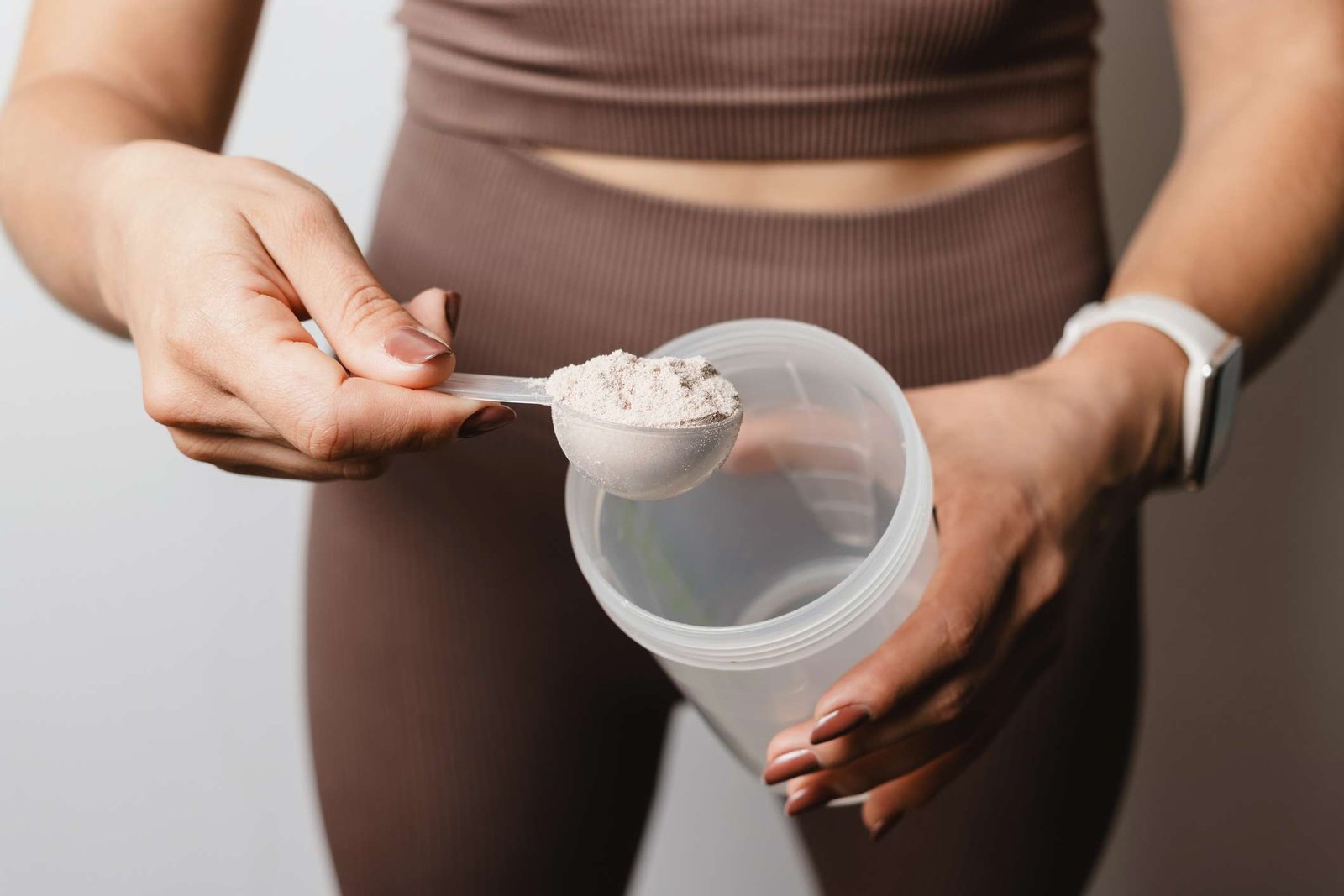
Creatine is one of the most popular and well-researched supplements in the sports and fitness world. It’s commonly used to support muscle growth, strength, and athletic performance in athletes and gym-goers.
Whether you’re new to creatine or have been taking it for a while, you may be wondering how long it stays in your body.
Here’s what you need to know about how long creatine stays in your system.
Creatine is a compound naturally made by the body from amino acids. It’s mostly stored in muscles, with smaller amounts found in the brain, heart, and testicles.
While your body produces about half the creatine you need, the rest must come from food sources, like meat and fish, or from creatine supplements. Most people need about 2 to 4 grams of creatine per day to support optimal health.
Creatine plays a key role in energy production by helping regenerate adenosine triphosphate (ATP), the main energy source for muscle contraction and other cellular processes. Because of its role in muscle function and energy production, creatine supplements, especially creatine monohydrate, the most studied form, are widely used to boost strength and endurance and to improve body composition.
Research shows that creatine is effective for improving body composition and muscle strength in both athletes and older adults, with greater benefits seen in younger individuals when combined with resistance training. It may also support fat loss, blood sugar control, and brain health.
When you supplement with creatine or eat creatine-rich foods, it doesn’t stay in your body indefinitely. How long it lasts in your system depends on where it’s stored.
After you take creatine, its concentration in your blood peaks in about two hours. Blood levels remain elevated for around four hours.
However, most of the creatine you consume is taken up by your muscles, where it can be stored for a much longer period. Creatine can remain in muscle tissue for several weeks, especially if you±ve been supplementing regularly and have reached full muscle saturation.
Each day, your body converts about 1–2% of the creatine stored in your muscles into a waste product called creatinine, which is then eliminated through urine.
There are several factors that influence how long creatine remains in your system, including:
- Hydration levels: Water is necessary for the body to remove creatine through urine. Dehydration could slow this process.
- Muscle mass: People with more muscle mass have the capacity to store more creatine in their muscles. As a result, they may retain creatine longer than individuals with less muscle.
- Kidney function: Since creatine is excreted through the kidneys, impaired kidney function could slow its elimination from the body.
- Age: Kidney function tends to decrease with age. This means that older people may break down and excrete creatinine more slowly than younger adults.
Individual metabolism, or how your body processes and excretes substances like creatine, may also impact how long creatine stays in your system.
“Creatine does not show up on drug tests because it’s a natural substance in the body and is not classified as a performance-enhancing drug. No major testing organizations screen for it, and its use is legal and safe in sports,” explained Routhenstein.
Creatine supplements are commonly used and widely accepted in the sports and fitness community, with both novice and professional athletes using creatine to support performance and muscle growth.
However, taking creatine might interfere with how your urine sample is interpreted.
Creatine supplements are broken down into creatinine, which is excreted in urine. In drug testing, urine creatinine levels are used to help detect urine sample dilution. Since creatine raises creatinine levels, it may mask urine dilution, making a diluted sample appear normal and potentially interfering with the interpretation of the drug test.
If your creatinine level comes back unusually high from creatine supplementation, the laboratory might investigate further or require you to retest.
Creatine is safe for long-term use, so there’s no need to cycle off creatine. In fact, studies show that creatine can be safely taken daily for up to 5 years.
What’s more, research suggests that long-term, creatine ingestion of around 3 grams per day throughout the lifespan can support general health.
Taking creatine consistently, whether through supplementation or through eating creatine-rich foods, ensures that your muscle cells are saturated with creatine and that your body maintains optimal creatine levels.
Some people take an initial loading dose of creatine of between 20 to 25 grams per day, for five to seven days. However, loading doses of creatine are more associated with side effects such as water retention and symptoms like diarrhea.
Skipping the creatine loading phase and instead taking smaller daily doses over a longer period can help minimize side effects like water retention. That’s why many experts suggest taking between 3 to 5 grams of creatine per day for at least four weeks to reach full muscle saturation with a lower risk of side effects.
