

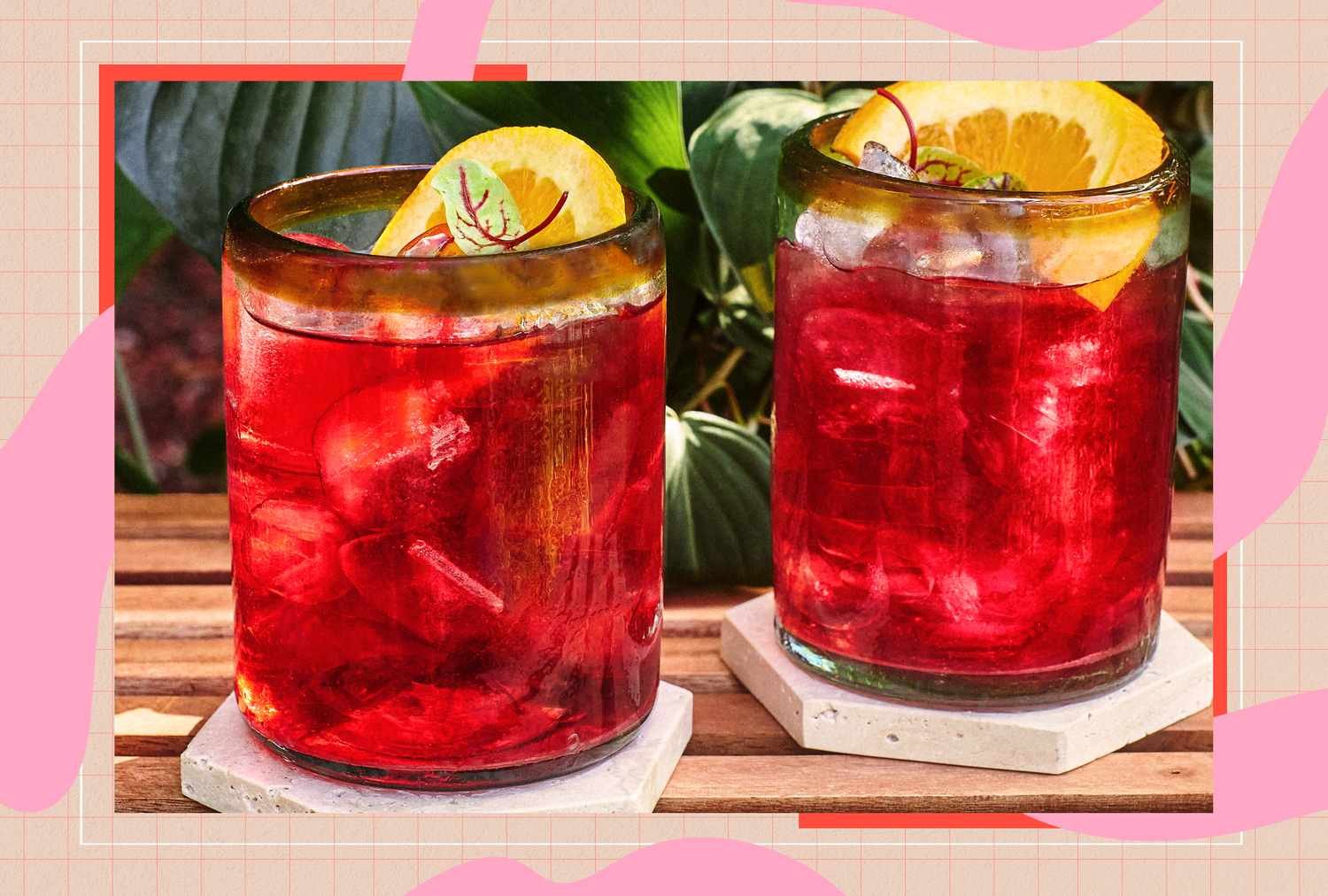
- Top bartenders have creative tricks to make healthy, flavorful mocktails.
- These include using herbs, toasted spices, herbal tea infusions and exotic fruits.
- To reduce sugar, they recommend using low-sugar or sugar-free nonalcoholic spirits.
From Thanksgiving to New Year’s, our bodies often take their heaviest hits. And it’s not just about all the eating—there’s also the drinking. No wonder promises for a Dry January top many people’s resolution list. The trend is so popular that some restaurants have developed nonalcoholic temperance menus to fill the void. While those carefully crafted drinks may elevate alcohol-free drinking to a new level, that’s not always the case when it comes to your standard mocktail. More often, those who are forgoing alcohol—and still want to be social with friends at bars and restaurants—encounter lackluster mocktails, infused with excessive sugars.
However, it doesn’t have to be that way. To help you enjoy a sober, healthy and inspired Dry January, we spoke with world-class bartenders and mixologists about how to compose a tastier, healthier mocktail.
Bartender-Approved Tips to Make the Best Mocktails
Reduce the Sugar
For imbibers of cocktails or mocktails, sugar has always been a top trouble. And we’re not just talking about a few ounces of simple syrup. Many mocktails get hidden sugars from honey, agave, maple syrup, grenadine or even fruit juice.
Eliott Edge, manager and head mixologist at Hekate Café & Elixir Lounge, an entirely alcohol-free watering hole, stocks up on low-sugar or sugar-free NA (short for nonalcoholic) spirits, like Monday and Trejo’s. Another way to reduce sugars, Edge says, is to turn a mocktail into a spritz. “Just add seltzer and lemon juice and you’ve got yourself some very low-sugar drinks to enjoy.”
The bar manager at LenLen, Robert Lam-Burns, uses traditional Thai flavors and fruits to craft sodas for LenLen’s temperance menu. While most sodas have roughly 35 grams of sugar per 12 ounces, Lam-Burns reduces that by nearly one-third in his Lemongrass Manao soda: “I try to use enough sugar to round out the flavors.” In addition, he uses natural ingredients, making teas from lemongrass husks, and lime cordial from lime peels. Those infusions become the base of his sodas.
It’s a similar approach taken by Junoon’s Hemant Pathak, who runs this Indian restaurant’s bar program. Pathak creates flavorful bases from herbs and fresh fruit that have “lively flavors” and don’t need added sugars.
Bring the Wow
When crafting an NA beverage, Edge wants to deliver what he calls “the Wow Factor.” “You can make a grilled cheese sandwich go wow if you do it right,” he says. Why not do the same with mocktails? His go-to strategies: toasting cinnamon for a drink or smoking a glass before pouring in his mixed creation.
While temperance menus are a fun way to offer nonalcoholic drinks to teetotalers, Atera’s head chef, Erin Paterson, uses her NA cocktails to elevate the restaurant’s Michelin tasting menu. When her first course is paired with an alcohol-free sparkling rosé, guests often stop the server holding what looks like alcohol from a wine bottle. However, they’re quickly comforted to learn that this is no wine bottle, as it holds a carbonated tea made with dried rose hip, citrus and berries. Each nonalcoholic beverage is presented with care and complexity. The Pomegranate Sour is topped with frothed egg white, and the Smoked Ginger, made with more than 20 ingredients, tastes as delicious as any whiskey cocktail. “It’s about giving people an option,” says Atera’s executive chef, Ronny Emborg. “If you’re not drinking, it should not be a punishment.”
Junoon’s Pathak likes to focus his mocktails on single ingredients from different regions of India. In one drink, he showcases saffron from Kashmir. Another features guava from the Indian state of Madhya Pradesh. “I plan to highlight them in their original form without diluting their flavors,” says Pathak. The simple yet intricate offerings deliver unique flavors, refreshing qualities and excellent complements to the powerful flavors and spices of Junoon’s cuisine.
Bartender’s Favorite Mocktails
- Eliott Edge, Hekate Café & Elixir Lounge: Edge’s favorite mocktail at Hekate is inspired by a famed Monsieur cocktail called Gordon’s Breakfast. His is dubbed Second Breakfast and features muddled cucumber slices and lime in a shaker. In go a few dashes of hot sauce, Worcestershire sauce and 2 ounces of Aplós Arise. After adding ice and shaking, Edge tops things off with salt and red chile pepper flakes.
- Robert Lam-Burns, LenLen: Lam-Burns prefers LenLen’s Colada soda, which uses coconut water, Southeast Asian pandan leaves and allspice tea. These are combined with a pineapple fruit syrup made by vacuum-sealing pineapple skins and cores with sugar, and using osmosis and the sugars to extract the remaining pineapple juice.
- Erin Paterson, Atera: Though she wouldn’t disclose her secret techniques, Paterson enjoys the mocktail she pairs with desserts at Atera, mixing coconut water, basil, lime and sugar.
- Hemant Pathak, Junoon: Pathak loves Junoon’s Imli, a savory tamarind mocktail. The tamarind soaks overnight. The next morning, he adds toasted fennel and honey to the liquid and simmers until the honey dissolves. Then, he macerates and strains it before serving.
The Bottom Line
Whether you’re partaking in Dry January, looking to reduce your alcohol intake, or simply want to shake up your drink options, bartenders have techniques that can take your mocktail to a whole new level and keep it healthy. To keep sugar in check, these pros recommend using low-sugar or sugar-free nonalcoholic spirits or swapping in coconut water for juice. Then elevate your drink by experimenting with herbs, toasted spices, herbal tea infusions and exotic fruits and plants. Give these tips a try, and you may never look at Dry January the same way again!
