

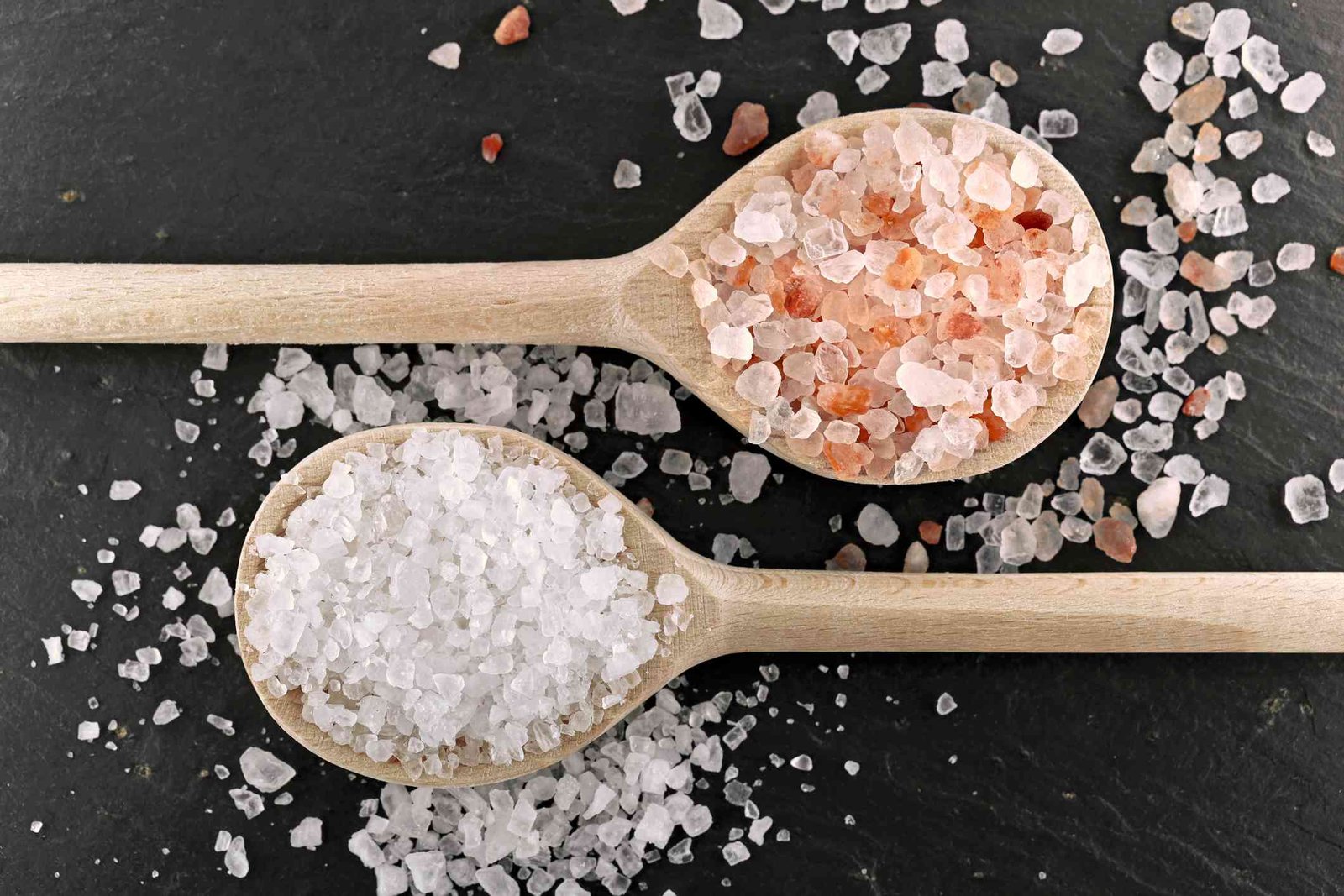
Himalayan salt comes from Pakistan and other areas southwest of the Himalayas. Sea salt is derived from the sea, is minimally processed, and contains a diversity of trace minerals. Both are considered more natural alternatives to table salt.
Salts are shaped by the minerals present in the land or sea, each of which holds a diverse range of elements.
Both Himalayan and sea salts are primarily composed of sodium and chloride, but their mineral composition can vary by region.
For example, some areas have more calcium and iron in the soil, reflecting a higher concentration in their salt-rock formations. Other salts may be higher in copper due to copper-rich clay or sea basins.
Both Himalayan and sea salts contain trace amounts of magnesium, potassium, and calcium, along with even smaller quantities of copper, manganese, iron, and other minerals.
The benefits from these minerals are unlikely to be significant within the amount of salt you can safely consume daily. A teaspoon of salt exceeds an ideal sodium limit (1,500 milligrams per day), particularly for people with high blood pressure.
Himalayan salt and sea salt are processed differently.
- Himalayan salt is extracted from underground rock formations (salt mines) that evolved over millions of years from geological compression, internal heat, and the combination of underground minerals. Water is sometimes pumped into rock basins to form a salt brine. This liquid may be filtered or chemically purified before being dehydrated to obtain the salts, though not to the extent to which table salt is refined.
- Sea salt is harvested from seawater through natural evaporation processes driven by the sun and wind. As the water evaporates, salt crystals form. The salts are then raked, rinsed, and dried. Some varieties may be filtered to eliminate any bitterness.
Because both salts are minimally processed, they contain many of their natural trace nutrients, which can add to their subtle flavor profiles and coloring.
There are several benefits of Himalayan salt and sea salt.
Himalayan salt is considered pure and free from land pollutants because it is minimally processed and mined deep within the earth.
Sea salt’s sun- and wind-driven processing gives it a nature-made appeal. Both are highly regarded for their wide variety of minerals.
When used in place of table salt, both Himalayan and sea salts might have slightly lower sodium levels. These differences can vary by product, and any sodium reduction is often so minor that it may not make a significant difference overall.
Both salts have benefits beyond consumption.
Adding coarse mineral salts, which contain magnesium, to a bath may offer restorative and relaxing properties. Dissolve 1-2 cups of these salts in warm bath water to ease muscle tightness or tension.
Himalayan salt and sea salt come in various textures, including large, irregular-shaped crystals, flakes, and fine, uniform granules (like table salt).
Himalayan salt may range from darker hues to a light pastel pink when finely ground. Iron oxide is responsible for its pink coloring.
Sea salts, though they tend to be white, may come slightly grey due to trace mineral influences.
Both salts are versatile in cooking uses. Himalayan salt has a slightly earthy flavor, while sea salt carries a more ocean-inspired taste.
Either can be found in large salt blocks for specific seafood preparations. In their coarse granular form, they can be used as bathing salts.
Gourmet table salts are less refined, providing beneficial minerals. However, they may also contain heavy metals due to potential contamination at salt collection sites.
Himalayan pink salt may contain higher levels of aluminum, barium, and silicon than table salt, and potentially toxic levels of lead. Further studies are needed to fully understand Himalayan salt’s heavy metal profile.
Microplastics may be another concern. Microplastics are plastic-derived pollutants invisible to the naked eye that can threaten the environment and our health. They can be found on land and in the sea and make their way into the salts we consume.
Neither Himalayan nor sea salt contains sufficient amounts of iodine, a necessary nutrient for thyroid function. Table salt is fortified with iodine to help prevent iodine deficiency.
Iodine is also in foods such as fish, seaweed (including nori and wakami), and eggs.
