

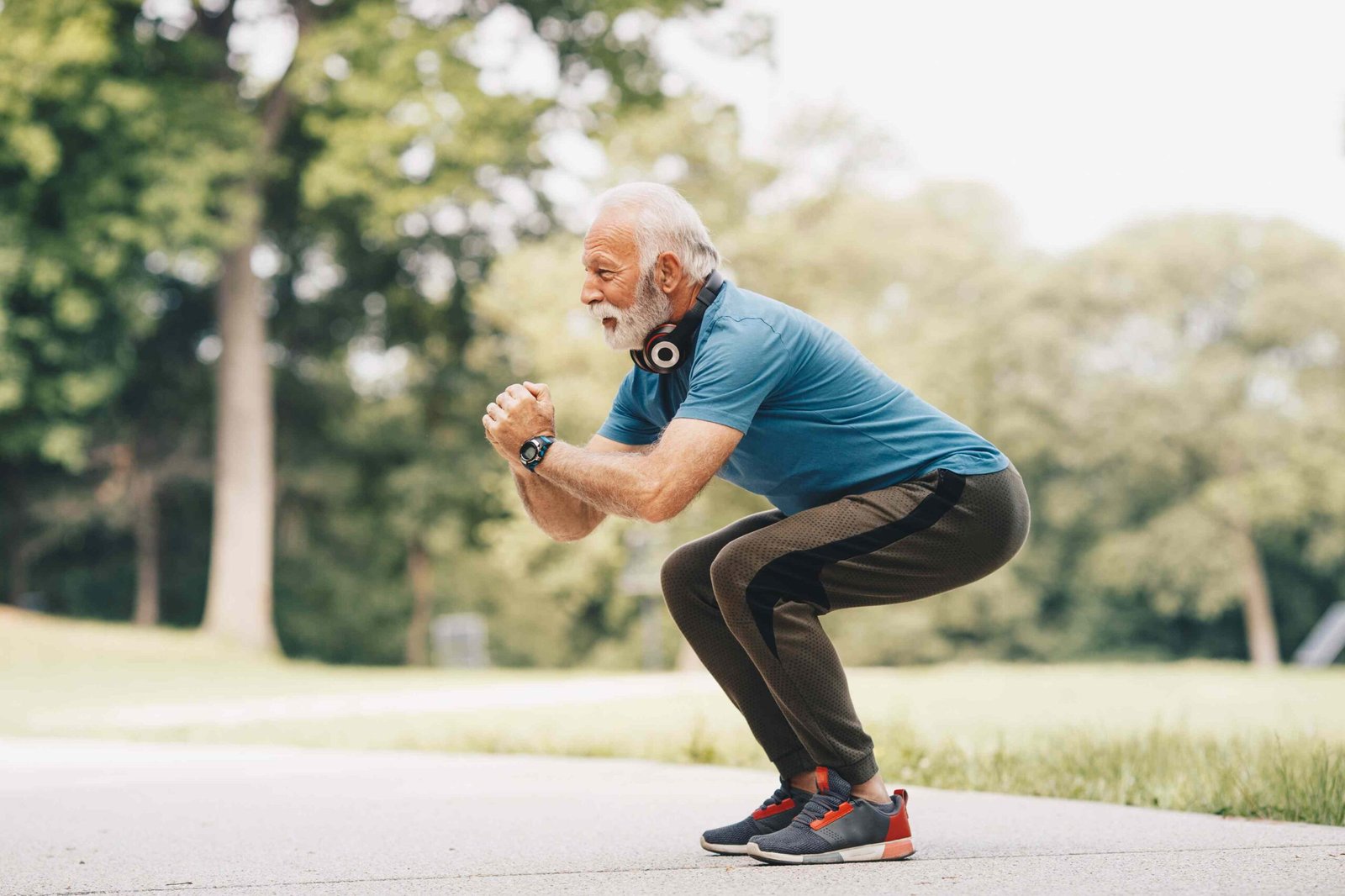
High-intensity interval training, commonly known as HIIT, may be worth the effort for healthy older adults. The new research, published in the journal Maturitas in December, found that, compared to less intense forms of exercise, HIIT workouts may help reduce body fat percentage and preserve muscle mass for people over age 65.
“Where appropriate and feasible, higher-intensity exercise training may be considered to support improvements in health-related body composition in older adults,” the researchers concluded.
As people age, two changes typically occur that increase the risk of chronic disease: body fat rises and muscle mass declines, said lead study author Grace Rose, PhD, an exercise physiologist and lecturer at the University of the Sunshine Coast in Queensland, Australia.
Exercise can help counter both of these effects, but Rose noted that little research has focused on exercise outcomes in older adults. “Most evidence about exercise intensity comes from younger or unwell populations,” she said. “I wanted to understand how different exercise intensities affect body composition, specifically in healthy older adults.”
To explore this, Rose and her colleagues recruited 123 healthy men and women ages 65 to 85 to participate in three 45-minute exercise sessions per week for six months. Participants were randomly assigned to one of three groups:
- HIIT: Four 4-minute intervals of various exercises performed at 85% to 95% of their peak heart rate, with three minutes of recovery between intervals, ending with a 5-minute cooldown. HIIT workouts typically consist of short bursts of exercises like burpees, high-knee jumps, squats, and mountain climbers.
- Treadmill-based moderate-level exercise: A continuous 30-minute treadmill workout during which participants hit 60% to 70% of their peak heart rate.
- Low-intensity exercise: A 45-minute stretching and balance class, during which participants achieved 45% to 55% of their peak heart rate.
All participants wore heart rate monitors during exercise and were instructed not to change their diets during the six-month study period and to continue taking any regular medications. At three and six months, researchers measured participants’ body compositions using dual-energy X-ray absorptiometry (DEXA) scans.
On average, both the HIIT and the moderate-intensity groups lost similar amounts of fat mass. However, the HIIT group experienced the greatest reduction in overall body fat percentage, the researchers found. Notably, the HIIT participants also retained the most muscle—an outcome that “stood out,” Rose said.
That said, the researchers emphasized that the “changes were small.” While the results may have been clinically meaningful for some individuals, they did not reach that threshold on average.
More research is needed to confirm the potential effects of these exercises and to inform clinical recommendations, the researchers concluded.
HIIT can be a great option for older adults, but it’s not the only way to improve fitness, according to exercise physiologist Jason Machowsky, MS, RD, CSSD.
As the research suggested, both moderate and higher-intensity workouts can support weight management and fat loss, he said. To preserve muscle mass, strength training can be “very effective.” While HIIT isn’t considered traditional strength training, it often incorporates strength-based moves like push-ups and lunges.
Still, as Machowsky pointed out, HIIT isn’t for everyone. For some people, it may “irritate sensitive joints,” particularly if they jump into it too quickly. HIIT can also raise the risk of serious cardiac events, especially in people with preexisting conditions such as diabetes.
For anyone interested in HIIT, Machowsky recommends speaking first with a doctor or a qualified exercise professional, such as a certified exercise physiologist (CEP). He said it’s also important to increase intensity gradually so you can monitor how your body responds.
