

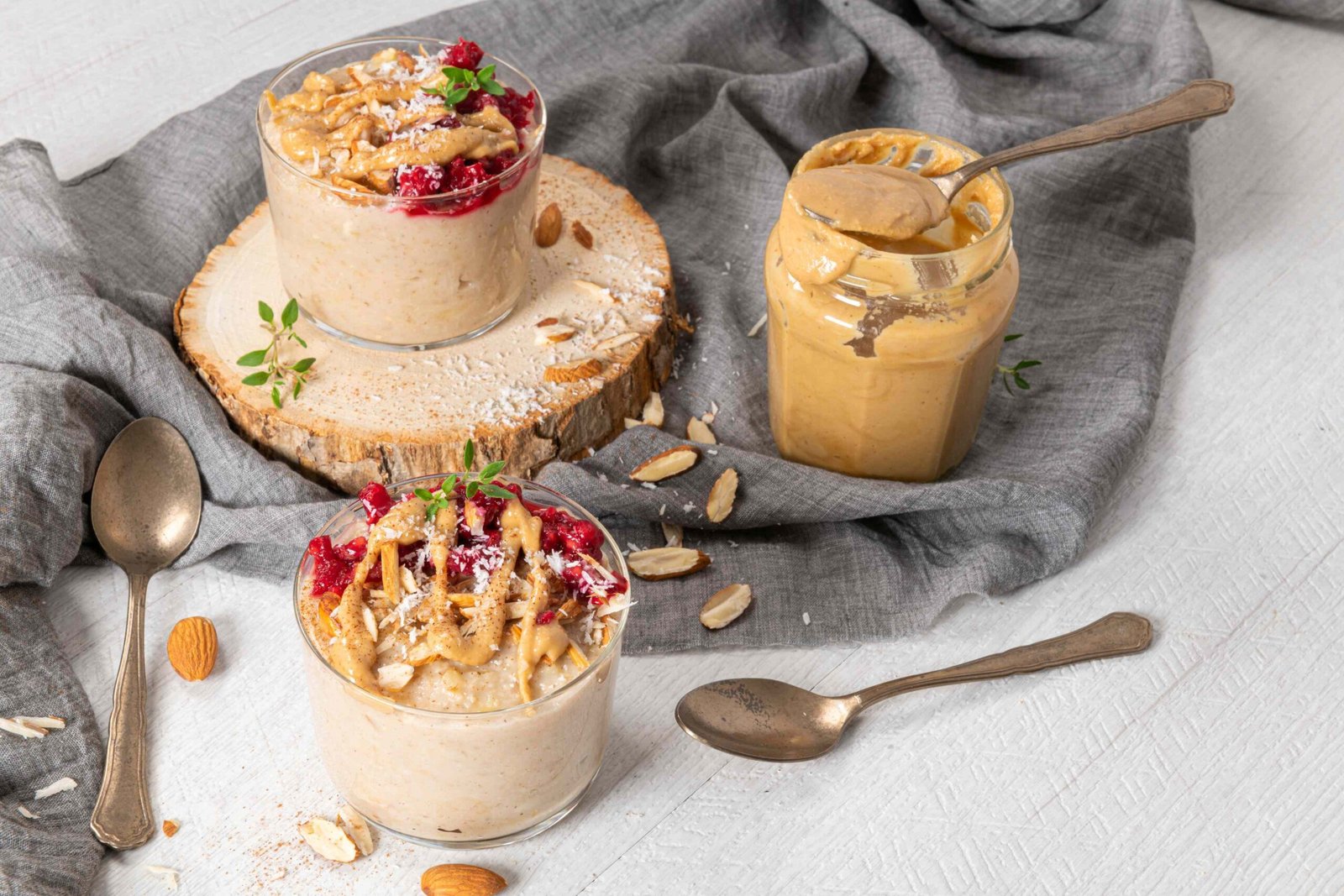
Oatmeal is a versatile breakfast staple. But does oatmeal with almond butter spike blood sugar? Oats contain fiber that slows digestion, and almond butter adds protein and fat that help stabilize your blood sugar. This combination supports steady energy levels rather than blood sugar spikes.
Oatmeal is high in carbohydrates, which your body turns into glucose, which the body uses for energy. Glucose enters your bloodstream and raises your blood sugar.
Scientists use a tool called the glycemic index (GI) to measure how quickly a food increases your blood sugar on a scale from 0 to 100. Foods scoring under 55 cause gradual rises, while those above 70 spike blood sugar quickly.
The type of oats you choose affects where they fall on this scale:
- Steel-cut oats are minimally processed with a GI of around 53. They are whole oat kernels that have been chopped into two or three pieces.
- Rolled oats have a GI of around 55. They are steamed and flattened, but retain most of their fiber.
- Instant oats have a GI of around 79. They are pre-cooked, dried, and broken down into smaller pieces. This extra processing breaks apart the grain’s structure, making it easier for your body to digest. When digestion happens faster, glucose enters your bloodstream more quickly.
Oats also contain beta-glucan, a type of soluble fiber. Fiber content doesn’t change drastically based on the level of processing. The fiber slows the absorption of carbohydrates into your bloodstream and could reduce blood sugar responses. It also keeps you full for longer, which could prevent snacking.
Almond butter has minimal impact on your blood sugar because it’s low in carbohydrates. A 16-gram tablespoon contains approximately 3.4 grams of carbohydrates, 3.3 grams of protein, and 8.4 grams of fat.
Beyond being low-carb, almonds may help control blood sugar. Research on people with prediabetes found that eating 20 grams of almonds before meals reduced blood sugar spikes. This effect lasted throughout the day.
Several factors could explain why almonds help stabilize blood sugar:
- Fiber slows glucose absorption in your gut.
- Healthy fats delay digestion and may improve how your body responds to insulin.
- Minerals such as magnesium and zinc support insulin function and glucose metabolism.
When you add almond butter to oatmeal, these benefits work together to help control your blood sugar response. The combination creates a more balanced response than either food alone:
- The fiber in both oats and almonds slows the absorption of carbohydrates. Almond butter adds protein and fat, which further delays digestion. When you eat them together, these effects work in tandem to moderate how quickly glucose enters your bloodstream.
- Studies show this pairing strategy works. Research found that adding almonds to high-glycemic meals reduced the overall blood sugar response. The protein and fat blunt the impact of carbohydrates from the oats.
- Portion sizes affect this balance. A half-cup of oats with 1 tablespoon of almond butter provides balanced nutrition without excessive carbohydrates. This keeps the meal’s total carb load manageable while maximizing the stabilizing benefits.
A standard half-cup serving of dried oats yields about 1 cup cooked. This provides approximately:
- 150 calories
- 27 grams of carbohydrates
- 5.3 grams of protein
- 5.3 grams of fat
- 4 grams of fiber
A single tablespoon of almond butter provides:
- 103 calories
- 3.4 grams of carbohydrates
- 3.3 grams of protein
- 8.4 grams of fat
- 1.5 grams of fiber
This combination delivers about 253 calories, 30 grams of carbohydrates, 8.6 grams of protein, 13.7 grams of fat, and 5.5 grams of fiber. The ratio creates a balanced meal with enough protein and fat to slow carbohydrate digestion while providing sustained energy.
The fiber content is particularly notable. At 5.5 grams, this meal delivers 14% to 22% of daily fiber needs (38 grams for men, 25 grams for women). That’s significant, since most Americans get only about 16 grams daily.
- Choose less processed oats. Steel-cut and rolled oats take longer to break down, which means a slower, steadier rise in blood sugar.
- Pay attention to portion sizes. A half-cup of dry oats yields about 1 cup cooked, which is a standard serving. Doubling or tripling this amount adds significantly more carbohydrates.
- Avoid sweeteners. Ingredients such as honey, brown sugar, or maple syrup increase carbohydrates and calories and can cause blood sugar spikes. Almond butter provides natural richness without added sugars.
- Select natural almond butter. Many brands add sugars, oils, or other ingredients to improve taste and texture. Check the ingredient list to ensure your almond butter contains only almonds and minimal salt. Added sugars increase your carbohydrate intake, and added oils increase calories.
- Monitor your unique responses. Factors such as your activity level, medication use, and overall health status influence how your blood sugar responds to different foods. If you have diabetes or prediabetes, check your blood sugar before and two hours after eating to understand your personal response.
