

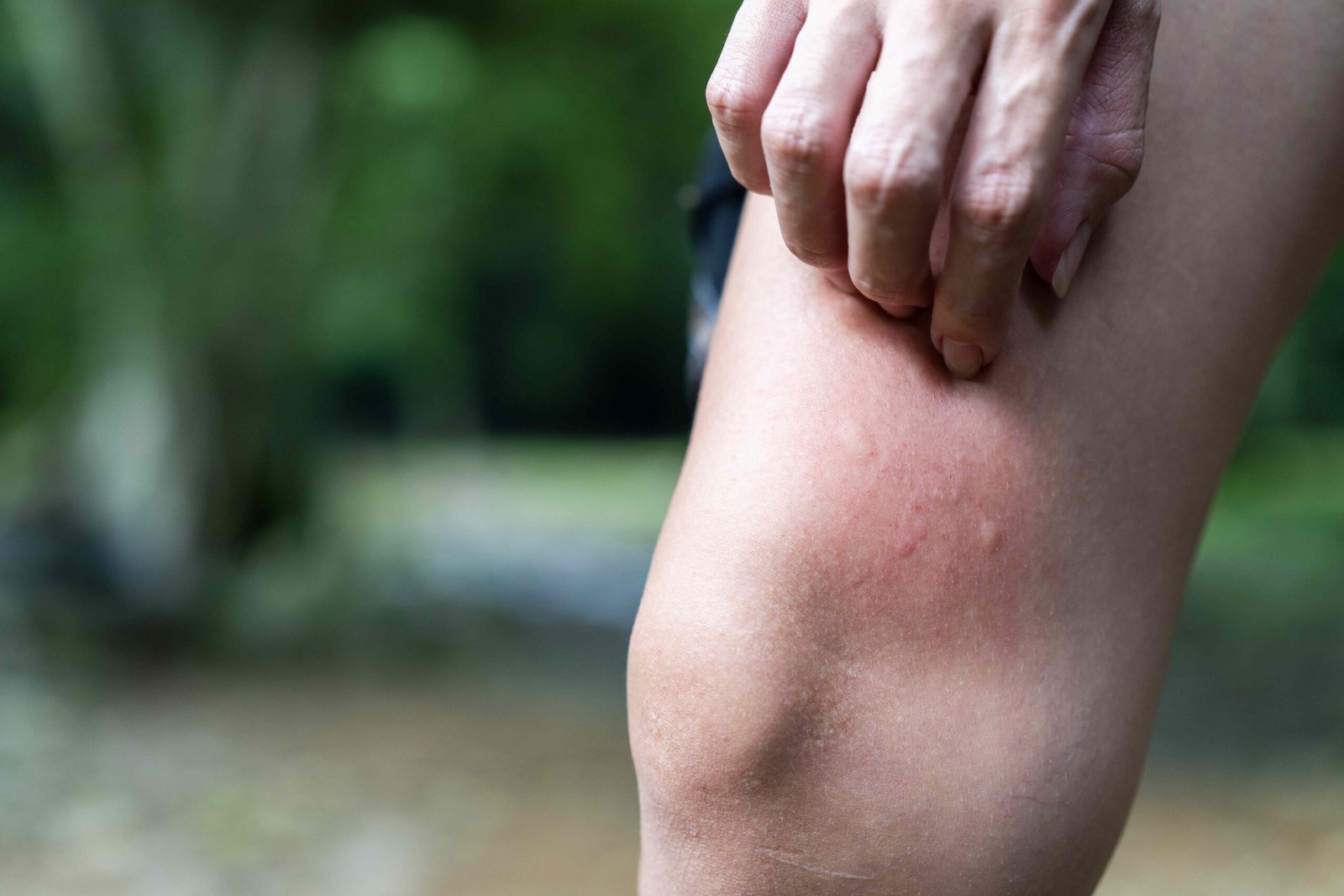
Bug bites that become infected may develop symptoms like warmth, redness, swelling, and pain. Though you may need treatment, infections from bug bites are usually temporary. Rarely, infections can become serious.
Signs of an infected bug bite may include:
- Redness or discoloration around the bite
- Heat radiating from the affected area
- Swelling, tenderness, or pain
- Itchy and painful sores that may burst and leak yellow fluid and then crust over
- A bull’s-eye rash
- Streaking on your skin
- Fatigue
- Fever or chills
- Swollen lymph nodes
- Arthritis-like joint pain
Note: Some swelling and itchiness are normal after a bite or sting from a bee, wasp, mosquito, or other insect. These symptoms—which doctors call insect bite inflammation—typically fade within a few days.
A bug bite can become infected when bacteria or other germs get in the skin, which can happen easily if you scratch. Different germs may lead to different kinds of infections.
- Cellulitis: Cellulitis is a bacterial skin infection typically caused by bacteria that naturally live on your skin. Any breakdown of the skin barrier—including insect bites or scratching—can lead to this infection.
- Impetigo: This skin infection is more common in children and infants. Sores may form around the bite and leak a yellowish fluid. Over time, a brittle, yellow crust forms.
- Lyme disease: Deer tick bites can spread this bacterial infection. An infected tick bite may cause a bull’s-eye rash (a small circle with a ring around it) one week to three months after the bite. The infection may be warm to the touch but not painful. Especially if untreated, Lyme disease can cause a range of symptoms, like nerve pain, paralysis, stiffness, and more.
- Lymphangitis: This is a more severe infection that spreads from the skin to the lymphatic system, an important part of your immune system. Lymphangitis causes distinct, red streaks coming from the bug bite toward the groin, neck, or armpit. You may also have fever, chills, mucle aches, pain, and swollen lymph nodes.
Without prompt treatment, an infection from a bug bite can develop into a more serious complication. Potential bug bite complications may include:
- Sepsis: Bacteria may spread from your skin to your bloodstream. Sepsis is a severe and life-threatening infection that causes severe fever, breathing difficulties, drops in blood pressure, rapid heart rate, and other symptoms.
- Endocarditis: This infection of the inner lining of the heart can occur with sepsis. Common signs include fever, chills, fatigue, and night sweats.
- Kidney failure: Rarely, impetigo can lead to kidney failure, which may develop one to two weeks after infection.
- Scarring: Scars or permanent changes in skin color can also occur after a bug bite infection.
Many bug bites don’t need medical care, but if you experience certain symptoms, it’s important to see a healthcare provider. These include:
- Fever
- Red streaks toward your lymph nodes
- Sores or pus
- Increasing redness, skin discoloration, pain, or swelling
A primary care provider will likely be able to treat the infection, but they may also refer you to a dermatologist, or a skin specialist.
You may be able to treat mild skin infections with home remedies. Home remedies may include:
- Cool compresses to reduce swelling
- Over-the-counter ointments
- Over-the-counter pain relievers, such as Motrin (ibuprofen), Aleve (naproxen), or others
- Elevation of infected and swollen areas to help reduce inflammation
Some infections may require treatment with a course of antibiotics, prescription medications that target and destroy infection-causing bacteria.
Preventing bug bites in the first place can help you avoid infection. If you do get a bug bite, you can take steps to help keep it from becoming infected. Consider these tips for avoiding bites or keeping them clean:
- Wear long sleeves and long pants when hiking, gardening, or spending time outdoors.
- Treat clothing with permethrin, which can help repel mosquitoes.
- Use insect repellent containing DEET.
- Avoid areas where mosquitoes may be more likely, like standing water or damp areas.
- Check your body for ticks after being outside and carefully remove any ticks you find.
- Clean any cut or bite with antibacterial soap and water.
- Apply an over-the-counter antibiotic and cover the affected area to prevent exposure to outside germs.
Signs that a bug bite is infected include heat, swelling, redness or discoloration, fever, chills, and more. Left untreated, infections can sometimes lead to serious, life-threatening complications. You may be able to treat mild infections at home, but if you have severe symptoms, see a doctor who can prescribe antibiotics to clear the infection.
