

Key Takeaways
- During the concrete operational stage, kids develop the ability to think logically about concrete situations.
- Children learn about reversibility, understanding that actions can be undone, like knowing a dog is a Labrador, and a Labrador is a dog.
- Kids in this stage can grasp conservation, realizing that changing an object’s shape doesn’t change its amount.
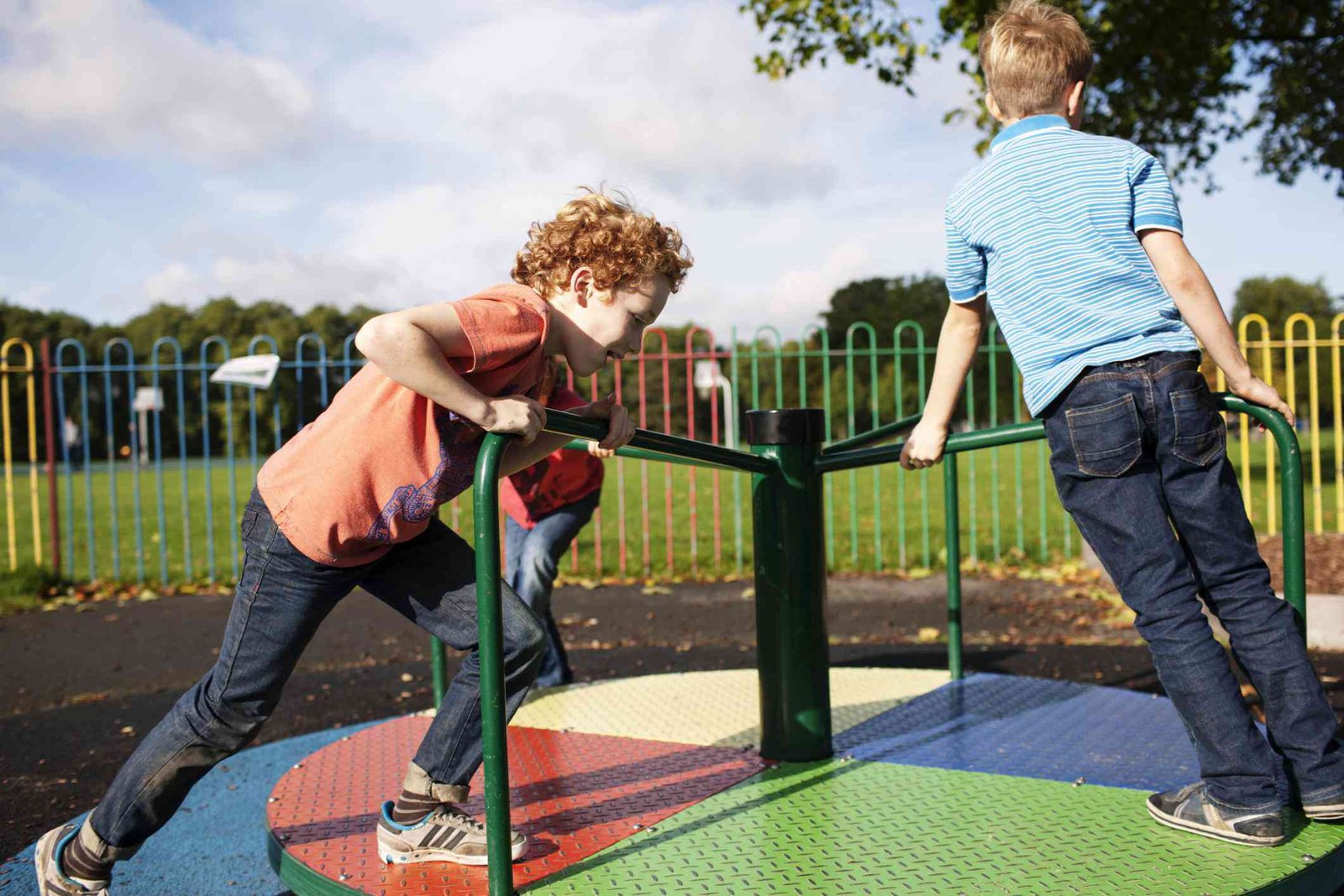
There are a lot of *big* changes going on during the elementary and middle school years of a child’s life. This period is known as the concrete operational stage, which is the third stage in Piaget’s theory of cognitive development. This period spans the time of middle childhood—it begins around age 7 and continues until approximately age 11—and is characterized by the development of logical thought.
They still tend to be very concrete, but kids become much more logical and sophisticated in their thinking during this stage of development.
While this is an essential stage in and of itself, it also serves as a transition between earlier stages of development and the coming stage, where kids will learn how to think more abstractly and hypothetically.
Significant events during the concrete operational stage include a great understanding of logic, reversibility, and conservation. Children also become less egocentric during this stage. Kids at this age become more logical about concrete and specific things, but they still struggle with abstract ideas.
Logic in the Concrete Operational Stage
Piaget determined that children in the concrete operational stage were fairly good at the use of inductive logic (inductive reasoning). Inductive logic involves going from a specific experience to a general principle.
An example of inductive logic would be noticing that every time you are around a cat, you have itchy eyes, a runny nose, and a swollen throat. You might then reason from that experience that you are allergic to cats.
Illustration by Cindy Chung, Verywell
On the other hand, children at this age have difficulty using deductive logic, which involves using a general principle to determine the outcome of a specific event. For example, a child might learn that A=B, and B=C, but might still struggle to understand that A=C.
Reversibility in the Concrete Operational Stage
One important development in this stage is an understanding of reversibility or awareness that actions can be reversed. An example of this is being able to reverse the order of relationships between mental categories.
An example of reversibility is that a child might be able to recognize that his or her dog is a Labrador, that a Labrador is a dog, and that a dog is an animal.
Reversibility is an important step toward more advanced thinking, although at this stage it only applies to concrete situations.
Conservation in the Concrete Operational Stage
Another key development at this stage is the understanding that when something changes in shape or appearance it is still the same, a concept known as conservation.
Kids at this stage understand that if you break a candy bar up into smaller pieces it is still the same amount as when the candy was whole. This is a contrast to younger children who often believe that pouring the same amount of liquid into two cups means that there is more.
For example, imagine that you have two candy bars of the exact same size. You break one candy bar up into two equally sized pieces and the other candy bar up into four smaller but equally sized sections.
A child who is in the concrete operational stage will understand that both candy bars are still the same amount, whereas a younger child will believe that the candy bar that has more pieces is larger than the one with only two pieces.
One of the key characteristics of the concrete-operational stage is the ability to focus on many parts of a problem.
While kids in the preoperational stage of development tend to focus on just one aspect of a situation or problem, those in the concrete operational stage are able to engage in what is known as “decentration.” They are able to concentrate on many aspects of a situation at the same time, which plays a critical role in the understanding of conservation.
Egocentrism in the Concrete Operational Stage
The concrete operational stage is also marked by decreases in egocentrism. While children in the preceding stage of development (the preoperational stage) struggle to take the perspective of others, kids in the concrete stage are able to think about things the way that others see them.
In Piaget’s Three-Mountain Task, for example, children in the concrete operational stage can describe how a mountain scene would look to an observer seated opposite them.
In other words, kids are not only able to start thinking about how other people view and experience the world, they even start to use this type of information when making decisions or solving problems.
While kids at earlier stages of development are egocentric, those in the concrete operational stage become more socio-centric.
In other words, they are able to understand that other people have their own thoughts. Kids at this point are aware that other people have unique perspectives, but they might not yet be able to guess exactly how or what that other person is experiencing.
Tips for Activities in the Concrete Operational Stage
Parents and other caregivers can help children develop their cognitive skills during this stage by encouraging a number of different activities. Some ideas that can help foster cognitive skills include:
- Playing with building blocks
- Pouring liquids into different-sized containers to demonstrate conservation
- Doing things for other people to help kids think about other perspectives
- Reading books and talking about what a child thinks might happen next
- Comparing sizes of similar objects and breaking them into smaller pieces to demonstrate principles of conservation
Tracking different cognitive milestones can help you better determine if your child’s growth is on track, but remember that all kids grow and develop at a different pace. If you are concerned about your child’s development during the concrete operational stage, talk to their doctor.
Verywell Mind uses only high-quality sources, including peer-reviewed studies, to support the facts within our articles. Read our editorial process to learn more about how we fact-check and keep our content accurate, reliable, and trustworthy.
Malik F, Marwaha R. Cognitive Development. In: StatPearls [Internet]. Treasure Island (FL): StatPearls Publishing.
Dingle AD. Incorporating developmental principles into clinical care. Focus (Am Psychiatr Publ). 2016;14(1):54-56. doi:10.1176/appi.focus.20150033
Rabindran, Madanagopal D. Piaget’s theory and stages of cognitive development- an overview. SJAMS. 2020;8(9):2152-2157. doi:10.36347/sjams.2020.v08i09.034
Carpendale J, Müller U, Lewis C. The Development of Children’s Thinking: Social and Communicative Foundations.; 2017.
Scott HK, Cogburn M. Piaget. In: StatPearls [Internet]. Treasure Island (FL): StatPearls Publishing.
Winstanley MA. Stages in theory and experiment. Fuzzy-structuralism and Piagetian stages. Integr Psychol Behav Sci. 2023;57(1):151-173. doi:10.1007/s12124-022-09702-7
M Badakar C, J Thakkar P, M Hugar S, Kukreja P, G Assudani H, Gokhale N. Evaluation of the relevance of Piaget’s cognitive principles among parented and orphan children in Belagavi City, Karnataka, India: A comparative study. Int J Clin Pediatr Dent. 2017;10(4):346–350. doi:10.5005/jp-journals-10005-1463
Additional Reading
- Rathus, SA. Children and adolescence: Voyages in Development Belmont, CA: Thomson Wadsworth; 2008.
- Santrock, JW. A topical approach to life-span development (4 ed.). New York City: McGraw-Hill; 2008.
Thanks for your feedback!
What is your feedback?
Helpful
Report an Error
Other
