

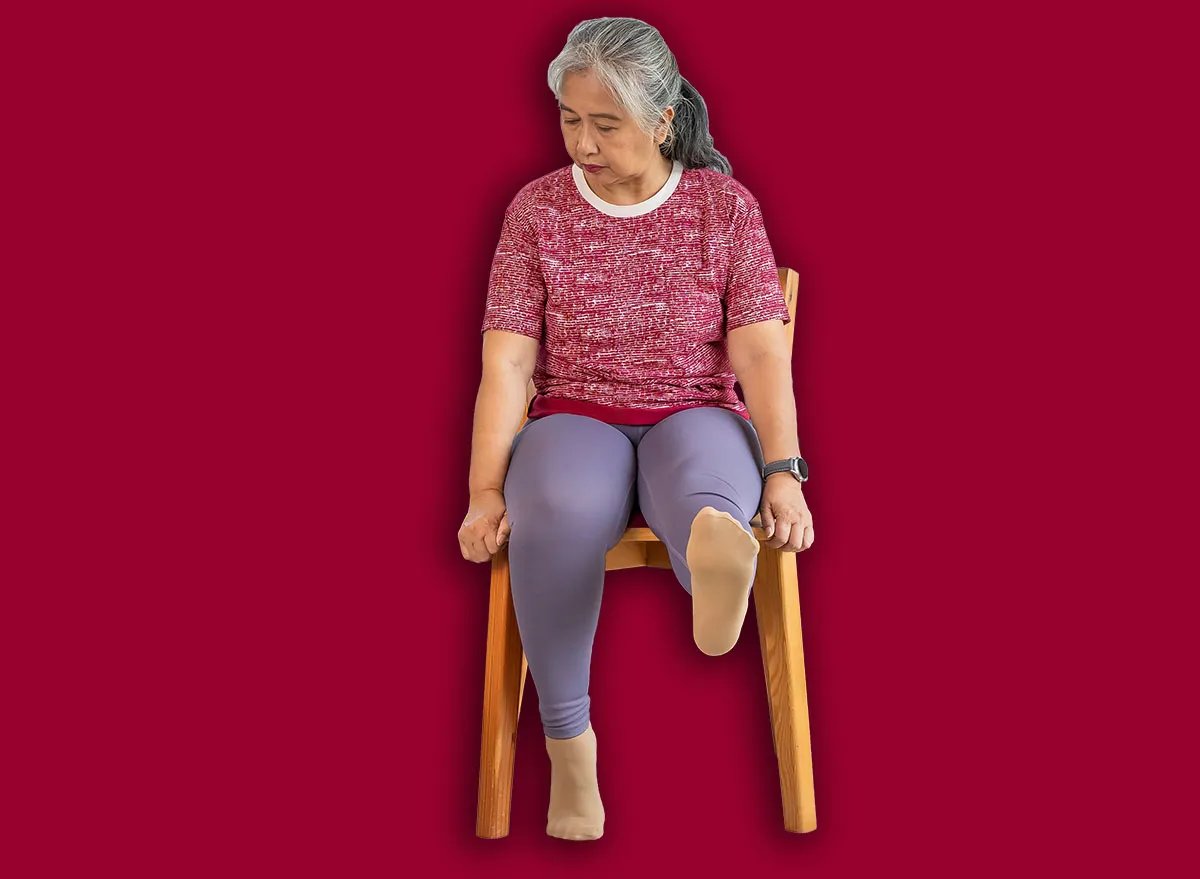
A trainer explains why these seated core exercises work better than planks after 60.
Belly overhang after 60 rarely improves from willpower alone. It changes when the muscles responsible for holding the abdomen in, your deep core and lower abs, start working again with consistency. Planks get a lot of attention, but for many adults over 60, they create more strain than results. I’ve coached clients in this age group for years, and the biggest breakthroughs usually come from movements that feel comfortable enough to repeat daily while still delivering real tension through the core.
Chair exercises solve that problem. They provide support for the back and hips while allowing you to focus on controlled abdominal contractions. When you remove the discomfort of getting on the floor, consistency goes up, and that’s where results start showing. I’ve seen clients make faster progress with five minutes of focused seated work than with occasional plank sessions they avoid.
Another key factor involves control. Fast reps don’t flatten the stomach: slow, deliberate tension does. These movements keep the abdominal wall engaged from start to finish, training the muscles to pull inward rather than push outward. That’s the shift that tightens the midsection.
The following exercises target the lower abs, obliques, and deep stabilizers that support the belly. Move slowly, stay tall through your posture, and focus on tightening your core during every rep. Stick with it daily, and you’ll feel the difference quickly.
Seated Knee Tucks
This remains one of the most effective seated movements for targeting the lower abdominal wall. I start many clients here because it teaches proper core engagement without putting pressure on the spine. When done right, the lower abs do the work, not momentum.
Pulling the knees toward the chest forces the core to contract deeply. Extending the legs back out challenges the same muscles to stay engaged. That constant tension makes this movement far more effective than it looks at first glance.
How to Do It
- Sit near the edge of a chair
- Lean back slightly with a straight back
- Pull both knees toward your chest
- Extend legs forward slowly
- Repeat with control.
Seated Leg Extensions With Core Brace
This exercise builds lower-core strength while reinforcing posture. I use this often because it teaches the body to stabilize while the legs move, a key function of the core in everyday life.
Extending one leg forces the abdominal muscles to engage and prevent leaning or shifting. Keeping that tension throughout the movement helps retrain the muscles that hold the belly in.
How to Do It
- Sit tall with feet flat
- Tighten your core
- Extend one leg forward slowly
- Lower with control
- Alternate legs steadily.
Seated Cross-Body Crunch
This movement brings the obliques into play while still hitting the lower abs. I include this often because tightening the sides of the core helps pull the entire midsection inward.
Bringing the elbow toward the opposite knee creates a strong contraction through the abdominal wall. Slow, controlled reps keep the muscles under tension and prevent the movement from turning into momentum.
How to Do It
- Sit tall with hands behind your head
- Lift one knee across your body
- Bring opposite elbow toward the knee
- Return slowly
- Alternate sides.
Seated March With Hold
This exercise looks simple but delivers serious core activation when done correctly. I rely on it often because it builds endurance and control at the same time.
Holding the knee at the top forces the core to stabilize the body without leaning back. That sustained contraction strengthens the deep muscles responsible for flattening the stomach.
How to Do It
- Sit tall with feet flat
- Lift one knee toward your chest
- Hold for 2–3 seconds
- Lower slowly
- Alternate sides.
Seated Forward Lean With Core Tightening
This movement ties everything together by training the core to stabilize during forward motion. I often use it at the end of a routine because it reinforces full abdominal engagement.
Leaning forward slightly while keeping the core tight forces the muscles to support the spine. When done slowly, the entire midsection stays active throughout the movement.
How to Do It
- Sit upright with arms extended forward
- Tighten your core
- Lean forward slightly from the hips
- Return slowly
- Repeat with control.
Tyler Read, BSc, CPT
Tyler Read is a personal trainer and has been involved in health and fitness for the past 15 years. Read more about Tyler
