

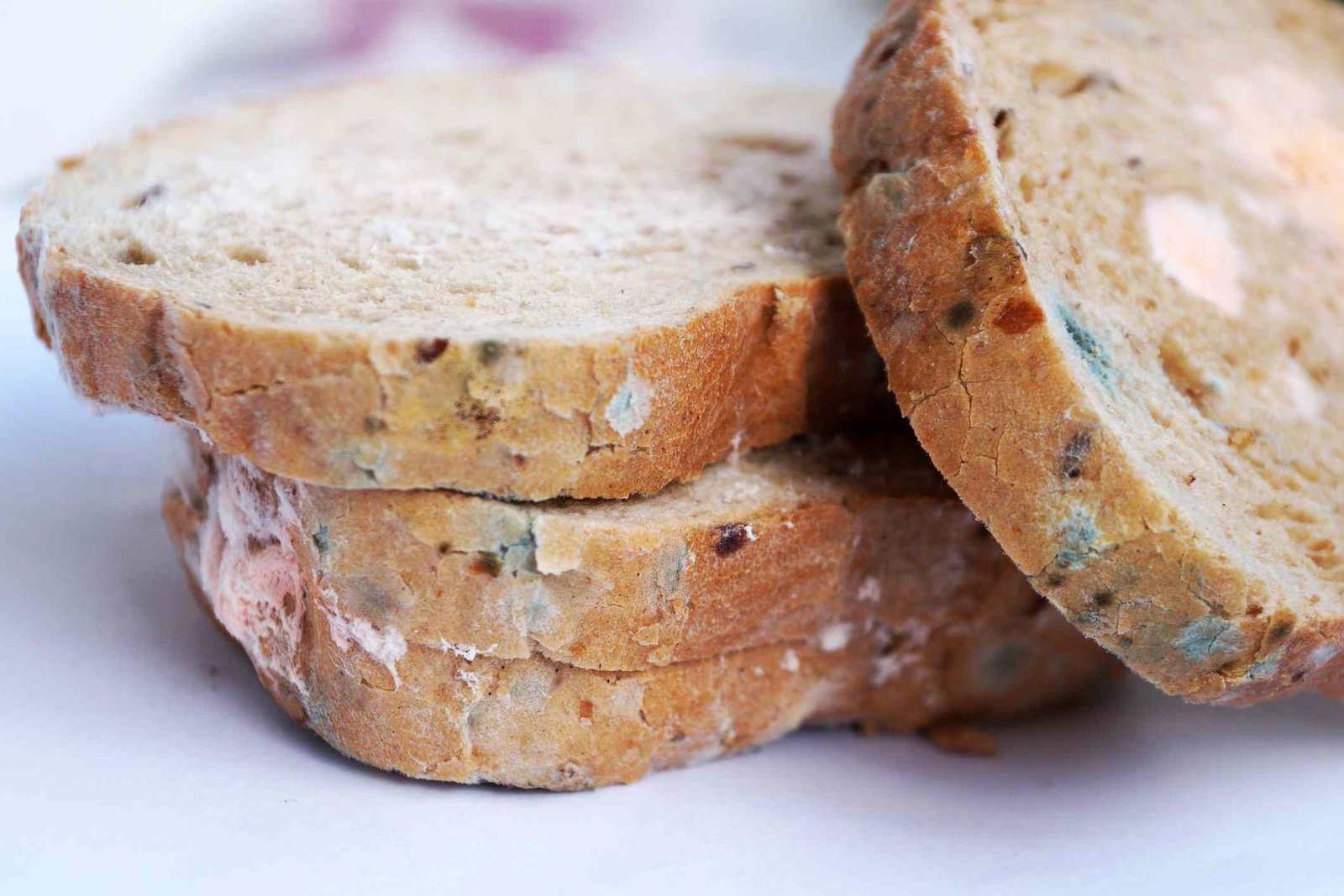
If bread is a regular part of your diet, you’ve probably come across an unexpected patch of mold on your favorite loaf. While a small fuzzy spot might not seem like a big deal, is eating moldy bread really safe? Here’s what you need to know about eating moldy bread, the potential health risks, and how to store bread properly to prevent spoilage.
The short answer: No, it is generally not recommended that people consume moldy bread.
The U.S. Department of Agriculture (USDA) recommends discarding any bread with visible mold because porous foods, like bread, can be contaminated with mold beneath the visible surface.
“Mold can pose health risks beyond what is visible on the surface,” Grace Derocha, MBA, RD, CDCES, and spokesperson for the Academy of Nutrition and Dietetics, told Health. “When mold is visible on bread, it means the product has been colonized by fungi that can extend well beyond what you can see.”
Additionally, some molds produce mycotoxins, which are harmful compounds that may cause gastrointestinal symptoms or more serious health effects, especially in vulnerable populations, such as pregnant people and children.
While not all mold produces mycotoxins, there is no reliable way to tell which molds are harmless and which are not.
When you see a green, black, or white fuzzy growth on bread, it indicates that mold is growing. Molds are microorganisms that produce tiny spores, which allow them to spread through the air and grow on foods.
Bread is nutrient-dense, moist, and typically stored in warm environments, such as on sunny countertops, which provide ideal conditions for mold growth.
Molds most commonly found on bread include Rhizopus nigricans, which appears as fluffy white growths with black spots, and Penicillium expansum, P. stolonifer, and Aspergillus niger, which have greenish to black spore clusters and are often called ‘bread mold.’
Mold is most likely to grow on homemade breads, made without preservatives, and breads kept past their shelf life. Although commercial breads often contain additives to inhibit mold growth, mold can still develop if the bread is stored beyond its shelf life or in warm, damp conditions.
Because mold growth is often more extensive than it appears, if you see mold on bread, it’s usually a sign that the bread is no longer safe to eat.
Also, though it might be tempting to just remove the one moldy slice from a loaf of bread, experts warn that the problem can extend beyond what you see. “Cutting off the mold doesn’t get the roots, so it isn’t an effective approach for cleaning the rest of the bread,” Margot Vigeant, professor of chemical engineering at Bucknell University, told Health.
“If you are using sliced bread, it’s possible for the growth inside the bread to extend through closely packed slices, so even pulling off the one moldy piece won’t guarantee a clean sandwich,” said Vigeant.
Guidance differs for low-moisture foods, such as hard cheeses and firm vegetables like carrots. For these foods, the USDA recommends cutting at least 1 inch around and below the moldy spot to make the food safe to eat. Unlike bread, mold usually can’t penetrate deeply into these firmer foods.
To prevent mold growth on bread, follow these expert-approved tips:
- Store bread in a cool, dry place: Mold thrives in warm, moist environments. Keeping bread in a bread box or pantry away from heat can help prevent mold growth.
- Keep bread sealed: Storing bread sealed in its packaging or an airtight container can help protect against mold growth by reducing exposure to airborne mold spores.
- Freeze your bread: Freezing bread can prevent mold and help your bread last until you’re ready to enjoy it. To make it easier to use, slice your bread before freezing.
Keep in mind that homemade bread and bread made without preservatives will spoil quicker than commercial breads. Commercial breads and rolls can be kept at room temperature for two to four days, in the fridge for one to two weeks, or in the freezer for up to three months.
If you spot mold on bread, the safest move is to discard it. To prevent mold growth and reduce food waste, store bread properly and freeze any portions you won’t eat within a reasonable time.
