

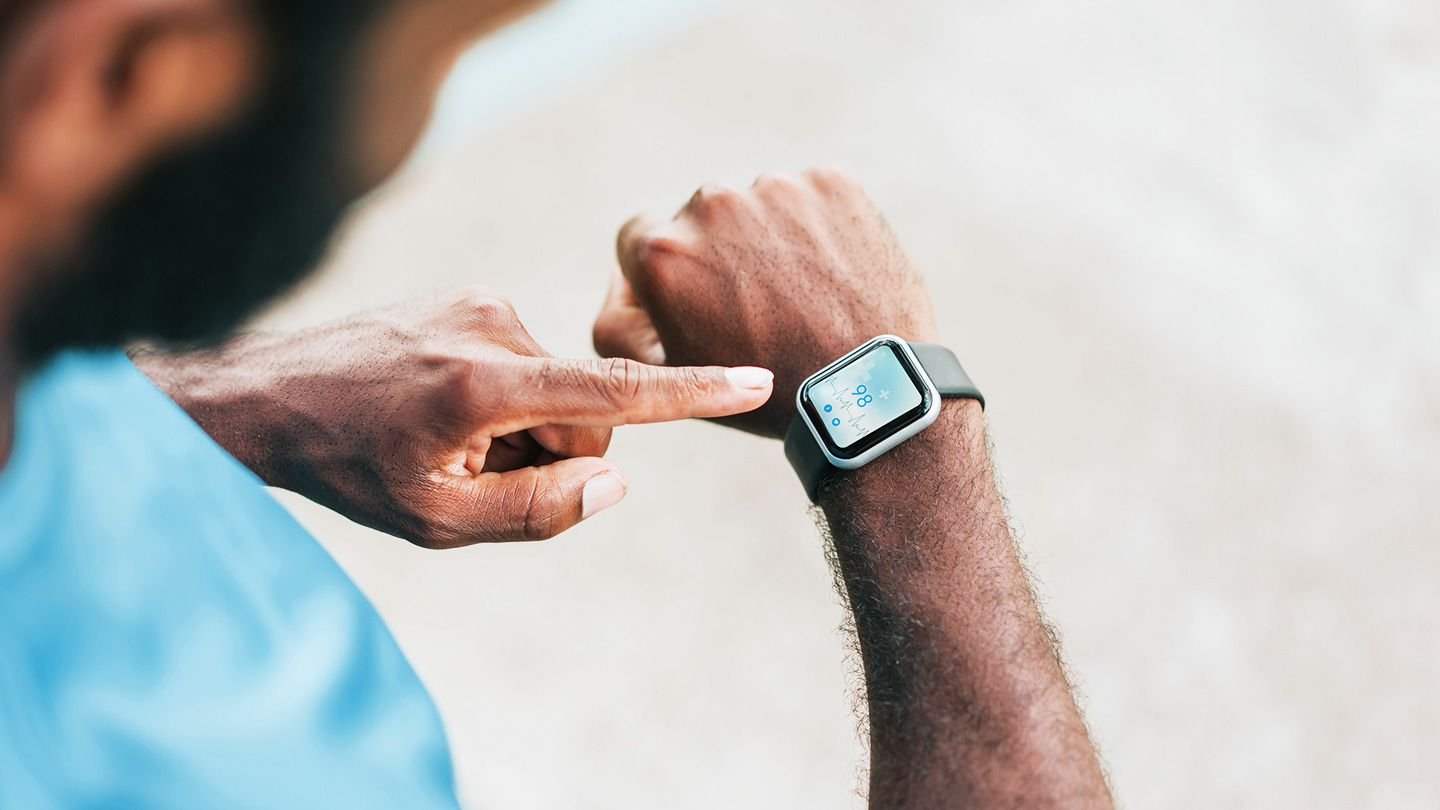
Technology has evolved to the point where wearable devices can show you heart-health warning signs and where your efforts to improve heart health are paying off. But not all of these heart health tracking features have been recognized as reliable by experts.
Detecting Heart-Rhythm Issues
One of the strongest features of wearable devices is their ability to identify irregularities in your pulse.
Wearables such as smartwatches or patches typically rely on at least one of three sensors to track heart rhythms:
[3]
- Accelerometer sensors, which detect motion and acceleration
- Electrocardiograph sensors (ECG), which record your heart’s electrical activity
- Photoplethysmograph sensors (PPG), which use infrared sensors to track changes in blood volume
They also may include additional sensors, such as gyroscopes or thermometers, that can provide heart-related feedback.
It’s the ECG sensors that may be most effective, however. They are most often found in smartwatches and ECG patches.
[4]
Research shows that some wearables with ECG sensors may be just as accurate as medical-grade ECGs in detecting simple or common heart-rhythm abnormalities more than 90 percent of the time.
[5]
[1]
“These data are the most widely used for diagnosis and management of cardiac arrhythmias, most notably atrial fibrillation,” says Nazem Akoum, MD, a cardiologist at the Heart Institute at the University of Washington Medical Center in Seattle.
A smartwatch isn’t your doctor, however. If your device repeatedly flags an irregular rhythm, or if you have symptoms such as palpitations or shortness of breath, call your doctor.
Tracking Activities
Wearable devices use a variety of technologies, from gyroscopes and accelerometers to proprietary algorithms, to measure step counts and similar movements.
[3]
Exercise is a crucial component of preventing heart disease, and just monitoring your own activity can inspire you to engage in more of it. Research has shown that people who use activity trackers are more likely to take more daily steps and spend more time exercising than those who don’t.
[6]
Understanding Sleep Patterns
There are many rings, bands, and similar devices that track how long and how well you sleep. These devices usually use PPG sensors and accelerometers to track changes in your heart rate, body temperature, and movement during sleep.
[3]
Although this information can help pinpoint potential sleep disorders, wearable devices are not a replacement for polysomnography, or a laboratory sleep study. If you suspect you have sleep issues because of what your device tells you, talk to your doctor about next steps in determining a potential diagnosis.
Monitoring Oxygen Levels
Wearables also can measure the percentage of oxygen in your blood, known as pulse oximetry. Low blood oxygen can be a sign of heart disease and other conditions.
[7]
Dr. Akoum says that this feature also can be useful in detecting symptoms of a breathing problem such as obstructive sleep apnea. If left untreated, sleep apnea can increase your risk of developing an irregular heartbeat or high blood pressure, which can lead to heart failure or a stroke.
Detecting Variations in Heart Rate and Stress
Devices commonly use ECG or PPG to track heart rate variability (HRV), or the time gap between each heartbeat.
[3]
A high HRV is considered good, while a low HRV may indicate stress, fatigue, or even a heart issue.
[8]
It is an inexact science, however.
“I wouldn’t say heart rate variability is something that people should fixate on, which a lot of people tend to do, because a lot of things influence it,” says Paul Leis, DO, a cardiologist and an assistant professor of medicine at the Icahn School of Medicine at Mount Sinai in New York. “Even a simple illness can change heart rate variability readings, and that can spiral into unnecessary worry.”
Reading Blood Pressure
Manufacturers may claim that devices such as watches keep track of your blood pressure, but these measurements aren’t always reliable.
Blood-pressure monitors typically use an inflatable cuff to tighten around your arm and measure how hard your blood is pushing through your arteries. Traditional blood-pressure cuffs aren’t designed to be worn all day long. But some wearables include a cuff that fits around your wrist and is designed to inflate at times. This is considered a less reliable reading than one from your upper arm, however.
[9]
Smartwatches without inflatable bands may use PPG sensors to estimate blood pressure. They do not match the accuracy of traditional cuffs, either.
[10]
