

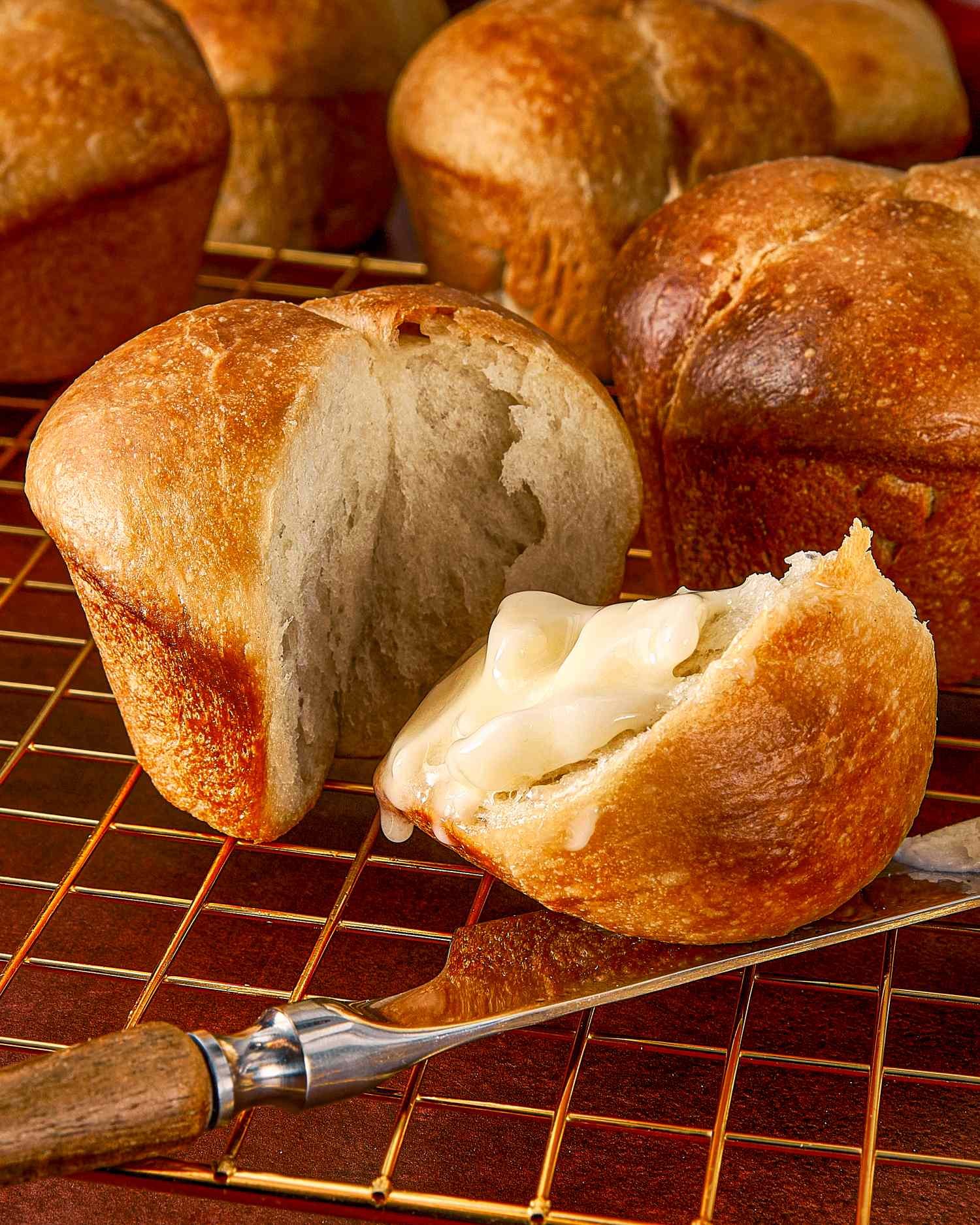
Why It Works
- Potato flakes in the dough hold moisture for a soft, tender crumb that stays plush even after baking.
- Gradually adding softened—not melted—butter ensures gluten develops properly, building structure for a higher rise and lighter texture.
The most memorable roll I’ve ever had was at a dinner table in Seaman, Ohio, sometime in the ’90s, and it was a cloverleaf.
I couldn’t have been more than 10 years old, but I still remember swiping a piece of that roll through the mess of mashed potatoes, gravy, and green bean potlikker on my plate. In my memory, it was as soft and pillowy as a doughnut, with a golden-brown crust and a cottony crumb.
That was one of the experiences that taught me just how good scratch-made food could be—and how many freshly baked rolls I could put away in a sitting.
To be clear, a cloverleaf roll is just a dinner roll divided into three parts and baked together in a muffin tin. But that structure offers more than a retro visual. There’s a practical advantage: A cloverleaf roll can be pulled apart into three distinct, pillowy bites without crushing the crumb—no tearing (or slicing) required. Think monkey bread, but for sopping up gravy.
Serious Eats / Lorena Masso
Engineering the Perfect Dinner Roll
Getting my cloverleaf rolls right meant striking a balance between tenderness and rise, to achieve the soft, cottony crumb I remembered. Here’s how I did it:
- Start with bread flour. Using bread flour instead of all-purpose flour raises the protein content of the dough, which strengthens gluten and supports a higher rise. That extra strength helps the rolls rise high even though the dough is enriched with butter, milk, egg, sugar, and potato, all of which weaken gluten.
- Add potato flakes. Potato starch holds onto moisture, which gives the rolls a tender crumb and helps them stay soft and squishy longer. Instant flakes are the easiest way to harness the effect. (Make sure to buy unseasoned potato flakes.)
- Choose whole milk instead of water. Milk enriches the dough in two ways:with fat that tenderizes the crumb, and lactose (milk sugar) that caramelizes for a golden, glossy crust. Compared to water, it gives the rolls more flavor and a softer texture.
- Use plenty of butter… Butter does double duty in this recipe: It enriches the dough for tenderness and better flavor, then adds shine and color when brushed on after baking. Why work softened butter into the dough instead of just pouring in melted? We’re prioritizing the rise again. Melted butter coats the flour instantly, blocking hydration and limiting gluten development. Softened butter, meanwhile, blends into the dough gradually during mixing. That slower incorporation lets the flour fully hydrate and the gluten develop before the fat disperses, so the rolls bake up lighter and fluffier.
- …and more than a spoonful of sugar. Sugar doesn’t just add flavor. It feeds the yeast for a higher rise and encourages browning in the oven.
- Don’t forget the egg. A single egg adds a few key elements to the dough: fat for richness, lecithin for emulsification and tenderness, and protein that sets during baking to give the crumb a gentle structure. It deepens the color, adds flavor, and helps keep the interior, once again, soft and light.
- Allow time for an overnight cold proof (optional). A rest in the fridge develops deeper flavor and gives the yeast more time to work, resulting in better oven spring. Long, slow fermentation also relaxes the gluten, making the dough easier to shape and producing a more even crumb. And if you’re cooking for a crowd, it gives you flexibility: You can shape the rolls the night before, then pull them out of the refrigerator an hour and a half before you’re ready to bake.
Serve these rolls warm, with more softened butter and something gravied.
Serious Eats / Lorena Masso
