

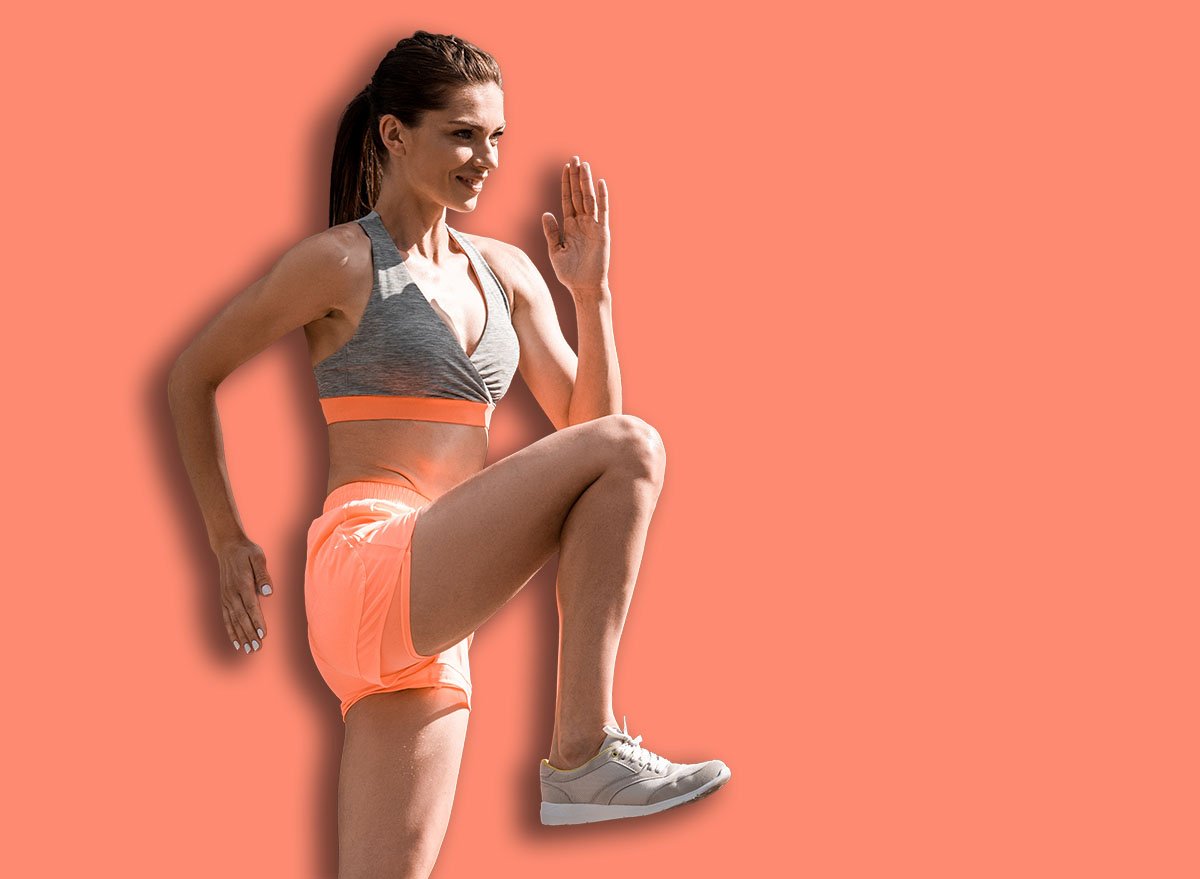
A personal fitness trainer shares a 15-minute daily circuit to shrink belly overhang, start today.
As a personal trainer and fitness educator, I’ve worked with thousands of older adults, and one of their biggest concerns is the fat on their stomach and more specifically, fat that has started to hang down.
Too many of them have given up and believe there’s nothing they can do about it, often making the problem worse by not exercising in any meaningful way and eating badly. Fortunately, it’s more than possible to fix this issue with some clever workout and diet choices. Here are five daily exercises that can help you shrink that belly overhang without touching a single weight machine.
What Makes Belly Fat So Hard to Lose After 55
Shutterstock
There are three things that happen in combination that make our belly fat more stubborn after we reach 55.
Our hormones shift and change the way our bodies store fat. For women, this is a drop in oestrogen, making fat storage move from the hips and thighs to the midsection. For men, testosterone dropping has the same effect, with people generally having less muscle mass and more belly fat.
Our metabolisms slow down, too. We burn around 150-300 fewer calories each day than we did at 30, even with the same amount of activity. This doesn’t sound like a lot, but it can potentially cause 15 lbs of weight gain over a year if movement or eating isn’t adjusted accordingly.
The third factor is muscle loss. From 50 onwards, you’re losing about 1-2% of your muscle mass each year if you’re not making an effort to work against it. Less muscle means a slower metabolism, which means your body burns fewer calories at rest. This creates a cycle where it becomes harder to shift fat, particularly around the middle.
There’s also the issue of visceral fat, the deep belly fat that wraps around your organs. This type of fat increases with age and is more resistant to diet alone. It responds better to specific types of movement that engage your core and build muscle throughout your entire body.
Why These Exercises Beat Machine-Based Weight Training
Shutterstock
Traditional weight training, the kind where you sit on machines and isolate single muscles, doesn’t burn many calories during the workout itself. A typical machine-based session might burn 150-200 calories in 30 minutes. That’s helpful, but it’s not addressing the real issue with hanging belly fat.
The exercises that work better are compound movements that use multiple muscle groups at once. These burn more calories during the session and, more importantly, they build muscle across your entire body. More muscle means your metabolism stays higher throughout the day, even when you’re not exercising. You’re turning your body into a more efficient calorie-burning machine.
These movements also create what’s called metabolic stress. Your muscles are working hard, they need oxygen, your heart rate increases, and your body has to work harder to recover afterwards. This afterburn effect means you’re still burning extra calories for hours after you’ve finished exercising.
Functional exercises that mimic daily movements are super effective because they engage your core continuously. You’re not just working your abs in isolation. You’re strengthening the entire system of muscles that support your spine and hold your midsection tight. This creates better posture, pulls your stomach in naturally, and builds the kind of strength that actually transfers to real life.
For people over 55, these exercises are also safer. You’re moving in natural patterns rather than being locked into fixed positions on machines. This reduces joint stress and builds the kind of stability and balance that prevents falls and injuries.
Chair Squats
Chair squats work your entire lower body and force your core to stay engaged throughout the movement. When you’re using your largest muscle groups, you’re burning the most calories and building the most metabolically active tissue.
Muscles Trained: Quads, glutes, hamstrings, core
How to Do It:
- Stand in front of a sturdy chair with your feet hip-width apart.
- Lower yourself down as if you’re going to sit, letting your bottom lightly touch the chair.
- Push through your heels to stand back up.
- Keep your chest lifted and your weight in your heels throughout.
- Make sure your knees track over your toes, not caving inward.
Avoid These Mistakes:
- Don’t let your knees shoot forward over your toes. Think about sitting back into the movement, as if you’re reaching your bottom towards the chair behind you.
- Don’t rush. Slow down the lowering phase to three seconds. This builds more strength and makes the exercise more effective.
Recommended Sets and Reps: 10-15 repetitions per set
Form Tip: Think “sit back,” not “sit down.” Reaching your bottom toward the chair keeps stress off your knees and in your glutes where it belongs.
Wall Push-Ups
Wall push-ups work your chest, shoulders, triceps, and core all at once. The angle makes them accessible for people who can’t do floor push-ups, but they still create enough resistance to build upper body strength and burn calories.
Muscles Trained: Chest, shoulders, triceps, core
How to Do It:
- Stand arm’s length from a wall with your feet together.
- Place your hands flat against the wall slightly wider than shoulder-width.
- Lower your chest towards the wall by bending your elbows, keeping your body in a straight line from head to heels.
- Push back to the starting position.
- Keep your core tight throughout. Don’t let your hips sag or your bottom stick out.
Avoid These Mistakes:
- Don’t stand too close to the wall. This makes the exercise too easy and limits the benefits. Step further back to increase the challenge.
- Don’t let your elbows flare out to the sides. Keep them at roughly a 45-degree angle to your body.
- Don’t hold your breath. Breathe in as you lower, out as you push back up.
Recommended Sets and Reps: 8-10 repetitions to start, building up from there
Form Tip: The further your feet are from the wall, the harder it gets. Start where you can do 8 clean reps and gradually step back as you get stronger.
Standing Knee Raises
Standing knee raises directly work your lower abdominals and hip flexors while also challenging your balance. The standing position means your core has to stabilize your entire body, not just lift your leg. This creates more muscle engagement and burns more calories than lying down crunches.
Muscles Trained: Lower abdominals, hip flexors, core stabilizers
How to Do It:
- Stand tall with your feet hip-width apart. You can hold onto the back of a chair for balance if needed.
- Lift one knee up towards your chest, keeping your standing leg straight and your core tight.
- Lower it back down with control and repeat on the same side before switching legs.
- Keep your upper body upright throughout. Don’t lean back.
Avoid These Mistakes:
- Don’t rock back and forth or use momentum to swing the leg up. Slow it down and focus on using your abdominal muscles to lift your knee.
- Don’t hold onto your support too tightly. Use it for balance only, not to haul yourself through the movement.
- Don’t let your standing knee lock out or hyperextend.
Recommended Sets and Reps: 10-15 repetitions per leg
Form Tip: If you can’t feel your lower abs working, you’re probably swinging. Pause at the top of each rep for one second to make sure your muscles are doing the work, not momentum.
Standing Side Bends
Side bends target your obliques, the muscles along the sides of your waist. These often get neglected, but they’re important for pulling your midsection in and creating that tapered waist appearance. They also improve your ability to twist and turn in daily life.
Muscles Trained: Obliques, core
How to Do It:
- Stand with your feet shoulder-width apart and your hands by your sides.
- Slowly bend to one side, sliding your hand down the outside of your leg.
- Keep your hips and shoulders facing forward. Don’t twist or rotate.
- Return to standing and repeat on the other side.
- Keep your core engaged throughout. The movement should come from your waist, not your lower back.
Avoid These Mistakes:
- Don’t bend forward or backward instead of directly to the side. Imagine you’re between two panes of glass and you can only move sideways.
- Don’t go too deep too quickly. Start with a small range of motion and gradually increase it as your obliques get stronger.
- Don’t add weights yet. Bodyweight is enough to start building strength in this movement pattern.
Recommended Sets and Reps: 10-15 repetitions per side
Form Tip: Picture those two panes of glass on either side of you. If you’re bending forward at all, you’ve broken the glass.
Modified Plank Against Wall
Planks work your entire core, not just your abs, but also the deeper muscles that wrap around your spine and support your posture. A wall plank gives you the same benefits as a floor plank but at an angle that’s manageable for people who are just starting out or have wrist or shoulder issues.
Muscles Trained: Deep core, abs, back stabilizers, shoulders
How to Do It:
- Stand arm’s length from a wall and place your forearms flat against it, elbows directly under your shoulders.
- Step your feet back until your body forms a straight line from head to heels.
- Hold this position, keeping your core tight and your hips level.
- Don’t let your lower back sag or your bottom stick up in the air.
- Breathe normally throughout.
Avoid These Mistakes:
- Don’t sag in the middle or pike your hips up. Both reduce the effectiveness and can strain your lower back.
- Don’t hold your breath. This spikes your blood pressure unnecessarily. Breathe steadily, in through your nose, out through your mouth.
- Don’t let your shoulders creep up towards your ears. Keep them pulled down and back.
Recommended Hold Time: 20-30 seconds to start, working up to 45-60 seconds
Form Tip: Check your body line by glancing at a mirror from the side if you can. Head, hips, and heels should make one straight line.
How to Structure This Workout
Shutterstock
Do these exercises in a circuit format. Complete one set of each exercise, then repeat the circuit 2-3 times depending on your fitness level. Start with 2 circuits if you’re new to exercise, and build up to 3 circuits after the first week or two.
Rest for 30-60 seconds between exercises. This keeps your heart rate elevated (which burns more calories) while still giving you enough recovery to maintain good form. Between circuits, rest for 60-90 seconds. The entire workout should take 15-20 minutes once you’re familiar with the movements.
You can do this routine 4-5 days per week. Your body needs at least 2 rest days per week to recover and build muscle. These don’t have to be consecutive. You might train Monday through Thursday, rest Friday, train Saturday, rest Sunday. Or train Monday, Wednesday, Friday, Saturday with rest days in between. The key is consistency over the week, not training every single day.
On rest days, you can still move. Go for a walk, do some gentle stretching, or just focus on getting your steps in. Rest doesn’t mean lying on the sofa all day. It means giving your muscles a break from resistance training while staying generally active.
What Results to Expect in 4 Weeks
Shutterstock
The first changes show up within 7-10 days, but they’re not what you see in the mirror. You’ll notice you have more energy throughout the day. Getting out of a chair feels easier. You’re not as out of breath climbing stairs. Your body is adapting to the new stimulus, and your nervous system is learning to activate muscles more efficiently.
By week 2, you’ll start to feel your core getting stronger. Your posture improves without you having to think about it. Your clothes might start to feel slightly looser around the waist, even if the scales haven’t moved much. This is because you’re building muscle (which takes up less space than fat) and reducing bloating as your digestive system responds to regular movement.
At the 3-week mark, you should see visible changes. Your stomach will look flatter, particularly in the morning. You might lose 1-2 inches around your waist depending on your starting point and how dialed in your nutrition is. The hanging belly fat will start to reduce, though it won’t disappear completely in just 4 weeks.
By the end of week 4, most people have lost 3-6 pounds of fat if they’ve also been mindful about their eating. Your stomach will be noticeably tighter. Other people will start commenting that you look different. The exercises that felt challenging on day one are now manageable, and you’ll be ready to progress to more difficult variations.
These results assume you’re doing the exercises 4-5 times per week and making reasonable food choices. You don’t need a perfect diet, but you can’t out-exercise a poor diet. If you’re still eating significantly more calories than you’re burning, you’ll build muscle and get stronger, but the fat loss will be minimal. Combine these exercises with a slight calorie reduction, even just cutting out one snack per day, and the results will be much more noticeable.
