

Key Takeaways
- ADHD can make it hard to start and stay on tasks, often leading to low motivation.
- Breaking tasks into smaller steps can help you feel more motivated.
- It’s essential to talk to a professional if ADHD is affecting your motivation.
Attention-deficit/hyperactivity disorder (ADHD) is a neurodevelopmental condition characterized by hyperactivity, impulsivity, and inattention. Because of these ADHD symptoms, adults and children with this disorder are often labeled as unmotivated, lazy, or apathetic—negative labels that are unfair and hurtful.
Immobility, sluggishness, or “ADHD paralysis” that can occur in people with ADHD are often reflective of executive function impairments. Understanding these impairments is important to correcting common misperceptions that exist and involves learning how ADHD can affect motivation, as well as how this can often be wrongly interpreted.
Watch Now: Strategies for Living Well With ADHD
How ADHD Impacts Motivation
Executive function deficits in ADHD can affect a person’s ability to begin, organize, and sustain effort on a task or project. They may want to get started but are unable to make forward progress in any manner, which can impact their motivational levels.
These differences in executive function can result in negative reactions from others. People around them may become confused or frustrated by inconsistencies in the person with ADHD, particularly when they perform well when a task is stimulating, interesting, or novel but do not perform as well when the task is tedious or repetitive.
ADHD Paralysis
While people with ADHD are often good at making quick decisions, they may struggle when working on tasks that require organizing information. They sometimes feel bogged down with large amounts of data, which can be overwhelming and result in ADHD paralysis.
This paralysis can make it seem impossible to figure out how and where to begin. And even if they are able to begin a task, a person with ADHD may have difficulty staying alert and persisting in this effort. They may know what they need to do to get things completed but, as hard as they try, they just can’t.
ADHD paralysis can lead to poor time management, trouble prioritizing tasks, lack of clarity and focus, and rapid mood or emotional changes.
Boredom and Motivation
Boredom can create issues for children and adults with ADHD. Maintaining focus on a boring task may seem out of the question as their attention wanders to more interesting activities and thoughts.
After repeated frustrations, the child or adult with ADHD can begin to feel less motivated. They might find it difficult to get excited and hopeful about something, only to crash down again and again.
Recap
Because ADHD causes difficulties with starting, organizing, and sticking with tasks, people with this condition often end up feeling bored or frustrated. Eventually, these patterns begin to affect motivation levels as well.
Do I Have ADHD or Am I Lazy?
If you have trouble concentrating or finding the energy to get things done, you might wonder if it could be due to ADHD or something else. You may even begin to question if laziness plays a factor in how you feel. If this is a concern for you, a good next step is to talk to your healthcare provider or a mental health professional.
While ADHD is typically diagnosed in childhood—often between the ages of 4 and 7, depending on condition severity—it isn’t always. Getting diagnosed with ADHD in adulthood does occur, even if it is outside of the norm.
Diagnosis can also vary based on sex. Males with ADHD tend to be more hyperactive and impulsive and, since these symptoms are more disruptive, are diagnosed more frequently. ADHD in females, however, tends to be marked more by inattention, a less obvious symptom that results in the condition being missed.
ADHD Symptoms Are Often Misunderstood
Because people who have ADHD can struggle with staying focused and completing tasks, others often incorrectly label the behavior as laziness. Unfortunately, people with this condition sometimes internalize these labels, particularly if they have not been accurately diagnosed.
Labeling people with ADHD as “lazy” contributes to mental health stigma. It’s important to recognize that ADHD is a neurodevelopmental condition that is caused by factors such as genetics, brain abnormalities, and exposure to environmental risks. The symptoms of ADHD are not caused by laziness.
Other Factors That Affect Motivation
If you don’t have ADHD and are experiencing a lack of motivation, there may be other factors that are making it difficult for you to be focused and productive:
- Anxiety: If you are experiencing anxiety, you might feel restless and find it difficult to concentrate. This may mean that you also struggle to stay on task and get things done, which can make it hard to stay motivated.
- Boredom: A lack of motivation might also mean that you feel stuck in a rut or are bored with a particular task, whether because you’re not interested in it or find it tedious or repetitive.
- Depression: People with depression can experience lower levels of motivation due to impaired cognitive control. Several other depression symptoms also impact motivational levels, including loss of interest, difficulty remembering, and problems concentrating.
If you are having a difficult time staying motivated, it may be worth talking to a doctor or therapist for further evaluation and advice.
Recap
If you are experiencing low motivation, it’s important to get to the bottom of this feeling. ADHD apathy might be a factor, but it could also be caused by other mental health conditions such as depression or anxiety.
Importance of ADHD Treatment
It’s important to actively engage in treatment for ADHD if you’re having motivation issues or other ADHD symptoms. Connect with a medical professional who is experienced in treating ADHD, and openly and regularly communicate with them about your symptoms.
ADHD treatment depends a great deal on your symptoms and individual needs. In many cases, it may include medications and behavioral interventions:
How to Improve Motivation When You Have ADHD
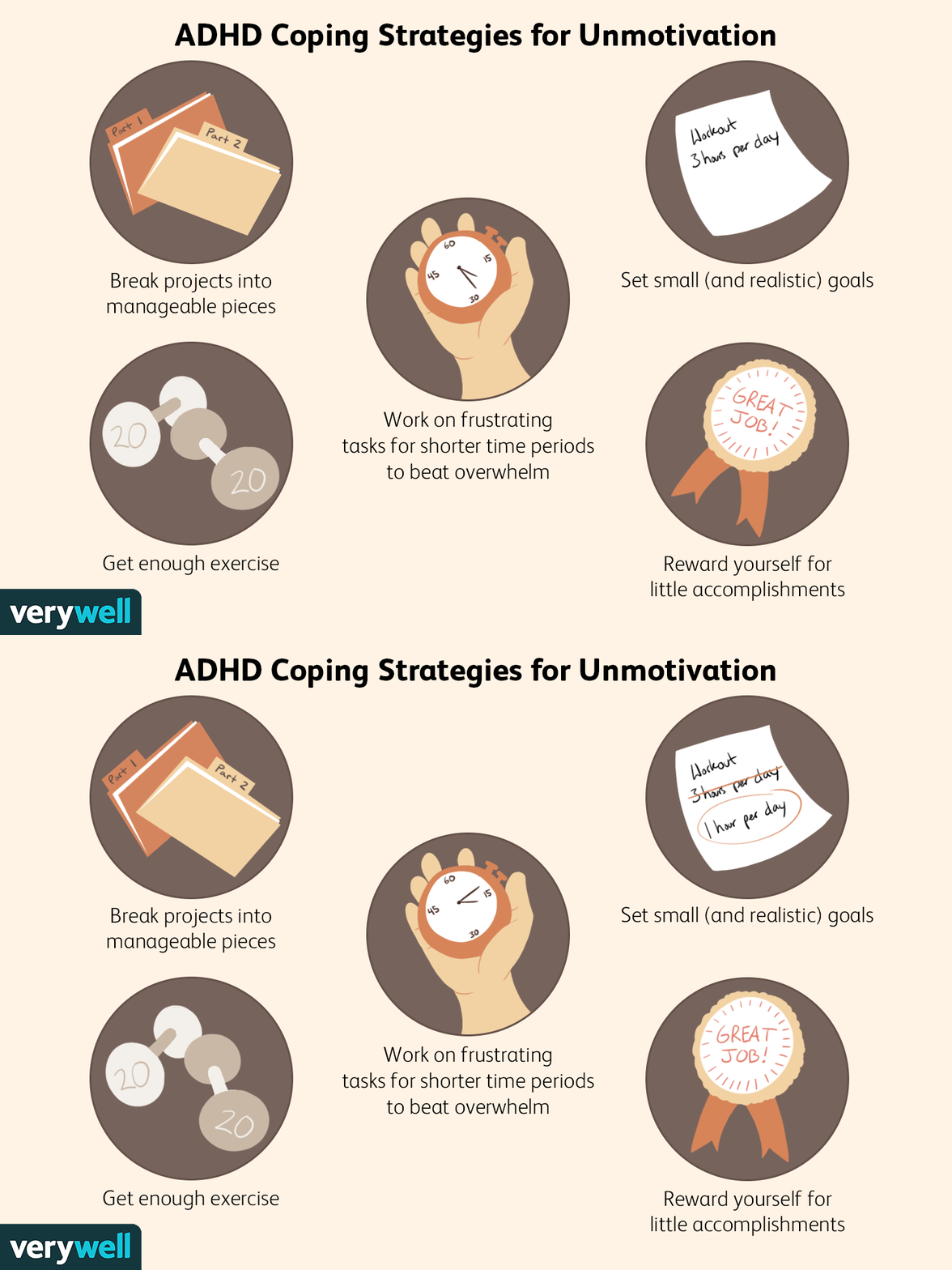
Finding ways to manage symptoms of ADHD can help you feel more motivated and productive. The next time you are finding it difficult to get started or stay on task, try some of these ideas:
- Break down projects into smaller, more manageable chunks.
- Delegate certain tasks to others, if you can.
- Exercise or otherwise incorporate physical movement into your day.
- Reward yourself immediately for little steps taken towards reaching goals.
- Set smaller goals.
- Set aside a short, less overwhelming time period (for example, 10 or 15 minutes) to commit to working on the activity that has you feeling stuck.
Interventions focused on improving executive functioning can also be helpful for improving motivation and productivity. Reward charts, daily planners, and daily checklists are all strategies that can help children and adults with ADHD better plan, organize, and carry out tasks.
Verywell Mind uses only high-quality sources, including peer-reviewed studies, to support the facts within our articles. Read our editorial process to learn more about how we fact-check and keep our content accurate, reliable, and trustworthy.
National Institute of Mental Health. Attention-deficit/hyperactivity disorder.
Roselló B, Berenguer C, Baixauli I, Mira Á, Martinez-Raga J, Miranda A. Empirical examination of executive functioning, ADHD associated behaviors, and functional impairments in adults with persistent ADHD, remittent ADHD, and without ADHD. BMC Psychiatry. 2020;20:134. doi:10.1186/s12888-020-02542-y
Morsink S, Van der Oord S, Antrop I, Danckaerts M, Scheres A. Studying motivation in ADHD: The role of internal motives and the relevance of self determination theory. J Atten Disord. 2022;26(8):1139-1158. doi:10.1177/10870547211050948
Kofler MJ, Sarver DE, Harmon SL, et al. Working memory and organizational skills problems in ADHD. J Child Psychol Psychiatry. 2017;59(1):57-67. doi:10.1111/jcpp.12773
Attention Deficit Disorder Association. ADHD paralysis is real: Here are 8 ways to overcome it.
Oram R, Rogers M, DuPaul G. Explaining the relationship between ADHD symptomatology and amotivation in the undergraduate population: The role of basic psychological need frustration. Canadian J School Psychol. 2019;35(2):139-153. doi:10.1177/0829573519880063
National Institute of Mental Health. Attention-deficit/hyperactivity disorder (ADHD).
Centers for Disease Control and Prevention. Data and statistics: Facts about ADHD.
Quinn PO, Madhoo M. A review of attention-deficit/hyperactivity disorder in women and girls: Uncovering this hidden diagnosis. Prim Care Companion CNS Disord. 2014;16(3). doi:10.4088/PCC.13r01596
Giedd JN. The enigma of neuroimaging in ADHD. Am J Psychiatry. 2019;176(7):503-504. doi:10.1176/appi.ajp.2019.19050540
Centers for Disease Control and Prevention (CDC). What is ADHD?
Grahek I, Shenhav A, Musslick S, Krebs RM, Koster E. Motivation and cognitive control in depression. Neurosci Biobehav Rev. 2019;102:371-381. doi:10.1016/j.neubiorev.2019.04.011
McGough JJ. Treatment controversies in adult ADHD. AJP. 2016;173(10):960-966. doi:10.1176/appi.ajp.2016.15091207
Daley D, van der Oord S, Ferrin M, et al. Behavioral interventions in attention-deficit/hyperactivity disorder: A meta-analysis of randomized controlled trials across multiple outcome domains. J Am Acad Child Adolesc Psychiatry. 2014;53(4):835-847.e5. doi:10.1016/j.jaac.2014.05.013
Thanks for your feedback!
What is your feedback?
Helpful
Report an Error
Other
