

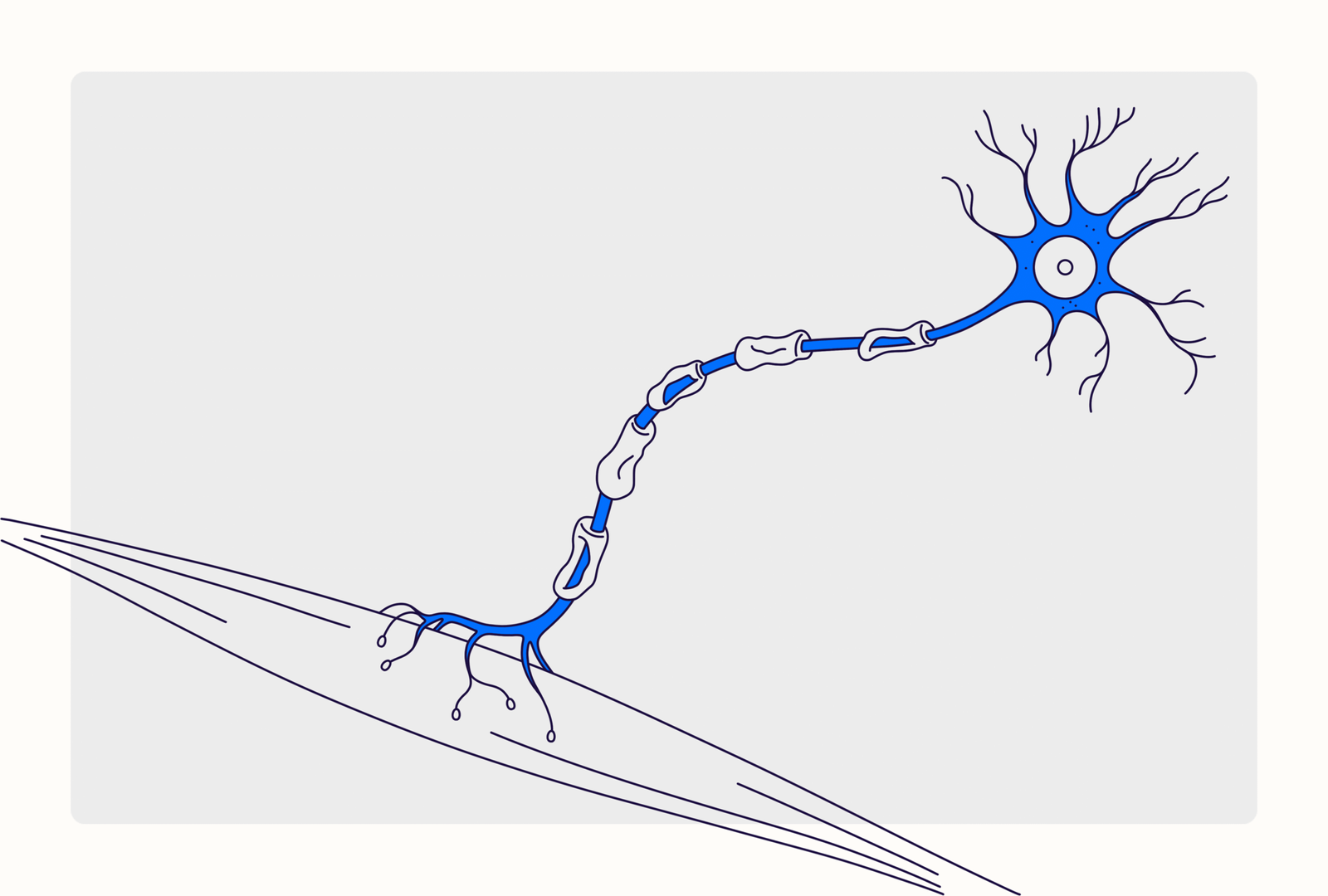
Amyotrophic lateral sclerosis (ALS), or Lou Gehrig’s disease, is a progressive neurodegenerative disease. It affects your nerves and muscle tissue and worsens over time, eventually becoming fatal.
There are two main types of ALS: sporadic and familial ASL. The symptoms are the same, but the underlying cause is different.
- Sporadic ALS: A majority of ALS cases are sporadic ALS. Most people with this type have genes that make them susceptible to ALS, but their environment plays a role in determining whether they will actually develop the disease. Sporadic ALS usually develops in your mid-50s.
- Familial ALS: If you have familial ALS, then you have a family member who also has ALS. There are over a dozen genes that cause familial ALS. The most common genes are C9orf72 and SOD1. About 10% of people with ALS develop this type. Familial ALS also occurs earlier, and most people are diagnosed in their late teens or early adulthood.
Your ALS symptoms will change as your disease progresses. Your nerve cells are responsible for sending impulses to specific muscle cells throughout your body to create movement, sensation, or behaviors. When these nerve cells die, the muscles that control those functions weaken, and you lose that function.
Early Symptoms
In the early stages of ALS, you may notice changes to your muscles as your nervous system weakens. Your walk may change, and you may stumble more. It might become harder to hold a cup or button a shirt.
Early symptoms of ALS include:
- Muscle twitches in arms, legs, or tongue
- Stiff muscles or movement
- One-sided muscle weakness that worsens with time
- Difficulty eating or swallowing
Up to 25% of people with ALS experience significant behavioral changes. It may become harder to plan and switch between different tasks. You may become more impulsive.
ALS can affect your social situations. You may have a hard time speaking fluently. Some people may struggle to recognize other people’s facial expressions.
Late Symptoms
As your ALS progresses, your symptoms will worsen. As the muscle weakness spreads throughout your body, you may have a hard time breathing or forming words. It may become harder to eat, so you may lose weight.
You may also experience:
- Drooling
- Constipation
- A feeling of pins and needles
- Muscle cramping
As your disease progresses, your behavior will continue to change. Some people may become less empathetic, while others may have a hard time regulating their emotions. You may laugh at inappropriate moments or cry during social situations. You may also yawn uncontrollably.
With ALS, the cells in your brain and spinal cord die. These cells are responsible for initiating movement in certain muscles throughout your body. Over time, your muscles, brain, and spinal cord weaken. Eventually, your muscles become paralyzed, affecting your movement and your ability to breathe.
Researchers believe ALS is caused by a complex combination of different factors. Your genes and environment are thought to play the main roles. Damage to your cells through oxidative stress or inflammation in your nervous system can also contribute to ALS. Sometimes, the body can’t repair its DNA, or nerve cells are damaged from overstimulation.
Risk Factors
There are risk factors that make you more likely to develop ALS.
You may be more at risk for ALS if you:
- Smoke
- Were in the military
- Played sports with a high risk of concussions
- Were exposed to heavy metals or pesticides
- Have a family member with ALS
- Are male
A neurologist (a doctor who specializes in diseases of the brain and nervous system) can diagnose ALS. After performing a physical exam and asking about your medical history, they may request additional testing.
Your neurologist may perform a:
- Neurological exam: A series of short, specific tests to evaluate whether your specific nerves are functioning properly
- Magnetic resonance imaging (MRI): An imaging study used to rule out other conditions that may be causing your symptoms
- Electromyography: A test that determines whether your nerves and muscles are communicating properly with each other
An early diagnosis is key to prompt treatment.
There is no cure for ALS. Instead, the goal of treatment is to manage your symptoms or prolong your life.
Medication
Currently, the only three medications approved to manage ALS are Rilutek (riluzole), Radicava (edaravone), and Olpruva (sodium phenylbutyrate). These medications provide the best results when started early, ideally within the first five years of the first symptom. They may help slow the progression of some symptoms.
If you experience depression, your doctor may recommend medication such as Elavil (amitriptyline) to manage your symptoms. Elavil can help with not only depression but also symptoms like drooling. Anxiety may be managed with benzodiazepines.
Respiratory Management
ALS makes it harder to breathe. The diaphragm (the muscle responsible for initiating each breath) becomes weaker with the disease. Your healthcare team will closely monitor you to determine whether your ability to breathe is changing.
If it has, they may recommend a tracheostomy (surgery to create an opening in the trachea that allows you to breathe through a tube) or noninvasive ventilation (tools that help with breathing, such as a mask).
Nutritional Support
ALS affects the muscles around your mouth and throat. This makes it harder to move your mouth, chew, and swallow. A doctor or registered dietitian can help you establish a meal plan to support your nutritional needs. If you lose a significant amount of body weight or you’re at risk for choking, you may need a feeding tube.
Rehabilitation and Therapy
As your disease progresses, it will become harder to move and perform daily tasks. A physical therapist may help you remain independent by recommending exercises to lower your risk of falling. This could include swimming or range-of-motion exercises.
An occupational therapist may support you by providing assistive devices to make your daily tasks easier to perform. These therapists specialize in helping people remain independent in eating, bathing, and dressing themselves. They may be able to recommend a special fork for eating or a tool to make buttons easier to manipulate.
Speech therapists support your ability to communicate. They may work with you to speak clearly or louder. Some people may need to use a communication device instead. These are portable devices with speakers that are controlled through touch or eye gaze.
A combination of genetics and lifestyle habits may cause ALS. While you may not be able to change your genetics, you may be able to alter your lifestyle habits to reduce your chances of developing ALS. For example, you can avoid contact sports, smoking, and the use of pesticides.
Some people will experience ALS and dementia together. About 15% of people with ALS will also experience significant memory loss. Short-term memory is usually maintained, while long-term memory becomes difficult to recall. It may become harder to learn new things, and it may be harder to pay attention.
Aspiration pneumonia, when food is inhaled accidentally, is another common condition for people with ALS. As the disease progresses, it becomes harder to chew, swallow, and cough. Using utensils to cut food into smaller pieces can also be challenging.
ALS is typically diagnosed between the ages of 45 and 75 years. After receiving a diagnosis, most people live about 2-4 years. Clinical trials are currently underway to evaluate new ways to manage ALS.
Occupational, physical, and speech therapists provide different approaches to offer individualized support for people living with ALS. Speech therapists offer new, portable communication devices with high-tech eye-gaze technology. Occupational therapists have assistive devices for everyday tasks to promote dignity and maintain independence. Physical therapists are offering innovative exercises to reduce joint pain. Your healthcare team can provide supportive measures to keep you comfortable while you manage your symptoms.
ALS can also be hard for loved ones. Ask the doctor about support groups and resources that are available for caregivers and other loved ones.
