

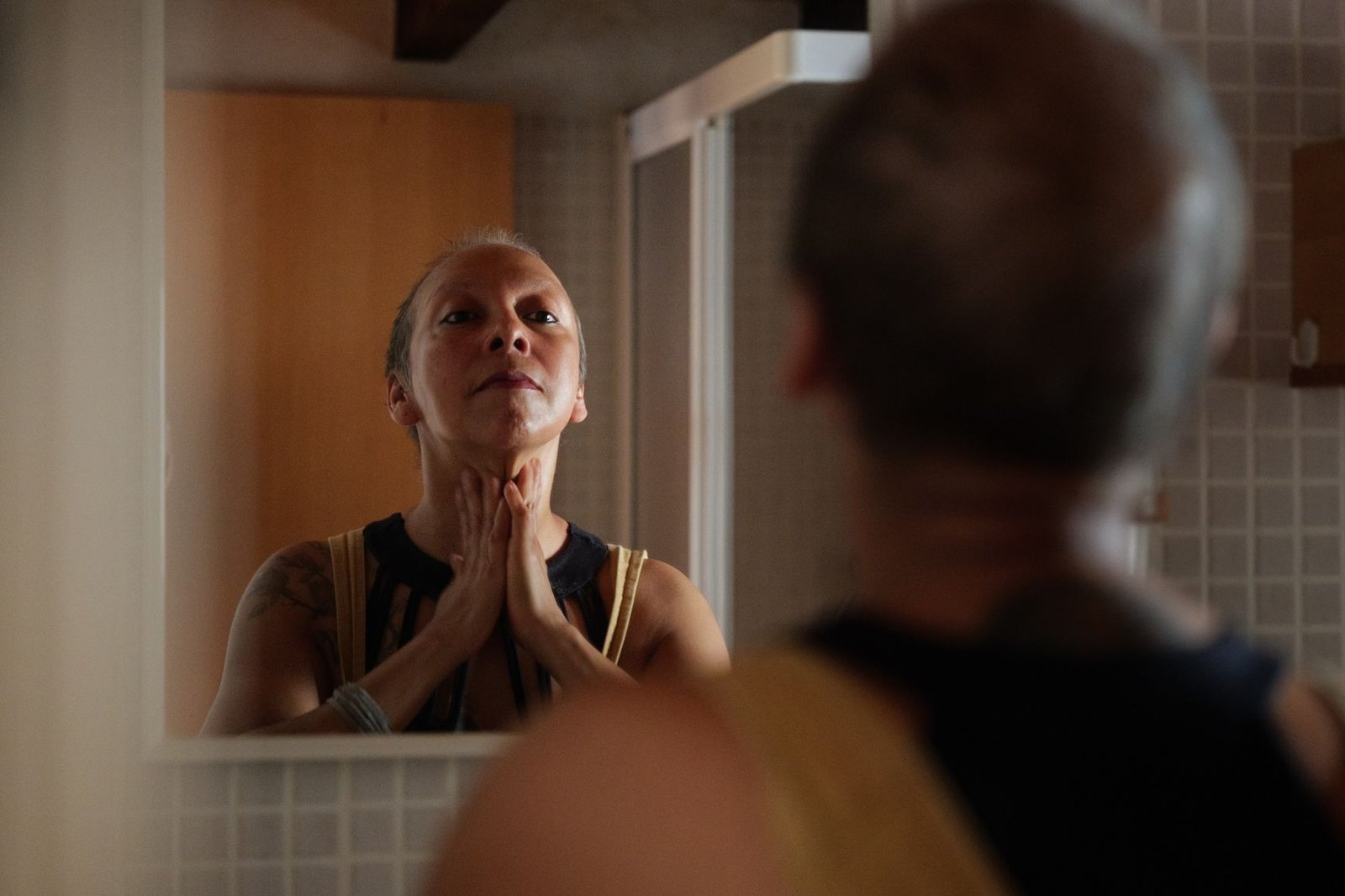
Tamron Little was 21 when she found out she had cancer. Having been misdiagnosed at first, she says it took a while before she could wrap her head around how her body had changed after treatment and the recent birth of her son.
“About six months after my treatment and surgery, is when I started to think, ‘Oh my gosh. Every time I take a shower, every time I put my clothes on and look at the mirror, I see this 12-inch cascading scarf going down my stomach,” Little recalls. “And for a long time, I mean, to be honest, even now, you would not catch me in a two-piece.”
For many people who go through cancer treatment, their relationship to their body changes. For some, that can look like body dysphoria, dysmorphia, or body image-related distress. According to a 2021 study, men and women, across a broad spectrum of cancers, have significantly decreased levels of body self-acceptance.
Impact of Cancer Treatment on Body Image
Little, who is now an advocate and writer, says she reached a point where she couldn’t look at her body anymore without feeling disconnected.
“What people don’t realize is that you can actually look in the mirror without looking in the mirror…I’ve always been the high-confidence, high self-esteem woman, but it had gotten [to be] like muscle memory for me, that when I would look in the mirror, I would avoid looking at my stomach.”
…it had gotten [to be] like muscle memory for me, that when I would look in the mirror, I would avoid looking at my stomach.
Sharon Batista, MD, a psychiatrist and faculty member at Mount Sinai who currently works in private practice, says that body dysmorphic disorder often goes undiagnosed and unnoticed, not just by providers but by patients’ loved ones. She adds that changes in body image can have a profound impact even if they do not rise to the level of a clinical diagnosis for BDD:
“They might be going to do things to control their bodies, like diets, exercise excessively, eating disorder behaviors like restricting their food intake severely to control the shape of their body, or buying a lot of makeup…spending hours even like trying to correct their appearance, and things that like outsiders may not recognize or feel they have, like, the right to say anything about.”
Batista says that can lead to misdiagnosis. For example, someone with eating disorder behaviors being diagnosed with anorexia. This can progress to heightened levels of depression, a common experience for those going through, or being in recovery from, the treatment of their cancer.
Recognizing the Loss and Change in Your Body
After Sally Wolf underwent cancer treatment, she did something few would: she went for a photoshoot. She says that doing so was about documenting the experience and her approach to recovery:
“I did the photoshoot about a month after I finished chemo. My hair was about to start growing back, and I realized two things: 1) despite my love for photography, I had barely taken any photos during treatment, and 2) I had come to see beauty in the bald head I dreaded and usually covered with my wig, and that while I hoped to never again be bald, I did want to remember that beauty.”
Wolf says it has been valuable for her, as someone who has had metastatic cancer for more than seven years, to acknowledge the joy and the hurt that comes with recognizing the loss of an imagined future.
“Give yourself permission to grieve what’s changed and to discover what’s still possible,” starts Wolf. “While isolation can be devastating and take us to dark places, community and connection helped push me toward acceptance and celebration.”
For Little, it has taken years to become more comfortable with her body. She says that it was a recent comment by her husband—as they spoke about looking for a scar-reducing cream—that helped her reframe her perspective.
“He said, ‘Why do you need that?’ I said, ‘Because the scars are ugly, I don’t want to look at them every day.’ He said, ‘Don’t look at your scars as being ugly. Every time that you look at your stomach, just be grateful that you’re here to even look at them.'”
Learning to Love Your ‘New’ Body
For her, it’s reclaiming that sense of self-love and beauty that has helped her since her treatment in 2007. Since then, her faith, therapy, and journaling have all been key aspects in her recovery. Clinicians can reassure patients that body image concerns are normal and that they can and should discuss any specific concerns.
Batista says that one valuable approach for those who have their body image shifted by medical treatments, like for cancer, is acceptance and commitment therapy (ACT), an approach that helps patients shift away from what is distressing them and towards growing in other areas of their life.
“You can’t necessarily control your body, but you can sure as hell control if you go out to see your friends, or if you read a book, or if you do something special with your family,” Batista explains.
Role of Healthcare Providers
When Little was going through treatment, she says body image wasn’t often something that was on the table in terms of discussion topics.
“A lot of things that we talk about now within the cancer survivorship realm, like body image, mental health…are topics that were not talked about then,” Little adds.
She says that this meant she needed to advocate for herself to find the resources and community she needed.
Still, Wolf says she hopes more clinicians can open space for these sorts of conversations.
“I wish more providers acknowledged that body image is not vanity, it’s identity,” says Wolf. “When cancer treatment alters appearance or abilities, it can shake our sense of self in profound ways. A moment of empathy, even a few words acknowledging they understand, can make patients feel seen. We need space to process not only just the medical losses, but also, and especially, the emotional ones too.”
Thanks for your feedback!
What is your feedback?
Helpful
Report an Error
Other
