

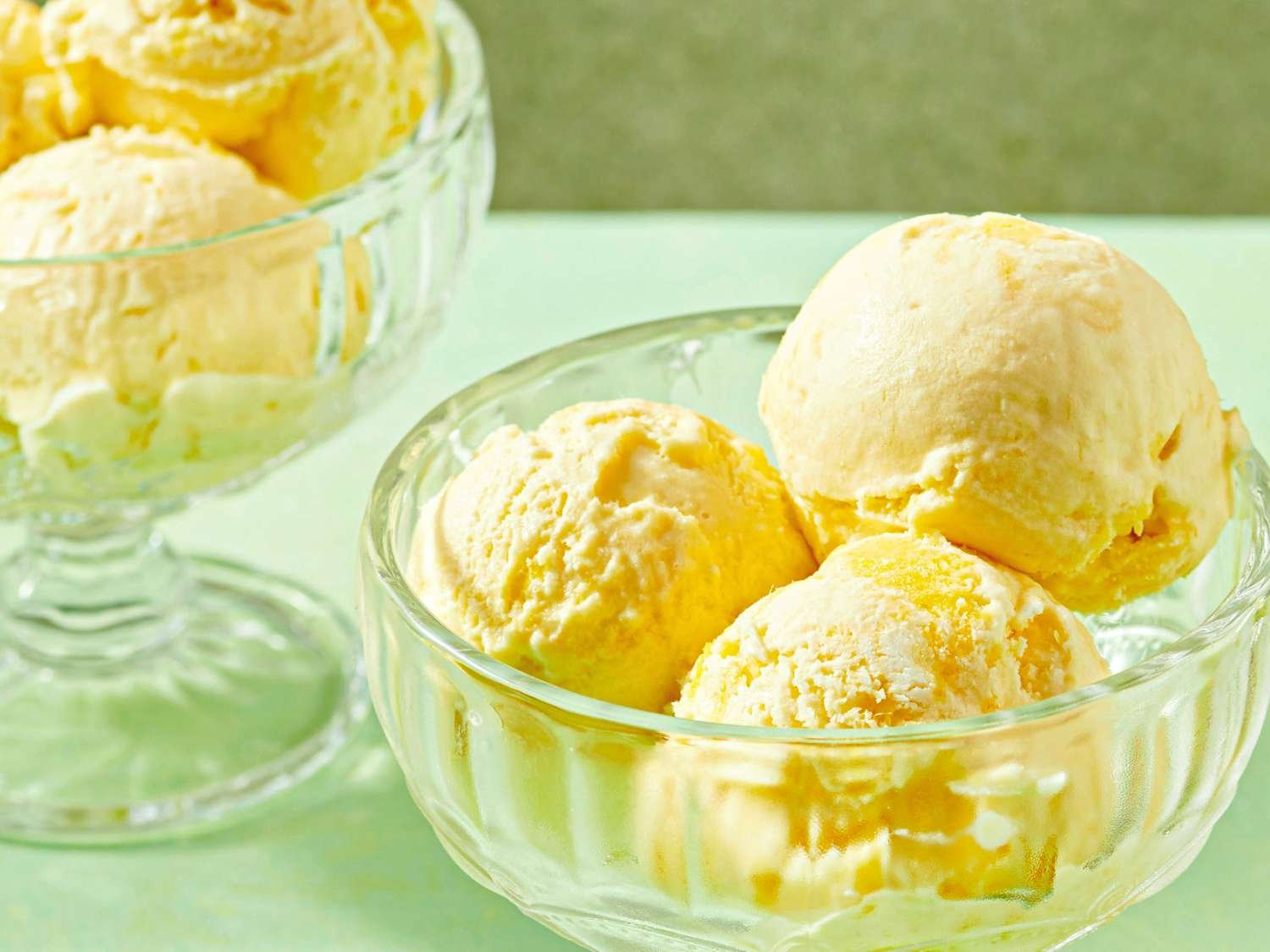
No-churn ice cream is easy, but only if you use the right ingredients—namely, sweetened condensed milk. In this guide, I break down the science of ice crystal formation, explain how churned and no-churn methods work, and show you exactly how to make smooth, scoopable ice cream without an ice cream maker and with minimal ingredients.
Homemade ice cream sounds dreamy, until your first spoonful turns out grainy, icy, and nothing like the pint you just finished bingeing from the store.
The culprit? Ice crystals. When they’re small, they melt on your tongue, creating that creamy, custard-like scoop you crave. But when they grow too large, you end up with icicles in a bowl. Fortunately, there’s a way to outsmart them—and you don’t need an ice cream maker to do it.
In this guide, I’ll break down the science of ice crystal control, explain how traditional churned ice cream avoids iciness, and show you how to make a rich, velvety, no-churn version at home using just two ingredients. (Spoiler: One of them is sweetened condensed milk, and it’s doing a lot more than adding sweetness.)
Serious Eats / Qi Ai
Why Ice Crystals Matter
Ice cream, true to its name, needs ice crystals to give it structure. However, here’s the catch: Those crystals need to be extremely small. If they’re too large, the texture goes from silky to gritty in seconds.
Commercial ice creams typically maintain average crystal sizes between 26.3–67.1 μm (micrometers). Studies show humans start detecting grittiness around 50 μm, and once crystals approach 100 μm, complaints go way up. So how do we stay below that threshold in a home kitchen?
How To Keep Ice Crystals Small
There are two primary strategies to prevent the formation of large ice crystals.
Add A Solute (Like Sugar)
Dissolved substances, such as sugar or salt, love to bind to water. This bond interferes with the structured bonding of water molecules themselves as they freeze into ice crystals, keeping the resulting crystals smaller and more dispersed. Salt is too savory for the task here, but sugar? Sugar works beautifully. To see why, let’s look at how different milk products behave in the freezer:
- Milk (87% water) and evaporated milk (about 60% water): When frozen, they form solid blocks.
- Sweetened condensed milk(roughly 25–27% water): Even after freezing it stays gooey.
Serious Eats / Swetha Sivakumar
The reason for this comes down to sweetened condensed milk’s higher concentration of sugar. Condensed milk is made by simmering milk under reduced pressure (between 43–60°C) until about 60% of the water is removed, then adding a large amount of sugar—about 45% sugar by weight. That much dissolved sugar depresses the freezing point of the milk and keeps the mixture semi-liquid in the freezer, creating a smoother texture. Besides the added sucrose, condensed milk typically contains:
- 8–9% fat
- 20–22% nonfat milk solids
- 10–11% lactose (natural milk sugars)
- 25–27% moisture
The high levels of sugar come with a potential downside: Sugar, especially the natural lactose in the milk, has its own tendency to crystallize, which can lead to an entirely different gritty texture caused by crystallized sugar instead of ice. However, during condensed milk production, manufacturers seed the mix with very fine lactose crystals that are too small to detect on the tongue, helping to prevent unwanted crystallization and ensuring a silky, smooth texture.
So sugar isn’t just for sweetness, it’s a structural element that can keep your ice cream smooth (if the sugar itself is kept smooth).
Suppress Ostwald Ripening
When I was a kid, we didn’t have an ice cream maker. My mom would make a custard base, freeze it in ice cube trays, then blend the cubes and freeze the mix again. It was tedious, but it ensured a smooth ice cream texture without unpleasant ice crystals. This hands-on method works because it manually disrupts a phenomenon known as Ostwald ripening.
This scientific-sounding term describes how smaller ice crystals tend to shrink as larger ones grow meaning small ice crystals “feed” larger ones. This happens because water tends to migrate from tiny crystals that are less stable to bigger ones that are more stable. The consequence of all this is ice cream with fewer, larger crystals and an unpleasant, gritty texture when eaten.
Ostwald ripening can be reduced both mechanically and chemically. My mom did it with a blender, and ice cream makers do it too: They constantly agitate the base, breaking up larger ice crystals as they form. Another way to limit Ostwald ripening is by providing numerous small nucleation sites—places where crystals can begin to grow. Since crystals prefer to grow on existing ones rather than start from scratch, seeding the mixture with countless tiny crystals helps keep their size in check. That’s why superfine lactose is added to condensed milk: it floods the mixture with micro-sized nucleation sites, reducing the risk of larger, gritty crystals forming over time.
If you don’t stop these processes, you get icy textures.
How Ice Cream Makers Work
Modern ice cream makers use a two-phase freezing system to outsmart Ostwald ripening.
Dynamic Freezing Phase
The mix is chilled while being churned. Ice starts to form on the walls of the bowl, and the rotating dasher scrapes off those tiny crystals, distributing them evenly through the mixture. This creates a seeded matrix of uniform, micro-sized crystals, which helps prevent large crystals from forming later. The smaller the crystals are at the start, the better we can prevent large crystals from forming later.
Static Freezing Phase
Once the mix reaches -5°C to -6°C (23–21.2°F), it’s transferred to a regular freezer to harden to a scoopable -18°C (-0.4°F). Because the crystal size was carefully controlled during dynamic freezing, the final texture stays smooth. Without the churning and initial seeding, you’re likely to end up with a chunky, crunchy mess.
The Secret to Creamy Ice Cream Without an Ice Cream Maker
An ice cream maker is great, but it’s an investment in money, space, and time. Plus, not everyone wants or remembers to pre-freeze a bowl for 24 hours, a common requirement for many home churns. Luckily, there’s a much simpler way to make rich, creamy ice cream at home: no-churn ice cream.
Instead of relying on mechanical methods, this technique utilizes ingredients that naturally inhibit crystal growth. The key ingredients in well-made no-churn ice cream need to have very little “free water,” so there’s less chance for big crystals to form. At the center of this magic trick is the hero we’ve already discussed: sweetened condensed milk.
Sweetened condensed milk is like an anti-freeze agent that’s tailor-made for ice cream. As mentioned above, because it contains both a high concentration of sugar (~45%) and reduced water content, it has a naturally low freezing point and a syrupy consistency that resists solidifying into an ice brick.
Serious Eats / Qi Ai
Unlike regular milk or cream, which will freeze into rock-hard slabs without churning, condensed milk stays semi-fluid in the freezer. This prevents large ice crystals from forming and maintains a soft, scoopable texture even after hours (or days) of storage.
On top of that, the sugar in condensed milk isn’t just about sweetness; it’s a structural tool. Dissolved sugar interferes with ice formation, while the small amount of remaining water is bound with milk proteins and lactose. The result is minimal free water, which means minimal crystal growth.
The second essential component in no-churn ice cream is heavy whipping cream. When whipped to soft peaks, cream traps air, creating a light, airy structure. This foam-like matrix is what gives no-churn ice cream its signature lightness and volume—something a churn introduces mechanically during mixing, but condensed milk alone can’t do.
More importantly, the fat and air from whipped cream also interrupt ice crystal formation, creating physical barriers that stop water molecules from organizing into large crystals. The high fat content also contributes to mouthfeel, making the final product rich and creamy instead of brittle or icy.
Serious Eats / Swetha Sivakumar
While unsweetened frozen cream may not be as tasty due to its lack of sweetness, it resists forming noticeable ice crystals because fat and air physically interrupt crystal growth. The fat and air disrupt crystal formation, and because there’s so little free water, there’s less to freeze in the first place.
Just be careful not to over-whip the cream: Too much air leads to crumbly, aerated textures instead of smooth and creamy ones.
A General Step-by-Step Guide to Making No-Churn Ice Cream
OK, I’ve talked through the key players in no-churn ice cream, here’s a general breakdown of how to do it:
1. Whip the Cream. Whip two cups of cold heavy cream to soft peaks in a blender or food processor. You want it thick enough to hold shape but still smooth and pliable—don’t over-whip, or it’ll turn grainy or start separating.
2. Add Sweetened Condensed Milk. Gently fold in one 14-ounce can of sweetened condensed milk until the mixture is fully combined and uniform. Work slowly and carefully to preserve the air you’ve whipped into the cream.
3. Flavor (Optional). Add any mix-ins, flavorings, or fruit purees at this stage—see the tips below to avoid introducing too much moisture, which can result in icy textures.
4. Freeze. Pour the mixture into a loaf pan or freezer-safe container. Smooth the top, cover tightly with plastic wrap or a lid, and freeze until firm (at least six hours).
That’s it. With just a bowl, a mixer, and a bit of chill time, you’re on your way to a homemade ice cream that rivals the best store-bought pints—no machine necessary.
Serious Eats / Swetha Sivakumar
Adding Flavor Without the Icy Fallout
Now that you know the science behind creating a creamy, smooth no-churn ice cream base, you’ll probably want to incorporate flavor. The biggest mistake you can make at this stage is adding ingredients with high water content, such as fresh fruit, which introduces free water and thus iciness. Instead, here are some flavor suggestions that won’t risk introducing icy chunks back into your ice cream:
- Jams or cooked fruit purees, where the sugar already binds to water
- Nut butters, chocolate, or alcohols, which bring bold flavor without water
- Acidic fruits, like mango, but only when cooked down with sugar
For example, in my no-churn mango ice cream recipe, I boil mango puree with sugar before folding it into the ice cream base. It freezes into a sorbet-like consistency, and its sharp fruity flavor pairs beautifully with the condensed milk base. The result is creamy, tangy, and perfectly smooth.
Serious Eats / Swetha Sivakumar
The Final Scoop
Ice cream is more than just a frozen dessert; it’s a surprisingly elegant colloid, aka a multi-phase food system that blends solid, liquid, and gas:
- Solid: ice crystals and fat globules
- Liquid: A sugar-dense syrup (from the condensed milk)
- Gas: Air pockets introduced by whipping cream
This microstructure is what makes ice cream ice cream. And with just a few basic pantry-friendly ingredients, including sweetened condensed milk and heavy whipping cream, you can recreate that complexity without any special tools. All you need is a blender, hand mixer, or even a food processor to whip the cream and fold in the condensed milk.
You get a dessert that’s soft, creamy, scoopable, and ready for all the flavors and add-ins your heart desires. With a little kitchen chemistry and time, you’ll have ice cream that’s every bit as good as what you’d buy in a pint.
