

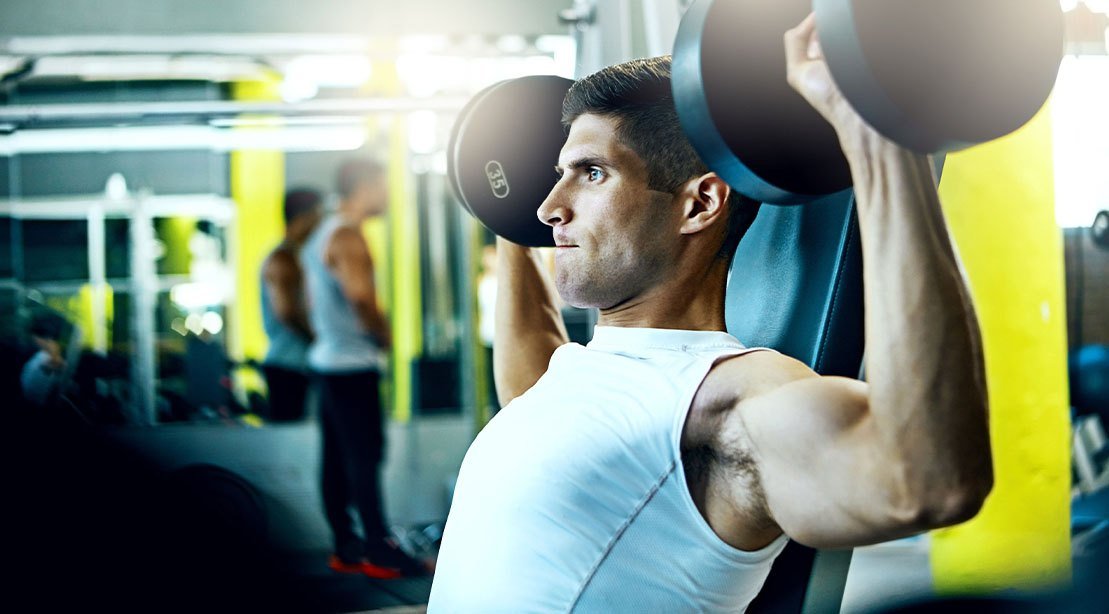
Mike Mentzer once said, “Shoulders are the mark of a man.” Whether you agree with the wording or not, the sentiment still lands with the force of a loaded barbell. Broad, rounded shoulders have always represented strength, athleticism, and physical presence. In both males and females alike the shoulders frame the torso, widen the silhouette, and can transform an average physique into something from aesthetic to powerful looking.
And when it comes to building them, few exercises rival the seated shoulder press.
Why the Seated Shoulder Press Is One of the Best Shoulder Exercises
The shoulder itself is a complex joint made up primarily of the deltoid muscle, divided into three heads: front, side, and rear. During a pressing movement, the front deltoids do most of the heavy lifting, assisted by the triceps and stabilized by the surrounding musculature of the upper back and rotator cuff.
That complexity is exactly why beginners should approach shoulder training with some respect.
For most trainees—particularly those training alone—the seated shoulder press is the smartest place to start. Seated pressing removes much of the body English and lower back cheating common with standing overhead work. Instead of turning the movement into a full-body wrestling match, the seated version allows you to focus on what matters: learning how to press correctly and safely.
Dusan Petkovic/Adobe Stock
Why Beginners Should Start With The Smith Machine Shoulder Press
Yes, the free-weight purists will groan, but stability matters when you’re learning mechanics. Machines and Smith setups allow beginners to establish proper movement patterns while gradually strengthening the smaller stabilizing muscles that protect the shoulders. There’s no prize for wobbling a pair of dumbbells over your skull before your joints and connective tissue are ready.
The Correct Seat Height for Maximum Shoulder Activation
Seat height is critical. Too low and the press turns awkward and shoulder-hostile. Too high and range of motion disappears. Ideally, the handles or bar should begin around ear or shoulder level.
Keep In Mind Wrist Alignment
Your wrists should remain straight and stacked over the forearms. Much like the bench press, many trainees allow the wrists to fold backward under load, placing unnecessary stress on the tendons and forearm musculature. Keep the hands rigid and let the bones support the weight.
Elbow Position Matters Too
The old-school behind-the-neck press once enjoyed tremendous popularity, but for most lifters it’s a poor tradeoff. It forces the shoulders into an externally rotated position that can aggravate the joint and invite impingement problems. A safer path is keeping the elbows slightly forward and pressing in a natural arc above the head.
Stay In Control and Make Each Movement Deliberate
Lower the weight deliberately and press smoothly without bouncing or violently locking out the elbows. The lowering phase is not intermission. It is part of the exercise and often where both muscle growth and joint protection live.
This matters because shoulder injuries are notoriously stubborn.
Muhammed/Adobe Stock
Why Shoulder Injuries Happen and How to Prevent Them
Unlike a sore biceps or bruised quad, irritated shoulders tend to linger like the flu when you have young kids in school. Rotator cuff irritation, impingement, and tendon inflammation usually stem from the same sins: poor mechanics, excessive weight, and ego-driven training.
The cure is refreshingly simple:
- control the weight
- respect your range of motion
- warm up thoroughly
- progress gradually
Eventually, many lifters graduate to dumbbells and free-weight overhead work as their stability and confidence improve. But there is no rush. Strength built patiently lasts longer than strength borrowed through momentum and bravado.
The seated shoulder press survives every training trend for one reason: it works.
The bench press may answer the question of how strong you are. But the shoulder press determines how that strength is carried. Wide shoulders change the entire architecture of a physique.
Mentzer had it right.
