

Trainer shares a 12-minute routine that targets the key areas of healthy aging after 60.
Aging well has a lot to do with how consistently you train the abilities that keep you strong, mobile, and confident. Strength, balance, coordination, posture, and core control all play a role in how young your body feels during everyday movement. A focused 12-minute routine can hit those areas quickly and give your body a strong training signal without turning your day into a marathon workout.
I’ve coached plenty of adults over 60 who make the best progress with short, repeatable sessions they can actually fit into their week. Longer workouts have their place, but these quick routines help fill the gaps, build momentum, and keep the body tuned up between bigger training days. Think of this as a compact full-body reset that keeps your muscles active and your movement sharp.
This 12-minute routine targets the big rocks of healthy aging: leg strength, upper-body strength, core stability, balance, and total-body coordination. You’ll move through four exercises that challenge the body in different ways while staying simple and approachable. Grab a sturdy chair, clear a little space, and get ready to train the muscles that help you feel strong for years to come.
The 12-Minute Healthy Aging Routine After 60
What you need: A sturdy chair, open floor space, and 12 focused minutes.
The Routine:
- Chair Squats
- Incline Push-Ups
- Standing March Holds
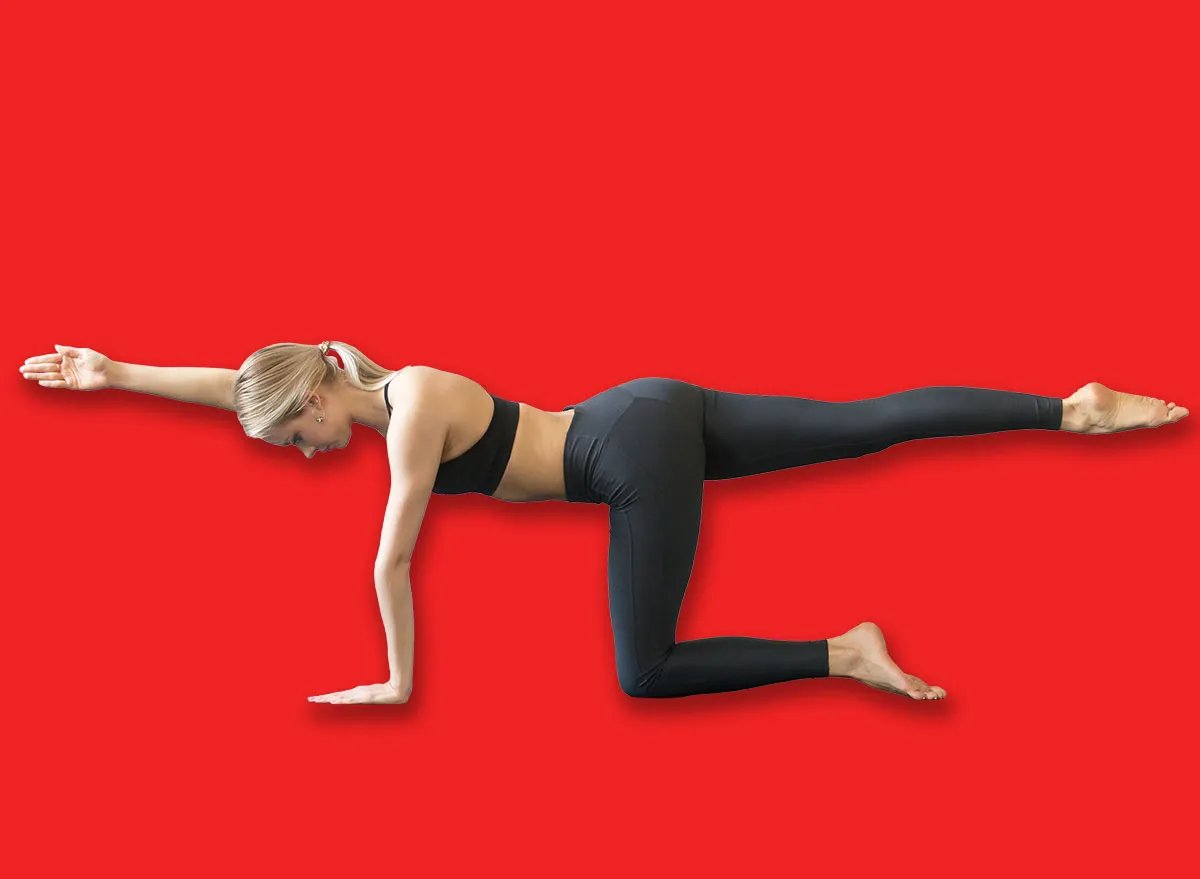
- Bird Dogs
Directions
Perform each exercise in order. Complete 2 rounds total. Move with control, rest as needed, and focus on clean reps over speed. Read on for the detailed instructions.
Chair Squats
Chair squats train one of the most important movement patterns for aging well: standing up with strength and control. They build the quads, glutes, and hips, which support walking, stairs, balance, and daily independence. I like using chair squats because they give you a clear target and help keep reps consistent. Over time, this movement builds lower-body power that carries directly into everyday life.
Muscles Trained: Quads, glutes, hamstrings, and core.
How to Do It:
- Stand in front of a sturdy chair with your feet hip width apart.
- Brace your core and keep your chest lifted.
- Push your hips back and bend your knees.
- Lower until your hips lightly touch the chair.
- Drive through your heels to stand tall.
- Repeat with control.
Recommended Sets and Reps: Perform 2 sets of 10 to 12 reps. Rest for 30 seconds between each set.
Best Variations: Pause chair squats, slow tempo chair squats, hands-free chair squats.
Form Tip: Keep your knees tracking in line with your toes.
Incline Push-Ups
Incline push-ups strengthen the chest, shoulders, triceps, and core in a joint-friendly position. Upper-body strength matters after 60 because it supports posture, daily lifting, and overall confidence. This version makes the movement more approachable while still challenging the muscles that keep your upper body strong. I use incline push-ups often because they scale well and deliver a reliable training effect.
Muscles Trained: Chest, shoulders, triceps, and core.
How to Do It:
- Place your hands on the edge of a sturdy chair, bench, or countertop.
- Step your feet back until your body forms a straight line.
- Brace your core and keep your neck neutral.
- Bend your elbows to lower your chest toward the surface.
- Press through your hands to return to the start.
- Repeat with steady control.
Recommended Sets and Reps: Perform 2 sets of 8 to 12 reps. Rest for 30 seconds between each set.
Best Variations: Wall push-ups, low-incline push-ups, slow-tempo push-ups.
Form Tip: Keep your body moving as one unit from head to heels.
Standing March Holds
Standing march helps build balance, hip strength, and single-leg stability. That combination matters because walking, stepping, turning, and climbing all rely on your ability to control your body on one leg. This exercise also trains posture and core engagement without needing equipment. I like it for adults over 60 because it builds confidence quickly and shows progress fast.
Muscles Trained: Hip flexors, glutes, calves, and core.
How to Do It:
- Stand tall with your feet hip-width apart.
- Place one hand near a wall or chair for light support if needed.
- Brace your core and lift one knee toward hip height.
- Hold the position for 2 to 3 seconds.
- Lower with control and switch sides.
- Continue alternating.
Recommended Sets and Reps: Perform 2 sets of 8 to 10 reps per side. Rest for 30 seconds between each set.
Best Variations: Supported march holds, slower march holds, and higher knee march holds.
Form Tip: Stay tall through your torso instead of leaning back.
Bird Dogs
Bird dogs train core stability, coordination, and control through the hips and shoulders. This movement teaches your body to stay steady while your limbs move, supporting safer, stronger movement in daily life. It also helps reinforce posture and spinal stability. I use bird dogs often because they build control without beating up the joints.
Muscles Trained: Core, glutes, shoulders, and lower back stabilizers.
How to Do It:
- Start on your hands and knees.
- Brace your core and keep your back flat.
- Reach one arm forward as you extend the opposite leg back.
- Pause briefly while keeping your hips level.
- Return to the starting position with control.
- Alternate sides for each rep.
Recommended Sets and Reps: Perform 2 sets of 8 to 10 reps per side. Rest for 30 seconds between each set.
Best Variations: Arm-only bird dogs, leg-only bird dogs, pause bird dogs.
Form Tip: Move slowly enough to keep your hips from rocking side to side.
Best Daily Habits to Feel Younger After 60
Shutterstock
Aging well comes from stacking small wins every day. A 12-minute routine gives your body a strong training signal, but the rest of your habits help that work turn into better strength, energy, and movement quality. In my coaching experience, adults over 60 usually feel their best when they combine simple strength work with daily movement and solid recovery. The goal is to keep your body active, capable, and ready for the things you enjoy. Use the habits below to support that process.
- Strength train several days per week. Regular resistance work helps maintain muscle and power.
- Walk daily. Consistent walking supports circulation, endurance, and joint health.
- Eat protein at each meal. Protein helps preserve muscle and supports recovery.
- Practice balance often. Short balance drills help keep your coordination sharp.
- Move through full ranges of motion. Controlled movement supports mobility and joint confidence.
- Prioritize sleep. Recovery helps your muscles, brain, and energy levels stay strong.
Stick with this 12-minute routine a few days per week, and your body can start feeling stronger, steadier, and more capable where it matters most.
